
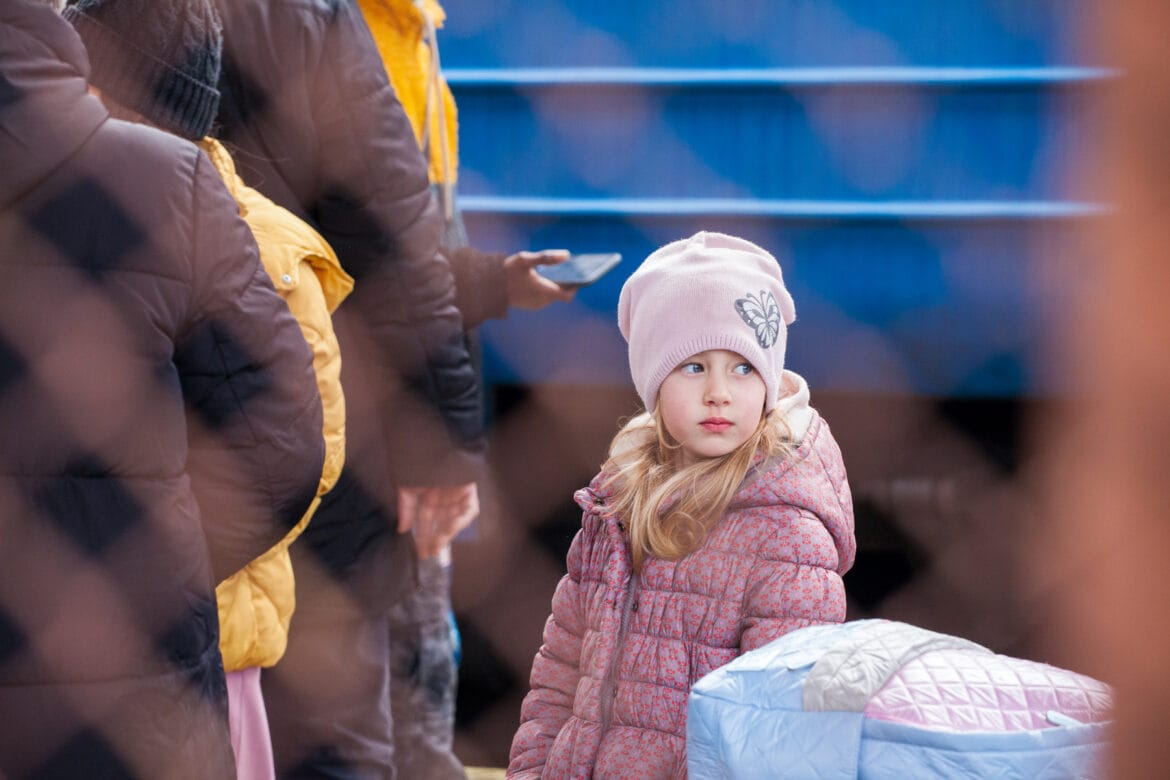
The Council has listed 16 individuals and seven entities accused of involvement in the unlawful deportation, forced transfer, indoctrination and militarisation of Ukrainian children taken from occupied territories.
The European Union has imposed new sanctions on Russian officials, institutions and organisations accused of involvement in the unlawful deportation and forced transfer of Ukrainian children, as foreign ministers met in Brussels to discuss further measures linked to Russia’s war against Ukraine.
The decision, adopted by the Council of the European Union on 11 May, adds 16 individuals and seven entities to the EU sanctions list. The listings target those deemed responsible for actions undermining or threatening Ukraine’s territorial integrity, sovereignty and independence.
The measures were announced on the same day as a high-level meeting of the International Coalition for the Return of Ukrainian Children, co-hosted in Brussels by the European Union, Ukraine and Canada. The meeting took place in the margins of the Foreign Affairs Council, chaired by EU foreign policy chief Kaja Kallas.
According to the Council, the new sanctions concern individuals and entities involved in the systematic deportation, forced transfer and forced assimilation of Ukrainian minors. The EU said the conduct included indoctrination, militarised education, unlawful adoption, and the removal of children to the Russian Federation and to temporarily occupied territories of Ukraine.
The Council stated that Russia is estimated to have deported or forcibly transferred nearly 20,500 Ukrainian children since the start of its full-scale war against Ukraine. It described such actions as grave breaches of international law and violations of the fundamental rights of the child.
The entities listed include federal state institutions linked to the Russian Ministry of Education, among them the All-Russian Children’s Centres Orlyonok, Scarlet Sails and Smena. The Council said these centres organise programmes for Ukrainian children in coordination with occupation authorities, exposing them to pro-Russian ideological education, patriotic events and military-oriented activities.
Other listed entities are accused of hosting Ukrainian minors taken from occupied territories and placing them in programmes aligned with Russian state policy. The EU said these activities include political indoctrination and education structures designed to introduce basic military training.
Among the entities named by the Council are the DOSAAF Centre in Sevastopol, the Nakhimov Naval School and the Military-Patriotic Club “Patriot” in Crimea. The Council said these bodies participate in the re-education, ideological indoctrination and militarisation of minors, with the effect of fostering loyalty to Russia and weakening Ukrainian national identity.
The individual listings include officials and politicians from territories illegally occupied by Russia, as well as heads of youth camps, military-patriotic clubs and similar organisations. The Council said those individuals were responsible for promoting military and patriotic education among young people through ideological instruction, paramilitary training, exposure to Russian military culture and participation in events glorifying Russia’s war against Ukraine.
Those sanctioned are subject to an asset freeze. EU citizens and companies are prohibited from making funds, financial assets or economic resources available to them. Listed individuals are also subject to a travel ban, preventing them from entering or transiting through EU territory.
The decision forms part of the EU’s wider sanctions framework against Russia, which has been expanded repeatedly since the full-scale invasion of Ukraine in February 2022. The child deportation issue has become a separate and increasingly prominent strand of EU policy, combining sanctions, diplomatic pressure and efforts to support the return of minors to Ukraine.
The Brussels meeting of the International Coalition for the Return of Ukrainian Children was intended to strengthen international coordination on identifying, tracing and returning children who have been deported or forcibly transferred. The coalition brings together governments and institutions working with Ukraine on documentation, legal support and return mechanisms.
The Council’s decision also reflects earlier EU conclusions calling on Russia and Belarus to ensure the safe and unconditional return of all unlawfully deported and transferred Ukrainian children and other civilians. EU leaders have repeatedly stated that pressure on Russia should continue while the war and occupation persist.
The latest measures come as ministers discuss Ukraine alongside other foreign policy files, including the Western Balkans, the Middle East, threat analysis and EU relations with Canada and Syria. For Brussels, the child deportation file has become one of the most sensitive legal and political elements of the war, involving both accountability and humanitarian recovery.
The EU’s new listings do not in themselves secure the return of children, but they increase the personal and institutional costs for those accused of participating in Russia’s transfer and assimilation system. They also place the issue firmly within the EU’s sanctions architecture, rather than treating it solely as a humanitarian matter.

