
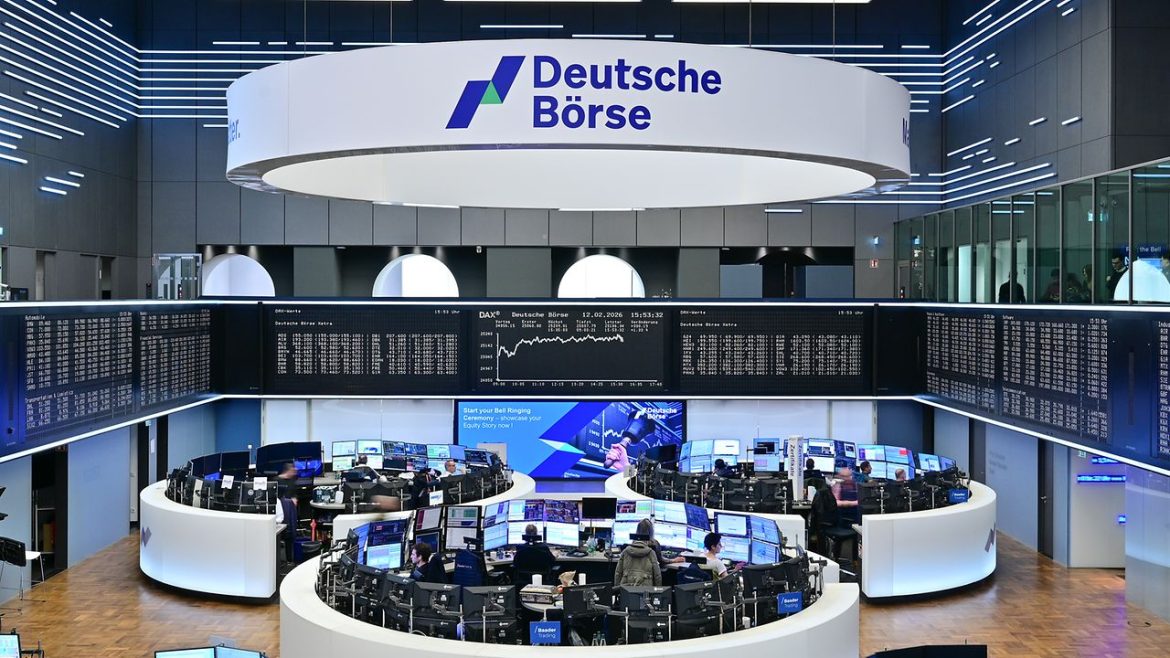
Germany’s exemption for Deutsche Börse exposes the political fault line at the heart of Europe’s capital-markets reform: more integration in principle, but protection for national champions in practice.
Germany has secured a carve-out that would allow Deutsche Börse to avoid mandatory supervision by the European Securities and Markets Authority, weakening one of the most politically sensitive elements of the EU’s renewed push to integrate its capital markets.
The exemption, reported by the Financial Times on 14 June, would give the German exchange group the option of remaining under national oversight rather than being automatically brought under ESMA’s direct supervision. The arrangement was negotiated during talks among the EU’s six largest economies: Germany, France, Italy, Spain, Poland and the Netherlands.
On paper, Berlin remains a supporter of deeper European capital-market integration. In practice, the Deutsche Börse exemption shows how quickly that ambition can run into the politics of national infrastructure. The same governments calling for a more efficient single market for finance are still reluctant to surrender control over institutions they regard as strategically or commercially important.
A Test Case for Europe’s Market Union
The reform matters because supervision is one of the hard parts of the EU’s capital-markets agenda. Brussels has spent years arguing that Europe needs deeper, more liquid and more integrated markets if it is to finance defence, technology, green industry and infrastructure without relying so heavily on banks or foreign capital.
That ambition now sits under the broader Savings and Investments Union, the Commission’s attempt to turn Europe’s large pool of household savings into productive investment across the bloc. But a single market for capital cannot be built only through political slogans. It requires common rules, consistent enforcement and credible oversight of the market infrastructures that connect investors, companies and trading venues.
That is why ESMA’s role is so contested. Stronger central supervision would reduce the risk that large market operators face different interpretations of EU law depending on where they are based. It would also give Brussels a more direct tool for policing cross-border financial activity. For national capitals, however, it would mean transferring influence away from domestic regulators and, indirectly, away from national political ecosystems.
Berlin’s Integration Dilemma
The Deutsche Börse case is uncomfortable for Germany because it appears to cut across the logic Berlin has endorsed elsewhere. In earlier talks, the EU’s six largest economies backed centralised market supervision, presenting the move as evidence that the largest member states were finally prepared to move beyond general support and accept institutional change.
The new carve-out changes the message. If Deutsche Börse can choose between national and ESMA supervision, the reform risks becoming selective. Integration would apply most forcefully where national governments are willing to accept it, but less forcefully where a major member state has a powerful domestic market champion to protect.
The issue is not only legal. It is political. Deutsche Börse is not simply another financial company. It is a central piece of Germany’s market infrastructure, connected to trading, clearing, data and the wider financial ecosystem around Frankfurt. For Berlin, leaving it under national oversight may be presented as proportionate because of its domestic footprint. For other capitals, it may look like special treatment.
Why the Carve-Out Matters Beyond Germany
The risk for Brussels is that one exemption becomes a precedent. If the largest member state can protect its exchange group from the strongest version of EU supervision, others may seek similar treatment for their own market institutions. That would weaken the credibility of the reform before it reaches its final legislative shape.
It could also complicate the politics of the Savings and Investments Union. The Commission’s argument is that Europe needs scale: larger pools of capital, easier cross-border investment, deeper markets and fewer national barriers. But market participants will judge the project by whether the EU can deliver predictable and uniform supervision, not only by whether leaders repeat the language of integration.
There is a practical market dimension too. Fragmented supervision can increase compliance complexity and encourage regulatory competition between jurisdictions. It may also make it harder for investors to know whether the same EU rule is being applied with the same intensity across the bloc. ESMA was designed to help close that gap. A carve-out for one of Europe’s most important exchange groups would signal that the gap remains politically protected.
The Fight Moves to the Next Stage
The proposal is not the final word. The broader supervision reform still requires wider support among member states and will face negotiations with the European Parliament. Smaller countries, many of which are wary of concentrating authority in Paris-based ESMA, may also have their own reservations. The German exemption could therefore become either a compromise that keeps the reform alive or a symbol of why the reform falls short.
For now, the political lesson is clear. Europe’s capital-markets agenda is no longer blocked only by technical complexity or investor habits. It is blocked by the same national reflexes that have long limited the single market in services and finance. Berlin wants deeper European markets. But when deeper integration reaches Deutsche Börse, Germany appears to want a softer version of the rule.
That tension is exactly why the carve-out matters. It turns an abstract debate about supervision into a concrete test of whether the EU is prepared to treat financial-market infrastructure as European infrastructure, or whether national champions will continue to sit just outside the strongest forms of single-market discipline.

