
The case moves the Foreign Subsidies Regulation from experiment to enforcement, with a Chinese acquisition of a major European electronics retailer now facing a concrete procedural test.
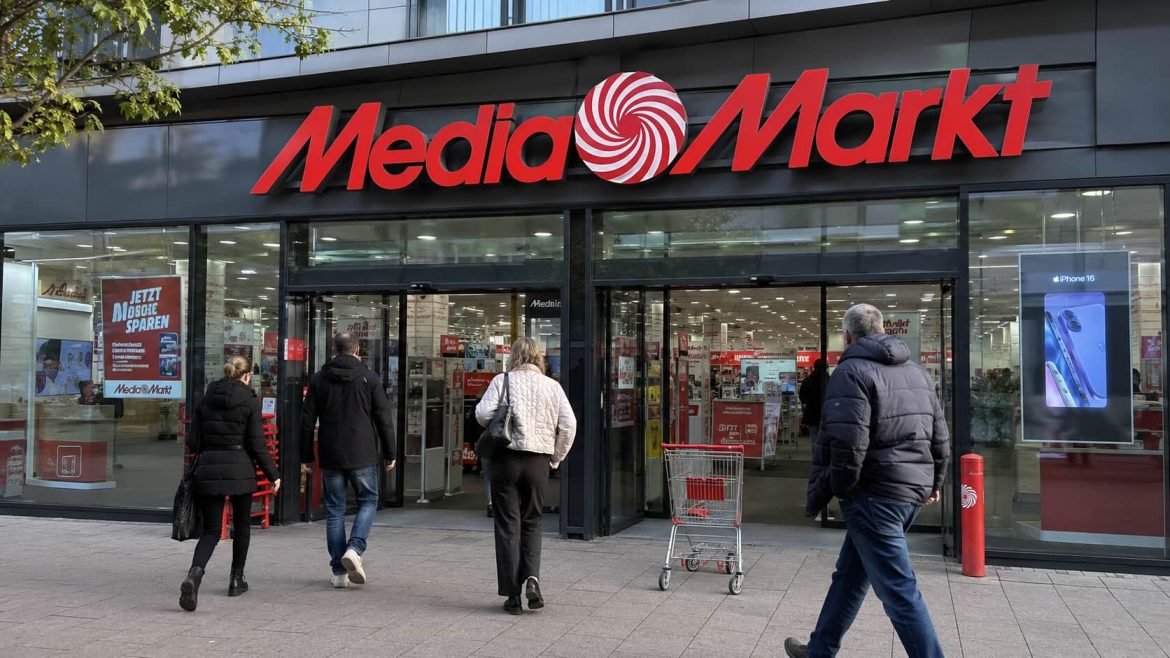
EU regulators are preparing formal charges against JD.com over its planned $2.5 billion acquisition of Ceconomy, the German owner of MediaMarkt and Saturn. The statement of grounds would be the first formal warning under the EU Foreign Subsidies Regulation, a relatively new tool designed to prevent foreign state support from distorting the single market.
The procedural step matters because it moves the case beyond investigation. A statement of grounds is not a final decision, but it tells the parties where Brussels sees potential distortions and gives them a chance to offer answers or remedies. If the concerns are not resolved, the Commission can impose conditions or block the transaction.
The Commission’s earlier Official Journal notice said the in-depth investigation was opened after preliminary indications that JD Group may have received foreign subsidies from China, including preferential debt financing, tax measures, grants and other financial contributions. The notice also said those potential subsidies may have helped JD.com finance the transaction and secure support from Ceconomy’s management and shareholders.
EU Today covered the opening of the JD.com-Ceconomy subsidy probe and later examined the Commission’s broader review of the Foreign Subsidies Regulation. The formal charge is a new stage because it turns the regulation’s promise into a case that companies can measure.
The target is not a niche asset. Ceconomy controls MediaMarkt and Saturn, two of Europe’s best-known consumer-electronics chains. Retail infrastructure matters because it gives access to distribution networks, consumer data, supplier relationships, logistics and e-commerce channels. A subsidised acquisition in that sector could affect not only ownership, but the competitive terms under which European and Chinese goods reach consumers.
The case also tests how Brussels defines strategic importance. Consumer electronics retail is not defence, telecoms or energy. Yet it sits between households, manufacturers and digital services. If foreign subsidies allow a buyer to offer a higher premium or absorb lower margins, the effect can still reshape European market structure.
JD.com will argue, as Reuters reported, that a statement of grounds is a normal step and that it expects a positive conclusion. That position is credible as a legal matter. Many EU cases move through objections or formal concerns before clearance with commitments. But the first formal charge under the FSR carries symbolic weight. It will show whether the Commission is willing to demand meaningful remedies from a large Chinese acquirer.
The remedies question is difficult. Brussels could seek commitments on financing, governance, technology transfer, data handling, supply conditions or market access. But any remedy must address the alleged subsidy distortion without becoming a general political restriction on Chinese ownership. That line will be watched closely by Beijing and by European investors.
The business community will also study the process. The FSR has already increased notification burdens for companies involved in major EU acquisitions and public tenders. If the first formal charge leads to broad or unpredictable remedies, dealmakers may treat Chinese-backed transactions as materially riskier. If it ends with narrow commitments, companies will have a clearer model.
Politically, the case arrives as the EU is under pressure to show that open markets do not mean open-ended vulnerability. Brussels wants foreign investment, but it also wants tools to address subsidised capital, overcapacity and state-backed expansion. The JD.com case is exactly the kind of transaction for which the FSR was created.
The outcome will define the regulation’s early credibility. A weak response would make the FSR look procedural. An excessive response could reinforce claims that the EU is using competition tools as protectionism. A proportionate remedy would prove that Brussels can defend market fairness without closing the door to legitimate investment.
For Ceconomy, JD.com and the wider retail sector, the immediate question is transactional. For the EU, the issue is larger: whether foreign subsidies can influence who controls important European commercial networks. The formal charge suggests Brussels is no longer willing to answer that question in theory only.
It will also matter how quickly the case is resolved. A prolonged process could weaken the transaction even without a formal prohibition, because uncertainty affects financing, management planning and shareholder expectations. That gives the Commission leverage, but it also creates responsibility. If Brussels wants the FSR to be seen as predictable, it must explain its concerns clearly enough that companies understand what kind of remedy can work.

