
Thirty-seven states have backed an agreement creating the management structure for a Special Tribunal intended to prosecute senior Russian political and military leaders over the crime of aggression against Ukraine.
The Committee of Ministers of the Council of Europe has approved a key agreement in the process of establishing a Special Tribunal for the Crime of Aggression against Ukraine, creating the management framework required for the future court to move towards operation.
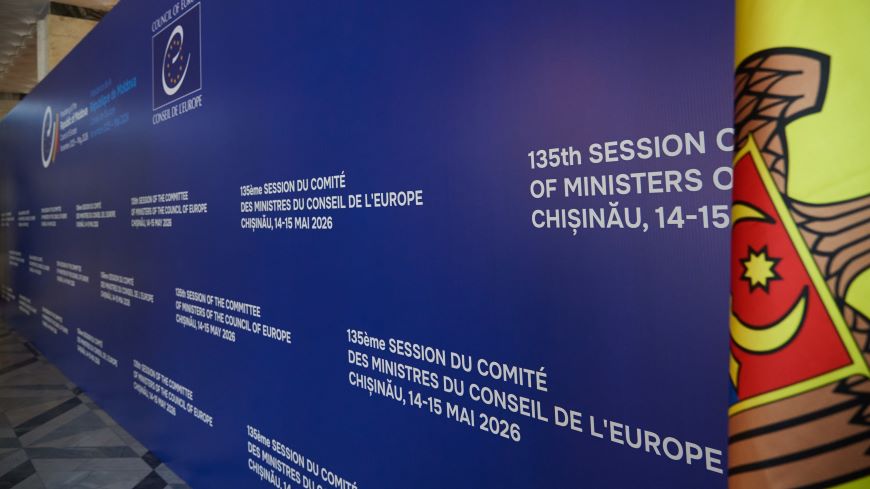
The decision was taken on 15 May at a ministerial meeting in Chișinău, Moldova. Ukraine’s foreign ministry said 37 states supported the Enlarged Partial Agreement on the Management Committee of the Special Tribunal, describing it as the third founding document of the new mechanism.
The agreement establishes the administrative and governance basis for the tribunal. It is intended to oversee funding, management and institutional arrangements, while also allowing both Council of Europe member states and third countries to join the process. The Council of Europe has said the tribunal will be established within its institutional framework and supported by participating states through an enlarged partial agreement.
Ukraine’s Foreign Minister Andrii Sybiha said the decision meant that a “point of no return” had been passed and that the Special Tribunal had become “a legal reality”. He added that the number of participating states was expected to grow further. In a political statement after the decision, he said the tribunal would place Vladimir Putin and other senior Russian and Belarusian officials on a path towards accountability.
The Special Tribunal is designed to prosecute individuals who bear the greatest responsibility for the crime of aggression against Ukraine. The Council of Europe describes this as a leadership crime involving the decision by state leaders to use armed force against another state in violation of the UN Charter. Its official explanation of the tribunal states that it will focus on senior political and military leaders involved in planning, preparing, initiating or executing the war of aggression.
The mechanism is intended to address a gap in the existing international justice system. The International Criminal Court can investigate war crimes, crimes against humanity and genocide committed in Ukraine, but it cannot currently prosecute the crime of aggression in this case because of jurisdictional limitations. The Special Tribunal is therefore intended to complement, rather than replace, the ICC’s work.
The tribunal’s institutional design has developed through several stages. Ukraine and the Council of Europe signed the bilateral agreement establishing the Special Tribunal in Strasbourg on 25 June 2025, and the Verkhovna Rada ratified it on 15 July 2025. In January 2026, the Council of Europe and the European Union agreed to set up an advance team to prepare the tribunal’s institutional, logistical and legal foundations. The Council of Europe says that work includes preparations for the election of judges and a prosecutor, the development of rules of procedure and evidence, and the creation of a court management system.
The Management Committee will have a central role in the future operation of the tribunal. According to the Council of Europe’s description of the tribunal’s functioning, it will oversee administrative, financial and strategic policy matters, approve budgets, elect key officials and facilitate co-operation among participating states.
The court structure is expected to include chambers, an office of the prosecutor and a registry. The Council of Europe states that judges will be elected from a 15-person roster, while the prosecutor will be elected by the Management Committee for a non-renewable seven-year term. The registry will provide operational support, including units dealing with victims and witnesses, detention and defence.
The latest decision does not mean that trials will begin immediately. It creates the structure through which the tribunal can be financed, administered and prepared for full operation. Once the preparatory stages are complete, the tribunal is expected to move towards investigations, indictments, proceedings and judgments relating to the crime of aggression.
There are also legal and practical limits. The Council of Europe has acknowledged that questions of immunity may affect proceedings against sitting heads of state, heads of government and foreign ministers. It has also noted the practical difficulty of securing custody over suspects. However, investigations and preparatory legal work may proceed before those issues are resolved.
Ukraine has argued since the start of Russia’s full-scale invasion that the crime of aggression must be prosecuted separately from battlefield crimes. Kyiv’s position is that war crimes investigations alone cannot address the original decision to launch the invasion. The tribunal is intended to focus precisely on that decision-making level.
The Chișinău decision therefore represents a significant institutional step, but not the end of the process. The next phase will depend on the participating states, financing arrangements, appointments to the tribunal’s key bodies, and the adoption of procedural rules. Its eventual impact will depend on whether the new legal structure can be converted into functioning proceedings capable of issuing indictments and judgments.

