The attack has drawn the EU’s foreign policy chief into a dispute with Tehran while exposing the difference between sanctioning military supply networks and physically disrupting them.
Ukraine’s reported attacks on vessels in the Caspian Sea have opened a new diplomatic dispute with Iran and placed renewed attention on the European Union’s efforts to restrict military trade between Tehran and Moscow.
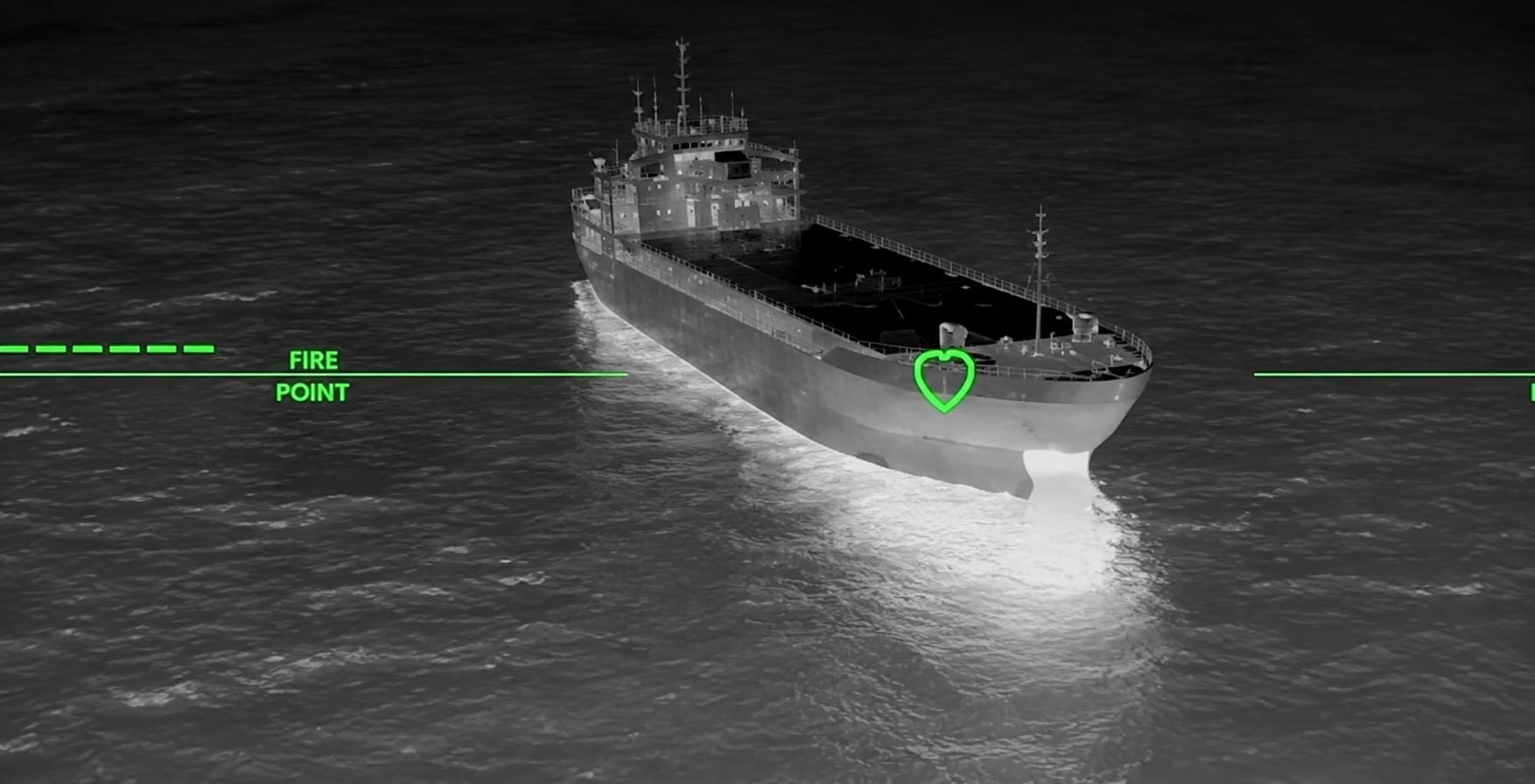
Kyiv says long-range drones struck ships used to transport military cargo between Iran and Russia, as well as a Russian warship and an offshore oil installation. Iran has confirmed that an Iranian commercial vessel was hit, killing one sailor and injuring another, but the relationship between that ship and the vessels identified by Ukraine remains unclear.
President Volodymyr Zelenskyy said Ukrainian forces had achieved “very strong results” against vessels involved in Iran-linked military transport. Ukraine has not disclosed where the drones were launched, the route they followed or released sufficient evidence to establish independently the extent of the damage.
Tehran described the strike as an act of aggression and summoned Ukraine’s chargé d’affaires. Iranian Foreign Minister Abbas Araqchi later told EU foreign policy chief Kaja Kallas that the attack “cannot go unanswered”, bringing Brussels directly into the diplomatic repercussions of the operation.
Araqchi also spoke to Russian Foreign Minister Sergei Lavrov, while accusing Ukraine of widening the geographical scope of the war. Tehran has not specified what form any response might take.
The incident intersects directly with an established EU sanctions policy. Since 2023, the bloc has imposed restrictive measures in response to Iran’s supply of drones and other military assistance for Russia’s war against Ukraine.
In November 2024, the Council expanded the sanctions framework to cover vessels and ports involved in transferring Iranian-made drones, missiles and related components to Russia. The measures included transaction prohibitions affecting the Iranian ports of Amirabad and Anzali and sanctions against three Russian shipping companies, including MG-Flot.
MG-Flot owns Port Olya 2, one of the Russian-flagged cargo ships identified by Ukraine as a target in the Caspian operation.
Ukraine’s military intelligence service classifies Port Olya 2 as a military-cargo carrier, alleging that it has been involved in moving military goods from Iran to Russia. The vessel has operated between Iranian ports and Russia’s Astrakhan region, including the port of Olya.
The second vessel named by Ukraine, Begey, is also registered as a general cargo ship. Ukraine’s intelligence database alleges that it has transported ammunition, shells, body armour and helmets from Iran to Russia, sometimes with its Automatic Identification System switched off.
According to the vessel record maintained by Ukrainian intelligence, Begey made 11 calls at Iranian ports between July 2022 and June 2023, travelling between Iran and Astrakhan. The United Kingdom sanctioned the ship in September 2024 for its role in transporting military supplies from Iran to Russia.
These records provide context for Ukraine’s claim that the ships formed part of a military supply network. They do not establish what either vessel was carrying at the time of the attack, nor do they resolve the identity of the Iranian vessel on which the casualties occurred.
For the EU, the episode illustrates both the reach and the limitations of sanctions. European restrictions can freeze assets, prohibit transactions and prevent EU companies from servicing listed entities or designated ports. They cannot, by themselves, stop non-EU vessels from sailing between Iranian and Russian territory.
The Caspian route is especially difficult to influence through conventional European maritime controls. Ships travelling between northern Iran and Russia do not need to pass through the Turkish Straits or enter waters controlled by an EU or Nato member.
The corridor also forms part of the International North–South Transport Corridor, a wider commercial project connecting Russia, Iran and markets farther south. The same ports and shipping infrastructure can therefore serve legitimate trade as well as movements that Western governments describe as military supply operations.
The Caspian attack introduces physical interdiction into a network that the EU has mainly addressed through financial and commercial restrictions. This does not mean that sanctions have failed: listings can increase costs, deny insurance and services, complicate payments and expose the companies involved. However, the vessels’ continued operation shows that designation does not necessarily remove a ship from service.
The incident also comes as the EU broadens its policy towards Iranian maritime activity. In May, the Council extended its legal framework on Iran to cover actions threatening freedom of navigation in the Middle East. The immediate focus was the Strait of Hormuz rather than the Caspian, but the decision reflects increasing overlap between Iran’s military policy, shipping activity and its relations with Russia.
The legal status of the vessels struck by Ukraine depends on their use at the time. Under the international humanitarian-law definition of a military objective, a civilian object may become targetable when it makes an effective contribution to military action and its destruction offers a definite military advantage.
Previous sanctions and intelligence assessments may contribute to that evaluation, but do not settle it. Any complete legal assessment would also have to examine the available intelligence, expected military advantage, risk to civilian crews and precautions taken before the strike.
For Brussels, the immediate issue is diplomatic. Kallas has been approached by Tehran as Iran considers its response, while the EU remains committed to restricting the military relationship between Iran and Russia.
The broader question is whether the Caspian will remain a viable military logistics route. Ukraine has demonstrated that at least some targets in the region are within the reach of its long-range systems. If such operations continue, the EU’s sanctions regime will operate alongside a Ukrainian campaign intended not merely to restrict the network, but to interrupt it.