
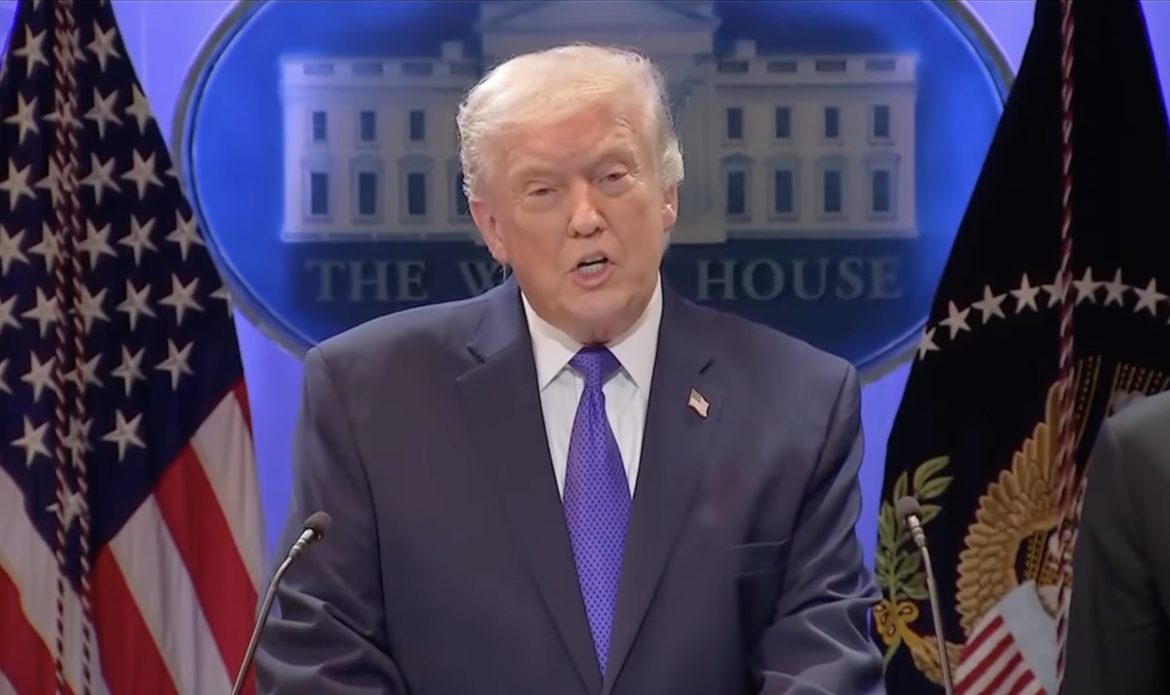
The US Supreme Court’s ruling on 20 February 2026 has changed the legal route for US tariffs, not the underlying risk for European exporters.
Washington’s earlier global tariff regime, built on the International Emergency Economic Powers Act (IEEPA), has been struck down by the Court. But the White House has already replaced it with a new temporary 10 per cent tariff on most imports, using Section 122 of the Trade Act of 1974. The measure is set for 150 days, with effect from 24 February 2026, and includes carve-outs for sectors such as aerospace, pharmaceuticals and critical minerals.
For EU business, this is not a clean reset. It is a legal pivot.
What has changed — and what has not
The Court’s decision removes the IEEPA-based tariff foundation. That is significant because it limits one of the broadest emergency routes used to impose tariffs. Coverage of the ruling notes that the Court held Trump lacked authority under IEEPA to impose those sweeping duties.
What has not changed is the administration’s policy direction. The White House moved immediately to preserve tariff pressure through a different statute, and reporting indicates Trump also signalled the use of other trade tools if needed.
For EU exporters, the practical consequence is straightforward: tariff exposure remains, but the legal basis, duration and implementation mechanics have shifted.
The immediate commercial effect: higher landed costs, quickly
For EU companies selling into the US, the first-order effect is a rise in the landed cost of many goods from the moment the new surcharge is collected.
Because Section 122 is time-limited (150 days), firms should treat the next five months as a concentrated period of repricing, contract review and buyer negotiation, not as a settled long-term tariff regime. That does not mean the risk ends after 150 days. It means the current phase is temporary by law, while the policy direction may continue through other instruments.
The second-order effect: operational uncertainty at the border
The more difficult issue for many firms is not the headline 10 per cent, but customs implementation.
The Supreme Court ruling invalidates the IEEPA-based regime, but practical treatment at the border — including effective dates, entry processing, liquidation timing, documentation and refund handling for previously collected duties — may take time to settle in enforceable practice. Reuters has highlighted the scale of past collections and the uncertainty around refunds.
In that environment, US importers are likely to price for risk. For EU exporters, this usually appears in one of three forms:
delayed orders;
requests for temporary price concessions;
disputes over who bears tariff costs under existing contracts.
What happens to the “old” tariffs
The safest way to describe the position is this: the Court ruling knocks out the IEEPA-based tariffs, but not every tariff already in force under other US laws.
That distinction matters for European business because it affects whether the new 10 per cent functions as a replacement for the struck-down layer, or as a surcharge that can sit alongside other duties that remain lawful under separate statutes. Open reporting on the White House response indicates a rapid substitution strategy rather than a broad retreat from tariffs.
Until US customs guidance settles product-level treatment, prudent firms should model two scenarios:
Risk-averse case: the 10 per cent is broadly additive unless a clear exclusion applies.
Narrower case: the 10 per cent effectively replaces only the voided emergency layer for specific products.
Why refunds matter to EU firms even if they are not the claimant
Any refund process for previously collected IEEPA-based duties is likely to be driven by the US importer of record, not the EU manufacturer. Reuters reporting on the ruling points to the scale of collections and likely disputes over repayment.
That still affects EU suppliers. If US buyers seek refunds, they may also revisit historical pricing, rebates, or tariff pass-through arrangements. In practice, this can reopen commercial terms that had appeared settled.
For business associations, this is a key point to communicate: the legal case is in the US, but the contractual consequences can travel back through transatlantic supply chains.
Brussels’ position: clarity and predictability first
The European Commission’s immediate line has been cautious and technical. Reporting quotes the Commission as saying it is analysing the ruling carefully, remains in contact with Washington, and is seeking clarity on the US response.
That is consistent with the EU’s broader approach over the past year: prepare leverage, but prioritise stable and predictable tariff conditions. Previous coverage of the tariff dispute and the EU’s response has documented both the retaliation track and the effort to preserve a negotiated framework.
For exporters, the message from Brussels is not “relax”; it is “wait for legal and operational detail before making assumptions”.
What EU companies and associations should do now
The next few weeks should be treated as a customs-and-contracts exercise, not just a political story.
Price at tariff-line level, not by headline average.
Sector carve-outs are only useful if your product classification clearly fits the exclusion.Review duty allocation clauses immediately.
Check who is importer of record, which Incoterms apply, and how tariff-change clauses trigger repricing.Prepare for buyer requests linked to refund uncertainty.
Even if you are not claiming refunds, your US customer may try to reopen commercial terms.Track the 150-day clock.
Section 122 is temporary. The strategic risk lies in what follows if Washington shifts to longer-lived tools.
Bottom line
The Supreme Court ruling is a real legal constraint on one form of tariff-making in Washington. It is not a restoration of tariff certainty for EU exporters.
For European business, the new situation is best understood as a short-term surcharge plus medium-term policy risk: immediate cost pressure from the new 10 per cent, combined with unresolved customs practice, refund disputes and the possibility of a second phase under other US trade statutes.
Donald Trumped: US Supreme Court overturns global “reciprocal” tariffs

