
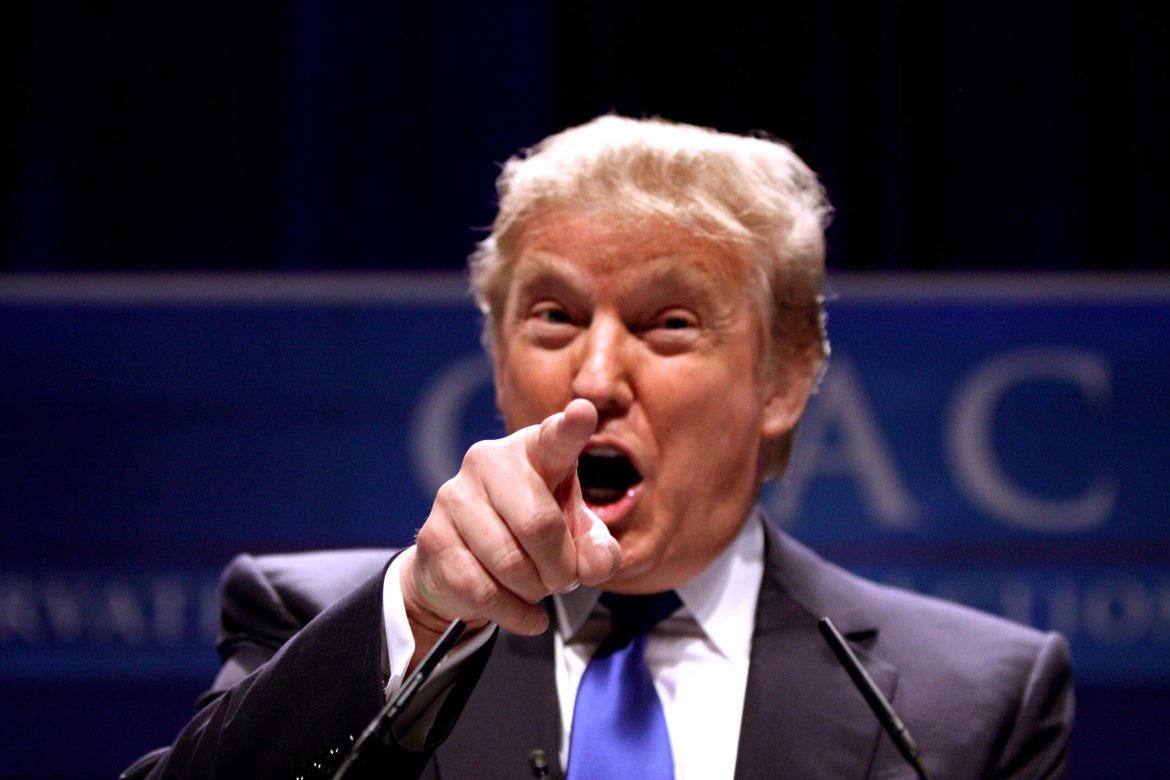
For years, questions surrounding Donald Trump have swirled around Washington in whispers, partisan jibes and late-night television monologues. But the latest intervention comes not from political rivals or media provocateurs, but from some of America’s most senior mental health professionals — and it lands with unusual force.
In a striking declaration published by the British Medical Journal (BMJ), thirty psychiatrists, psychoanalysts and physicians specialising in mental health have publicly concluded that the American president is mentally unfit to serve. Their language is uncompromising, their warnings stark, and the implications potentially historic.
The signatories argue that Mr Trump’s recent behaviour demonstrates what they describe as “objectively observable signs of serious medical concern,” including declining cognitive function, impaired impulse control, episodes of apparent confusion and grandiose thinking bordering on delusion. They go further still, urging the invocation of the 25th Amendment of the United States Constitution — the extraordinary mechanism allowing a president to be removed from power if judged incapable of fulfilling the duties of office.
Such a public intervention by medical professionals is almost without precedent in modern American politics. It also reflects a growing unease that has spread far beyond the usual ideological battlegrounds of Washington.
The doctors’ statement reportedly cites episodes in which the president appeared disengaged during major public proceedings, displayed erratic emotional reactions, and increasingly portrayed himself in quasi-messianic terms. Particularly alarming to the signatories were comments and online posts linked to escalating tensions with Iran, including rhetoric they believed hinted at catastrophic military escalation.
One of the physicians involved, Professor Henry David Abraham of Tufts University School of Medicine, warned that the issue was no longer simply political theatre but one of global security.
That concern rests on a chilling reality unique to the American presidency: the occupant of the Oval Office retains sole authority over the launch of nuclear weapons. In the view of these clinicians, the concentration of such power in the hands of a leader they consider psychologically unstable presents a profound risk not merely to the United States, but to the wider world.
Critics will immediately raise the ethical dilemma of psychiatrists diagnosing a public figure from afar. The so-called “Goldwater Rule”, adopted by the American Psychiatric Association after the 1964 presidential campaign, discourages psychiatrists from offering professional opinions on individuals they have not personally examined.
Yet the doctors involved argue that the scale of the danger overrides traditional caution. Several insist they are not issuing a partisan attack, but fulfilling what they regard as a moral and professional duty to warn the public when observable behaviour suggests serious impairment.
That distinction matters. America has become so poisoned by tribal politics that almost any criticism of Mr Trump is instantly dismissed by supporters as elite hysteria. But the breadth of the coalition involved here complicates that familiar narrative. According to the statement, signatories include Republicans as well as Democrats, conservatives alongside liberals, united less by ideology than by alarm.
Whether one agrees with their conclusions or not, it is difficult to ignore how dramatically the political atmosphere has shifted. A decade ago, discussions about presidential mental fitness largely existed on the fringes. Today, they sit at the centre of geopolitical anxiety.
Nor is this merely about eccentricity or unconventional behaviour. American voters have long tolerated presidents with outsized egos and volatile temperaments. What concerns critics now is the perception of visible deterioration — moments where confusion, rage, impulsiveness or detachment appear increasingly difficult to disguise.
The White House, unsurprisingly, has yet to offer substantive comment on the doctors’ claims. Trump allies have dismissed similar criticisms in the past as politically motivated attacks masquerading as medical analysis. They point instead to his stamina on the campaign trail, his instinctive connection with supporters and his continuing dominance over the Republican Party.
Indeed, one of the enduring political facts of the Trump era is that scandal rarely weakens him among his core base. If anything, attacks from establishment institutions often reinforce his image as a populist insurgent battling entrenched elites.
Yet there is a broader issue at play here, one extending beyond the fortunes of a single politician. The American constitutional system was built on assumptions of restraint, stability and institutional trust. Increasingly, those assumptions look fragile.
The 25th Amendment itself was designed as a safeguard for moments of genuine incapacity — assassination attempts, strokes, severe illness or catastrophic decline. To invoke it against a sitting president over mental fitness would plunge America into constitutional turmoil on a scale unseen in living memory.
And still, the fact that respected medical figures are openly discussing such a step illustrates how extraordinary the present moment has become.
America’s allies, meanwhile, watch nervously. European diplomats, defence officials and intelligence services have spent years privately wrestling with the unpredictability of the Trump presidency. Concerns over NATO, Ukraine, Iran and nuclear doctrine are no longer theoretical abstractions; they shape strategic planning across the Western alliance.
For Britain and Europe, the deeper worry is not merely one man’s temperament but the vulnerability of democratic systems to instability at the very top. The presidency of the United States remains the most powerful office on earth. Any suggestion that its holder may be psychologically compromised inevitably reverberates far beyond Washington.
Ultimately, voters — not psychiatrists — will determine Donald Trump’s political future. But the intervention published this week ensures that the question of his fitness for office can no longer be dismissed as fringe speculation.
It is now part of the mainstream political conversation, with consequences that may reach far beyond the next election.
Click here for more News & Current Affairs at EU Today
Click here to check out EU TODAY’S SPORTS PAGE!
___________________________________________________________________________________________________________________

