
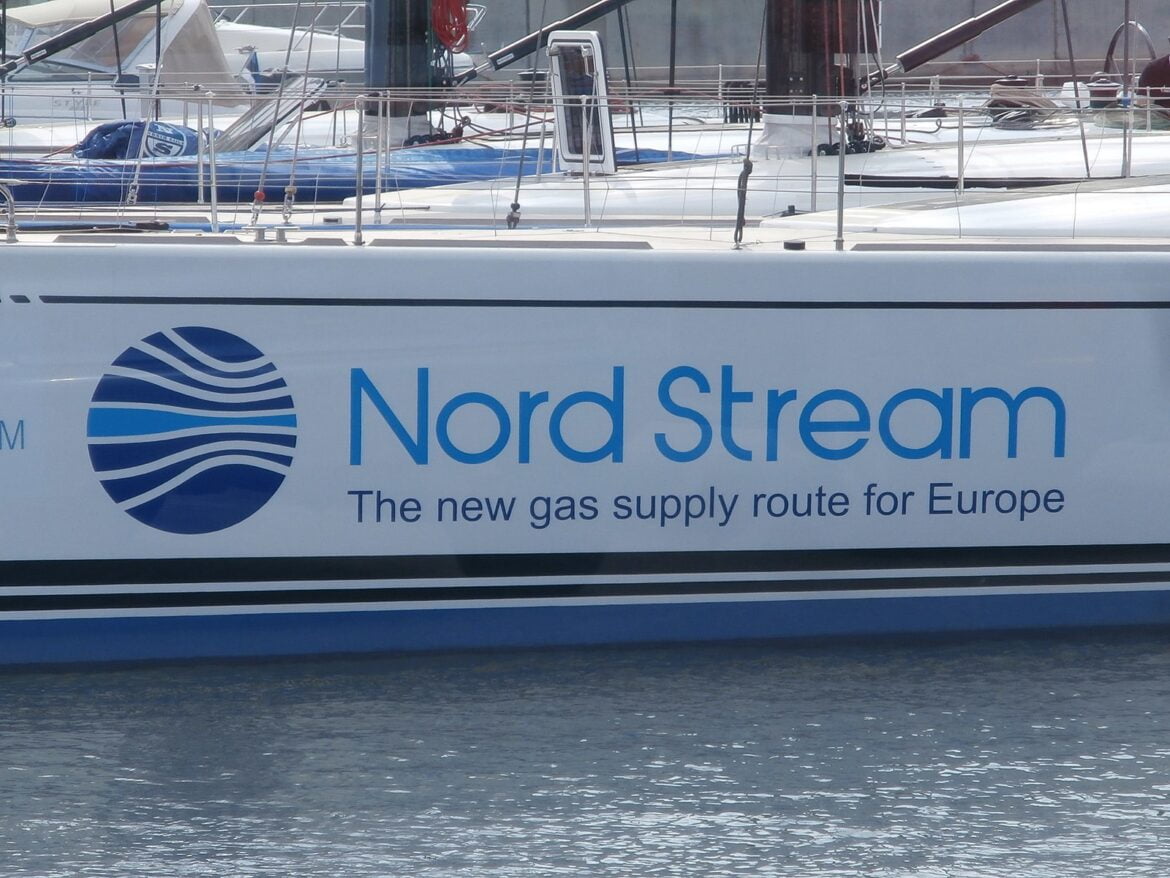
Nord Stream 2 AG’s legal challenge turns the EU’s Russian gas phase-out into a test of Brussels’ authority to use internal-market and trade tools where sanctions would require unanimity.
Nord Stream 2 AG has taken the European Union to court over the bloc’s binding phase-out of Russian gas imports, opening a legal front against one of Brussels’ central post-2022 energy-security measures.
Reuters reported on 23 June, citing public EU court documentation, that the company is asking the EU General Court to annul the regulation requiring Russian gas imports to end by the close of 2027. The case gives legal form to a political fight that has been building since the EU decided to make its break with Russian gas permanent rather than temporary.
The dispute is not only about a pipeline that never entered commercial operation. It is about the legal basis of the EU’s energy decoupling from Russia, and whether Brussels was entitled to use legislation that could pass without unanimous approval from all member states.
A Legal Challenge to Energy Decoupling
The EU’s Russian gas phase-out was designed to close a remaining gap in the bloc’s sanctions and energy-security architecture. Since Russia’s full-scale invasion of Ukraine in 2022, Brussels has cut most Russian fossil-fuel imports, diversified gas supplies, expanded LNG purchases from other partners and accelerated its REPowerEU strategy to reduce dependence on Moscow.
But gas has always been harder than coal or seaborne oil. Some member states remained exposed to Russian pipeline supplies, while others continued to receive Russian LNG. That made a classic sanctions route politically difficult, because EU sanctions require unanimity and can be blocked by governments with a direct national interest in continued imports.
The gas phase-out instead became a broader energy and market measure, allowing the EU to proceed through a different legal route. That is the core vulnerability Nord Stream 2 AG is now testing. If the court finds that Brussels used the wrong legal basis, the case could complicate one of the EU’s most politically important energy decisions.
Why Nord Stream 2 Still Matters
Nord Stream 2 was completed but never certified for operation after Russia’s invasion of Ukraine transformed Europe’s security environment. Germany suspended the certification process in February 2022, and the pipeline later became a symbol of Europe’s pre-war dependence on Russian energy.
The company behind the pipeline has already fought legal battles linked to EU energy rules. Its new challenge is different because it targets the bloc’s decision to remove Russian gas from the EU market altogether.
For Brussels, that distinction matters. The EU is not merely regulating one pipeline or one company. It is trying to establish that Russian gas itself represents a structural security risk after years in which Moscow used energy supply as political leverage.
New EU Today White Paper examines fossil energy as a weapon of war and coercion
That argument is politically powerful. In court, however, the question may be narrower: whether the EU institutionally chose the right legal instrument for a measure with sanctions-like consequences.
Unanimity by Another Route?
The strongest political criticism of the phase-out has come from governments and companies that argue Brussels is using market legislation to achieve what should properly be done through sanctions. The practical difference is decisive. Sanctions require unanimity among member states. Internal-market or trade legislation can usually be adopted by qualified majority.
That is why the Nord Stream 2 case matters beyond the company itself. If the court accepts that the measure is in substance a sanctions decision, the EU could face pressure to justify why it bypassed the unanimity threshold. If the court upholds the regulation, Brussels will have stronger legal backing for using market-based instruments to reduce strategic dependencies.
The case therefore sits at the intersection of energy security, Russia policy and EU institutional power. It also raises a compensation question. Companies with contracts, infrastructure exposure or commercial losses may try to argue that the phase-out interferes with protected economic interests.
That does not mean such claims will succeed. EU courts often give institutions broad discretion in areas involving security, external policy and market regulation. But litigation can still slow implementation, sharpen political divisions and create uncertainty for companies planning around the 2027 deadline.
A Test for Post-2022 Europe
The EU has repeatedly argued that ending Russian fossil-fuel dependence is necessary because energy imports have helped finance Moscow’s war economy. The Guardian reported last year that the Commission wanted the ban to remain even in the event of a future peace settlement in Ukraine, framing the break with Russian gas as permanent energy independence rather than temporary crisis management.
That permanence is exactly what makes the court case important. A short emergency measure can be defended as crisis response. A binding phase-out by 2027 is a structural change in the European energy market.
If Nord Stream 2 AG’s challenge fails, Brussels will be able to argue that its post-2022 energy-security policy rests on firm legal ground. If the case exposes weakness in the legal basis, opponents of the Russian gas ban may gain a new route to challenge or delay the phase-out.
Either way, the lawsuit shows that Europe’s energy break with Russia is no longer only a matter of pipelines, storage levels and alternative suppliers. It is now also a court battle over how far the EU can go when energy dependence becomes a security threat.

