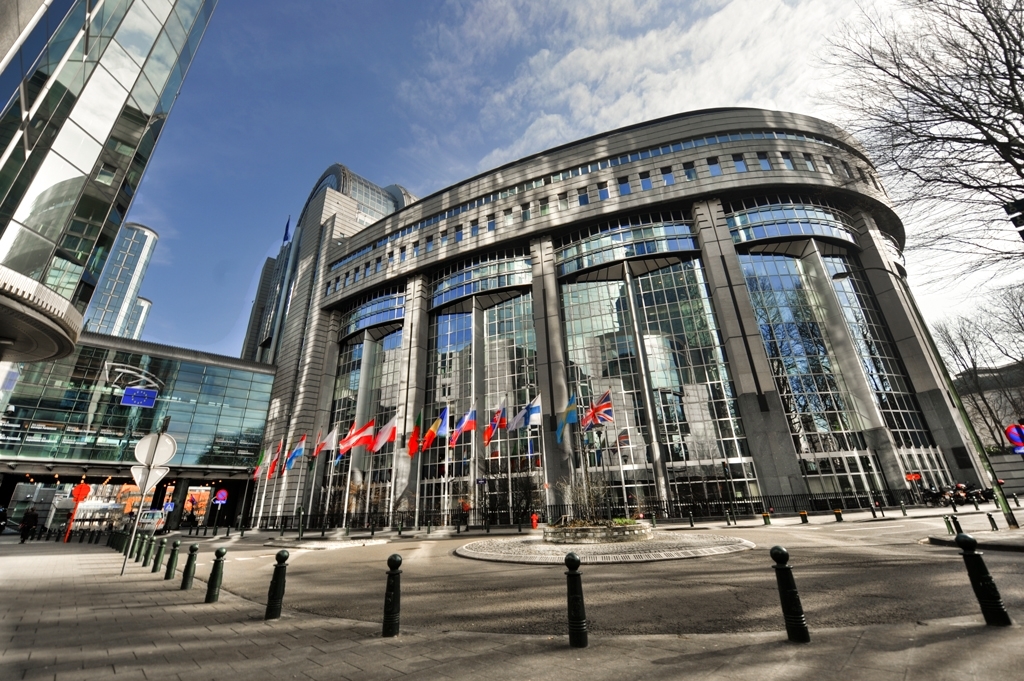
As European Parliamentarians return to Brussels following the Easter recess, the week ahead promises no shortage of high-stakes deliberations, ambitious policy proposals, and a familiar dose of bureaucratic theatre.
From the labyrinthine negotiations over the bloc’s long-term budget to the sharpening focus on Europe’s defence capabilities and gas security, MEPs will have their hands full navigating a political landscape defined by crisis readiness, fiscal reform and simmering geopolitical tensions.
On Wednesday, the Committee on Budgets will present its vision for the EU’s next Multiannual Financial Framework (MFF), covering the period post-2027. With the ink barely dry on recent budgetary firefighting measures, MEPs are now turning their gaze to the next long-term plan—one that aims to better align financial instruments with Europe’s evolving political agenda.
At the heart of the committee’s proposal is a demand for greater flexibility in EU spending, a move designed to equip the bloc with the fiscal firepower to respond more swiftly to crises ranging from pandemics to geopolitical shocks. The COVID-era recovery fund and the cost-of-living crunch sparked by the war in Ukraine have already demonstrated the limitations of the current framework.
But beyond flexibility, the Parliament is also expected to call for simplification and transparency in budgetary procedures—code, in part, for a more robust approach to safeguarding funds from misuse and rule-of-law breaches. Poland and Hungary, already on the radar of EU watchdogs, will no doubt be watching these debates closely.
It’s a debate that cuts to the very core of the EU’s legitimacy: how to finance an increasingly ambitious policy agenda—green transition, digital transformation, defence—while avoiding the twin political perils of waste and overreach.
Brussels Flexes its Military Muscles
Thursday will see two key committees—Security and Defence, and Industry, Research and Energy—unite in pursuit of a common cause: fortifying the European Defence Industry.
The focus is the European Defence Industry Programme (EDIP), a flagship initiative aimed at enhancing the bloc’s defence readiness. The draft regulation under discussion this week seeks to underpin the EU’s military supply chains, ensuring both availability and technological independence for Europe’s beleaguered defence sector.
The political backdrop here is unavoidable: Russia’s invasion of Ukraine has shattered any illusions about strategic stability on the continent. The message from Brussels is that Europe must now “take its fate into its own hands,” as Emmanuel Macron might put it. The proposed regulation includes not just financial support but also regulatory streamlining—intended to foster innovation and coordination among defence firms across the Union.
Critics warn, however, that such efforts risk duplicating NATO structures or becoming mired in infighting between member states over procurement and industrial priorities. Still, the Parliament’s commitment to bolstering “European sovereignty” in defence has rarely looked firmer.
Gas Security Gets a Second Look
Also on Thursday, the Industry, Research and Energy Committee will vote on whether to extend the EU’s gas storage rules introduced in the wake of Russia’s energy blackmail.
The 2022 Gas Storage Regulation—adopted as Moscow weaponised gas supplies—mandated that member states fill storage facilities ahead of each winter. That policy played a key role in avoiding an energy crisis last year, despite record prices and supply uncertainty.
Now, the Commission is seeking to prolong the scheme while introducing more flexibility to minimise market distortions and keep consumer prices in check. Supporters argue it’s a prudent hedge against continued instability in the global energy markets; sceptics say it could mask deeper structural failings in Europe’s energy strategy.
Either way, expect sparks to fly as lawmakers debate the balance between security of supply and market efficiency.
Border Controls and Digital Passports
Migration and border management return to the agenda on Wednesday with a Civil Liberties Committee vote on the new Entry/Exit System (EES), a long-delayed database designed to track non-EU nationals entering and leaving the bloc.
The system—essentially a digital log of arrivals, departures and refused entries—is part of the EU’s broader push to modernise border controls and enhance internal security. Once operational, it will replace the current manual stamping of passports with an automated system capable of storing biometric data and movement histories.
The proposal before the committee allows for a phased rollout of the system by member states, a recognition of the considerable technical hurdles many capitals still face. Privacy advocates are likely to raise concerns over data protection, while national authorities will be eager to avoid further delays—especially with the migration debate as politically charged as ever.
Also under discussion will be the EU’s Digital Travel Credentials initiative, another plank in the bloc’s efforts to digitise border procedures. Whether this spells genuine modernisation or simply more red tape remains to be seen.
Democracy and Digital Oversight
Further afield from the economic and security dossiers, MEPs will also wade into thorny issues of democratic governance and data protection.
Tuesday sees the Civil Liberties Committee reconvene its Democracy, Rule of Law and Fundamental Rights Monitoring Group to scrutinise member state compliance with EU law and court rulings. Expect renewed friction over the enforcement of European Court of Justice (CJEU) and European Court of Human Rights (ECHR) decisions—particularly in countries already under the EU’s rule-of-law spotlight.
Wednesday will also feature presentations from the European Data Protection Board and the European Data Protection Supervisor, both of whom will unveil their annual reports. The discussions are likely to zero in on enforcement challenges, cross-border data transfers, and the implementation of the Artificial Intelligence Act—a legislative behemoth in its own right.
Meanwhile, corruption will be under the microscope as MEPs assess a new directive designed to replace outdated Council decisions and conventions. The aim? Strengthening anti-graft frameworks across the Union and harmonising penalties for officials caught engaging in corrupt practices.
Climate Talks and Global Biodiversity
On the environmental front, the Committee on the Environment, Climate and Food Safety will meet Wednesday afternoon for a double-header of exchanges with the Commission. First on the docket is a preparatory session ahead of COP30, the next major global climate summit. MEPs will also review the outcomes of COP16 on biological diversity.
With the EU keen to present itself as a global climate leader, these hearings will serve as both a stocktaking exercise and an opportunity to press the Commission on its international diplomacy efforts.
Expect talk of nature restoration, emissions cuts, and financing commitments—alongside the usual tensions between climate ambition and agricultural, industrial, and energy realities.
Metsola in Prague: Diplomacy on the Danube
Beyond committee rooms and plenary corridors, European Parliament President Roberta Metsola will step onto the diplomatic stage this week with a visit to the Czech Republic.
On Wednesday, she will meet with Markéta Pekarová Adamová, Speaker of the Czech Chamber of Deputies, before holding a joint press point. Later that day, Metsola is scheduled to meet Czech Prime Minister Petr Fiala, followed by a bilateral press conference.
Her visit continues on Thursday with a meeting with Miloš Vystrčil, President of the Czech Senate. Metsola’s diplomatic outreach reflects the Parliament’s efforts to reinforce ties with national parliaments and bolster the EU’s institutional legitimacy amid growing scepticism in some member states.
The Week Ahead: Complexity as Usual
If the week ahead demonstrates anything, it is that Brussels continues to juggle a dizzying array of files, from the granular to the geopolitical. As ever, much of the action takes place in committee rooms and behind closed doors, far from the limelight. Yet the decisions taken—or postponed—this week will have profound consequences for the future direction of the Union, from how it spends its money to how it defends its borders and its ideals.
In typical EU fashion, the debates will be dense, the language careful, and the conclusions open to interpretation. But beneath the surface lies a continent attempting to steel itself for a more volatile and uncertain world. Europe may not yet speak with one voice—but in Brussels this week, it will certainly have a great deal to say.