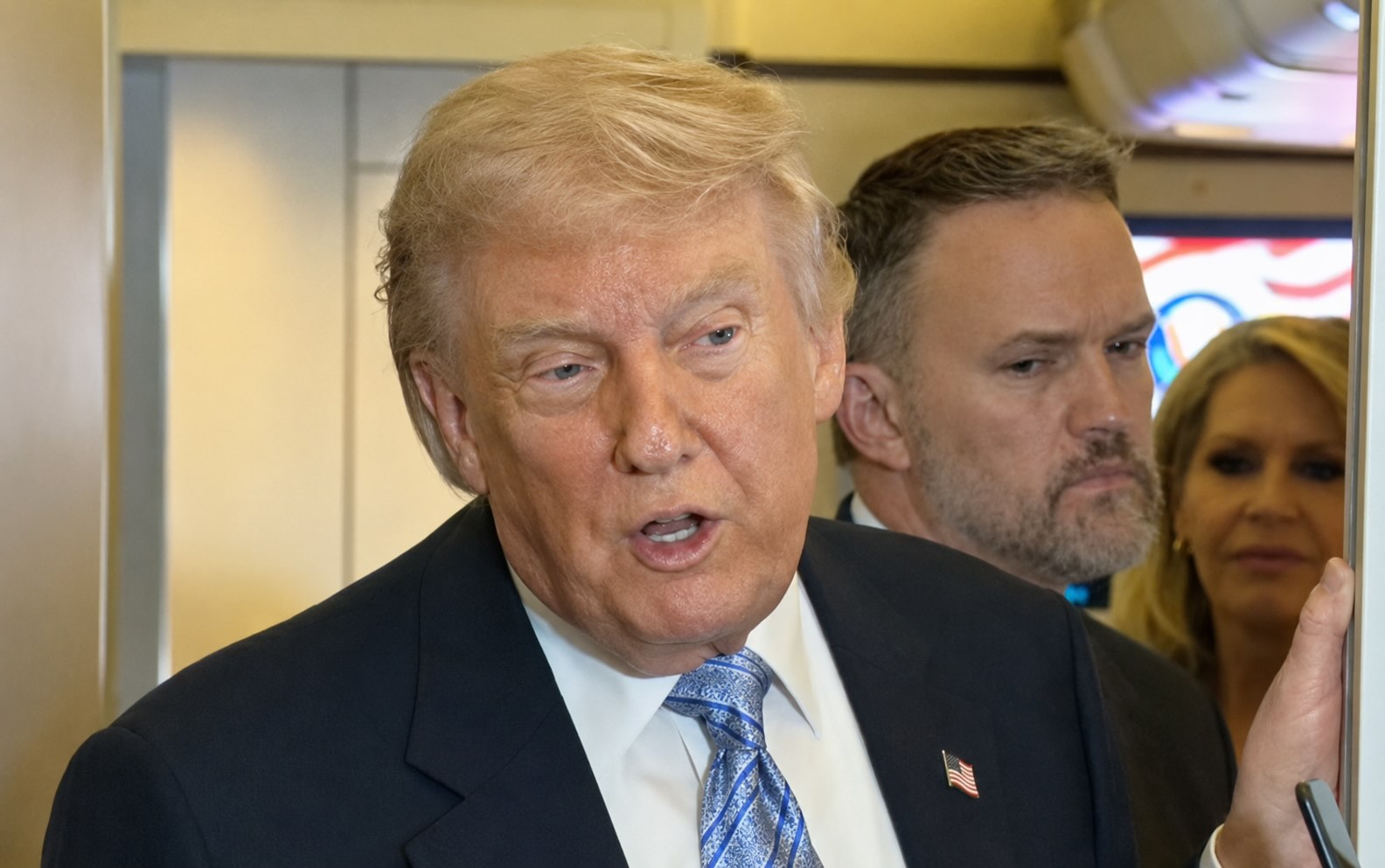
Donald Trump’s talks with Xi Jinping have placed China at the centre of efforts to reopen the Strait of Hormuz, while also raising questions over whether Washington may soften sanctions pressure on Chinese firms buying Iranian oil.
President Donald Trump has said Chinese President Xi Jinping agreed that Iran must reopen the Strait of Hormuz, after months of disruption to one of the world’s most important energy routes following the war with Iran.
Speaking after talks in Beijing, Trump said Xi had accepted that Tehran should reopen the strait, while also indicating that he was considering whether to lift US sanctions on Chinese companies that buy Iranian oil. The remarks have turned the Hormuz crisis into a test of Washington’s sanctions policy, Beijing’s leverage over Tehran, and Europe’s exposure to a prolonged energy shock.
The Strait of Hormuz is the narrow maritime passage between Iran and Oman through which a significant share of global oil and liquefied natural gas supplies normally moves. Its disruption has affected energy prices, shipping routes and market confidence, with direct consequences for European consumers, businesses and governments already dealing with higher security and defence costs.
Trump said, during his return from China, that Xi had agreed Iran must reopen the waterway, but Beijing’s own public position was more cautious. China’s foreign ministry said the war should not have started and that there was no reason for it to continue, but it stopped short of adopting Washington’s language of pressure on Tehran. The difference matters because China is one of the main buyers of Iranian oil and has more economic influence over Tehran than most Western governments.
The United States is trying to use that influence without surrendering sanctions leverage. Trump said he had discussed the possibility of lifting sanctions on Chinese companies that purchase Iranian oil and would make a decision within days. The sanctions question is politically sensitive because Washington has repeatedly used restrictions on oil trade as a tool to limit Iran’s revenue and constrain its regional and nuclear ambitions.
For Europe, the immediate issue is not only whether Hormuz reopens, but under what political terms. If China helps persuade Iran to restore shipping flows, Beijing could strengthen its position as a diplomatic broker in a crisis that directly affects Western energy markets. If, however, Washington eases sanctions on Chinese buyers in order to secure movement from Tehran, European capitals may face a familiar dilemma: relief in energy markets at the cost of a less coherent sanctions regime.
The issue also exposes the limits of Western pressure when major non-Western economies continue to buy sanctioned energy. China’s demand for Iranian oil has given Beijing a practical channel to Tehran. That same relationship makes it difficult for Washington to force a settlement without discussing the status of Chinese firms involved in Iranian crude purchases.
Iran has not accepted US terms. Tehran has linked reopening the strait to American actions, including an end to what it describes as a blockade of Iranian ports. Iranian officials have also continued to resist US demands over the country’s nuclear programme, while signalling that they remain open to negotiations if they believe Washington is serious. Trump, for his part, has said Iran must “make a deal”, while also insisting that any nuclear limits must be genuine and verifiable. The latest exchange was reported after the Beijing talks.
The diplomatic picture is complicated further by Oman’s position. The strait lies between Iran and Oman, and Muscat has traditionally played a quiet mediating role between Tehran and Western governments. Recent Iranian claims about coordination with Oman over control of the strait have drawn attention to the legal and political stakes around freedom of navigation. Any arrangement that allowed Iran to profit from or restrict passage would be watched closely by shipping companies, insurers, energy traders and governments.
Europe has limited direct leverage over this dispute, but high exposure to the consequences. Oil-market disruption feeds into fuel prices, inflation expectations, aviation costs, industrial production and public finances. A prolonged Hormuz crisis would also affect European debates over energy security, strategic reserves, alternative routes, and dependence on external suppliers whose policies are shaped outside Brussels.
The crisis also comes at a moment when European governments are being asked to spend more on defence, support Ukraine, manage sanctions enforcement and absorb wider economic pressure from global instability. A fresh energy shock would therefore not remain a foreign-policy story. It would enter domestic politics through prices, budgets and business costs.
Trump’s comments suggest that Washington sees Beijing as a necessary intermediary in the Hormuz crisis. That may be realistic, given China’s relationship with Iran and its own dependence on Gulf energy. But it also confirms that Europe’s energy security can be heavily affected by decisions made in negotiations where the EU is not the principal actor.
The immediate question is whether China will use its influence to help reopen the waterway without weakening sanctions pressure on Iran. The longer-term question is whether the crisis will leave Beijing with greater diplomatic weight in the Gulf, while Europe remains exposed to the market consequences of decisions taken by Washington, Tehran and Beijing.
For European policymakers, the lesson is already clear. The Strait of Hormuz is not a distant maritime chokepoint. It is a direct line into Europe’s inflation, energy security, foreign policy and strategic autonomy debates.