The two-week ceasefire announced between the United States and Iran prevented what had appeared, only hours earlier, to be a major new escalation in the Middle East.
President Donald Trump presented the development as a breakthrough, linked it to the reopening of the Strait of Hormuz, and suggested that final arrangements to end the conflict could now be negotiated. The first visible consequence was on the energy market, where oil prices moved sharply lower almost immediately after the ceasefire announcement.
Yet the suspension of hostilities does not in itself amount to a strategic victory. Both sides have claimed success, but the central question is whether the principal war aims of the United States and Israel were actually achieved. On that point, the answer remains far from clear. The ceasefire may have halted a dangerous phase of the conflict, but it has not demonstrated that the operation accomplished the objectives for which it was launched. Even the arrangement itself appears temporary and conditional, not final.
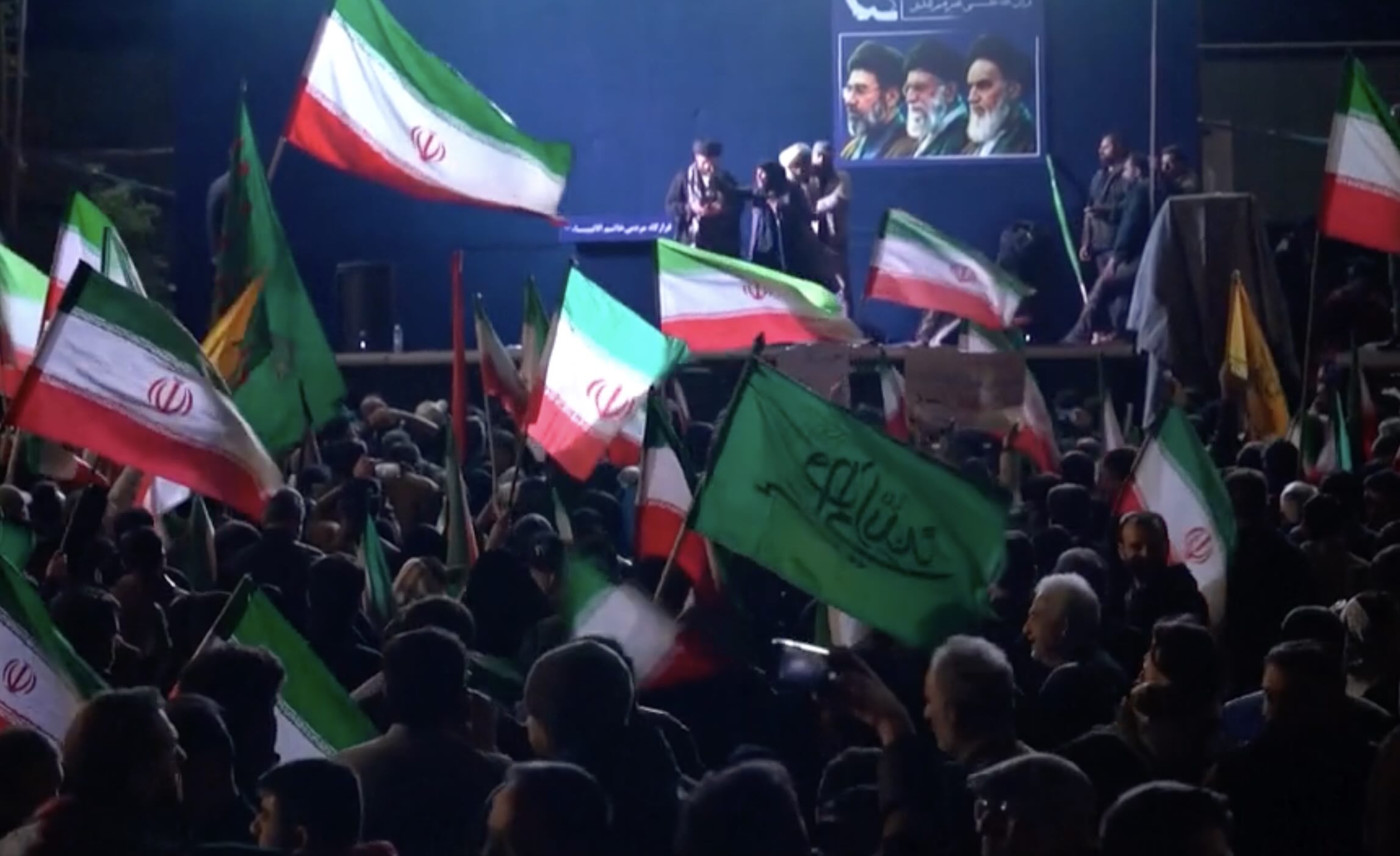
The first of those objectives was widely understood to be a fundamental weakening of the Iranian regime, if not outright regime change. That did not happen. Iran’s political system remains in place, its governing structure has not collapsed, and the authorities in Tehran have used the ceasefire to present the outcome as a domestic victory. In practical terms, the regime survived the confrontation and is now in a position to argue to its own population that it withstood pressure from both Washington and Israel. That alone makes claims of a decisive result difficult to sustain.
A second stated objective was the destruction, or at least irreversible crippling, of Iran’s nuclear programme. But a ceasefire does not settle the nuclear issue. At most, it postpones the question. It remains unclear what damage was done to Iran’s nuclear infrastructure, whether enriched uranium stockpiles were fully located, and what inspection mechanism could now credibly verify Iranian compliance in the future. The issue of nuclear materials and verification therefore remains unresolved, despite the language of success used in Washington.
That is a central weakness in the current settlement. If there is no reliable system for confirming the location of enriched uranium, the status of Iran’s facilities, and the real extent of any surviving capability, then the diplomatic track rests once again on declarations rather than verifiable facts. Iran may repeat that it has no intention of producing a nuclear weapon, but that is not the same as a settlement built on enforceable inspection. A pause in bombing is not, by itself, proof that the underlying problem has been removed.
The same uncertainty surrounds Iran’s missile capability. Early claims that Iran’s missile infrastructure had been severely degraded have been followed by a more cautious picture, with suggestions that substantial elements of its launch capacity may have survived. If that proves correct, then one of the other central military objectives of the campaign — neutralising Iran’s ability to threaten regional targets — was only partially achieved. The war may have inflicted damage, but it has not yet been shown that Iran lost its strategic deterrent in any lasting sense.
Trump has also presented the reopening of Hormuz as a success. But that argument is open to challenge. The strait was not the original reason for the war, and its closure or restriction emerged as part of the conflict rather than as a pre-existing strategic failure. The economic relief caused by the reopening is real enough, as shown by the rapid fall in crude prices, but that does not mean the wider political balance has shifted decisively in Washington’s favour. It may simply mean that markets are reacting to the temporary avoidance of a larger disruption.
The ceasefire also leaves unresolved the broader question of regional security. The conflict exposed the vulnerability of the Gulf, the fragility of energy routes, and the speed with which military escalation can affect not only Israel and Iran but also the wider economic system. If Gulf states now conclude that they are more exposed than previously assumed to missile, drone and maritime disruption, that will alter investment and security calculations across the region. What has been avoided for now is not strategic transformation, but immediate escalation.
There are also obvious questions about how the ceasefire was reached and managed. The arrangement emerged through outside mediation, and its terms appear to have been shaped more by urgent de-escalation than by any settled diplomatic architecture. It has also remained uncertain how far the truce extends beyond the direct US-Iran front, particularly in relation to Israel’s wider regional confrontation. That ambiguity reinforces the sense that this is not a comprehensive peace arrangement, but an improvised pause whose durability remains in doubt.
The conflict may also have geopolitical consequences that extend well beyond Iran itself. External powers with leverage in Tehran now have greater room to present themselves as necessary intermediaries or stabilisers. If Washington’s conduct of the crisis is viewed by partners as abrupt, unilateral or insufficiently co-ordinated, then the outcome may be to widen diplomatic space for alternative centres of influence, particularly in the Gulf and the wider Middle East.
For Europe and Ukraine, the most immediate consequence is economic. A fall in oil prices reduces some of the temporary benefit that Russia gains when crude prices surge during a Middle Eastern crisis. At the same time, the episode is likely to sharpen European concerns about strategic autonomy, alliance reliability and the consequences of sudden shifts in Washington’s policy. The ceasefire may have reduced the immediate risk of a broader war, but it has not removed the wider instability that made such a conflict possible.
The most accurate conclusion at this stage is that escalation has been postponed, not that the conflict has been settled. Trump can claim that he prevented a wider disaster and restored short-term calm. But the larger issues — the survival of the Iranian regime, the future of its nuclear programme, the resilience of its missile arsenal, and the balance of power in the Gulf — remain open. For that reason, the present ceasefire is best understood not as a final victory, but as a temporary and still uncertain pause in a conflict whose decisive phase may still lie ahead.