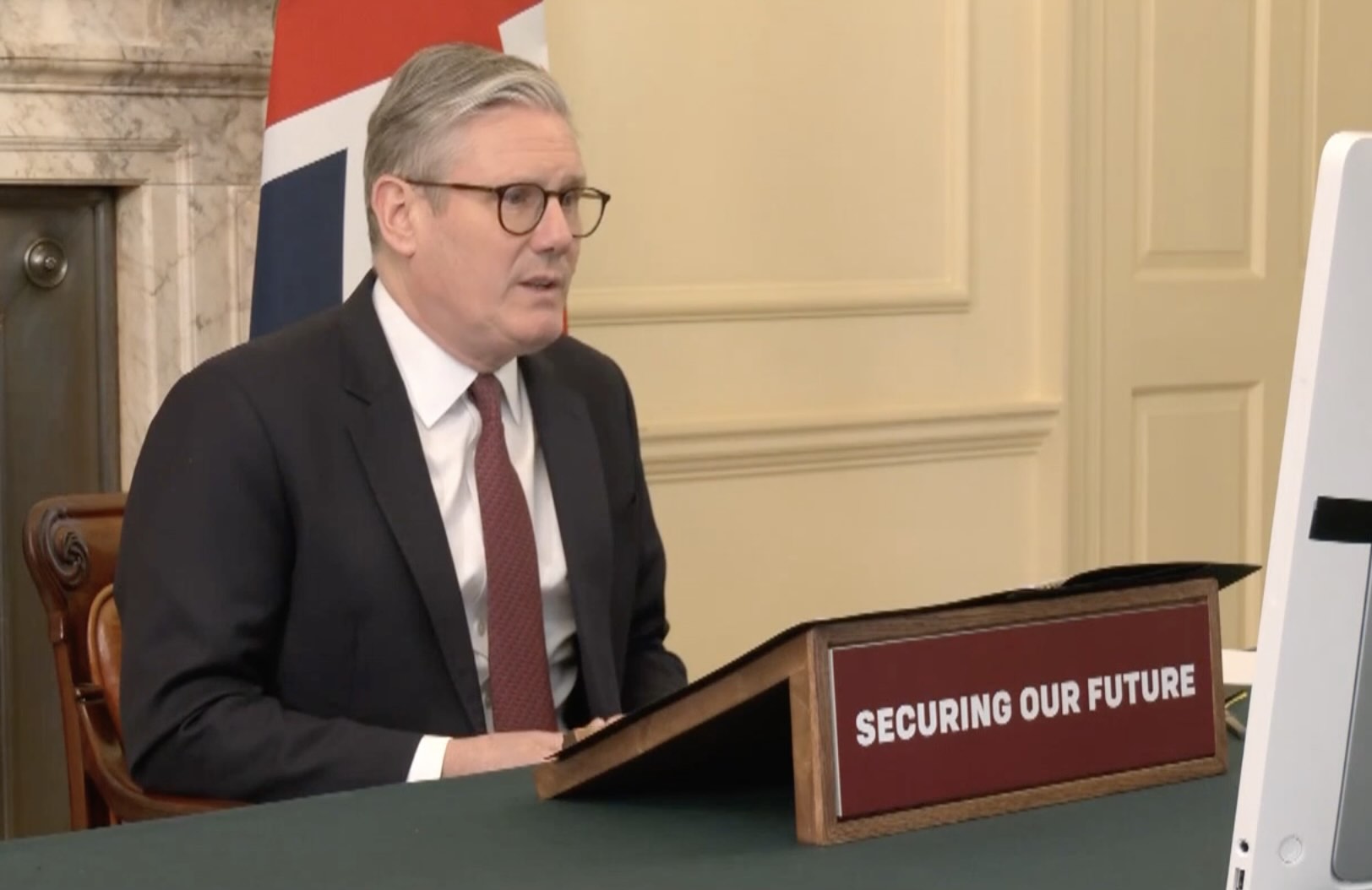
UK Prime Minister Sir Keir Starmer has reiterated calls for increased pressure on Russian President Vladimir Putin to agree to an immediate and unconditional ceasefire in Ukraine.
Speaking after convening a virtual summit of world leaders, Starmer emphasised the need for military and diplomatic measures to compel Russia to negotiate in good faith.
The meeting, which brought together representatives from Europe, North America, and other key allies, focused on forming a “coalition of the willing” to support Ukraine’s security both in the immediate term and in a potential post-war settlement.
Starmer revealed that Western military leaders are scheduled to meet on Thursday to discuss operational strategies.
Ceasefire Conditions and Putin’s Response
The summit follows recent talks in Saudi Arabia, where Ukrainian President Volodymyr Zelenskyy endorsed a 30-day unconditional ceasefire proposed by the United States.
However, Starmer accused Putin of “trying to delay” and using negotiations as a stalling tactic while continuing military operations.
“My feeling is that sooner or later he’s going to have to come to the table and engage in serious discussion,” Starmer said. “But we can’t sit back and simply wait for that to happen. We have to keep pushing ahead, preparing for a peace that will be secure and lasting.”
Zelenskyy echoed this sentiment, stating that “strong pressure” must be applied to Russia. He accused Putin of “lying about the situation on the ground” and attempting to “sabotage” ceasefire negotiations. The Ukrainian leader stressed that peace is achievable if international allies remain committed to ensuring that “the aggressor gains nothing from this war.”
Composition of the ‘Coalition of the Willing’
While Downing Street has remained cautious about revealing precise commitments from participating nations, it confirmed that leaders from Australia, Canada, the EU, NATO, and multiple European countries joined the call. Notably, the meeting included French President Emmanuel Macron, German Chancellor Olaf Scholz, and NATO Secretary General Mark Rutte.
The coalition aims to provide a robust framework for Ukraine’s long-term security, with discussions centred on military assistance, sanctions enforcement, and potential deployment of peacekeeping forces should a ceasefire be agreed.
Military and Economic Measures
Starmer outlined two key strategies to pressure Moscow: increasing Ukraine’s military capability and tightening sanctions.
He confirmed that new military commitments were made during the summit, though details remain undisclosed.
The UK, he said, is “prepared to play a leading role” in a peacekeeping force, with European nations contributing various capabilities.
Regarding sanctions, Starmer indicated that leaders discussed “further measures” targeting Russian assets, including the possibility of using frozen assets to finance Ukraine’s reconstruction.
“We want to tighten sanctions still further,” he stated, adding that discussions on alternative legal pathways to ensure Russia pays for war damages will continue.
US Role and Trump’s Position
When asked about the role of the United States in the coalition, Starmer assured reporters that the UK remains in close dialogue with Washington.
He dismissed concerns over US President Donald Trump’s fluctuating stance on the war, stating that he is “absolutely committed to a lasting peace.”
However, questions remain about the extent of US support for a European-led peacekeeping mission.
Challenges Ahead
While many European nations have signalled support for the initiative, divisions persist. Some countries, including Hungary and Slovakia, have been hesitant to endorse stronger military involvement.
Analysts suggest that while major Western European nations, along with Poland and the Baltic states, are aligned on aiding Ukraine, securing a broader consensus on troop deployments may prove difficult.
As discussions move into an operational phase, the next test will be translating political commitments into concrete action. Starmer’s insistence that “the guns must fall silent” underscores the urgency, but whether Putin will heed the pressure remains uncertain.
Western military leaders will reconvene next week to advance the coalition’s planning, with further discussions expected in the coming days to solidify security guarantees for Ukraine.
Read also:
Trump’s Plea to Putin Based on False Reports of Ukrainian Troop Trap