The circumstances surrounding the knife attack on 18-year-old student Henry Nowak by an Asian man brutally exposed the two-tier policing system currently operating in Britain today. A dying victim handcuffed on the ground while the perpetrator played the “victim of racism” card.
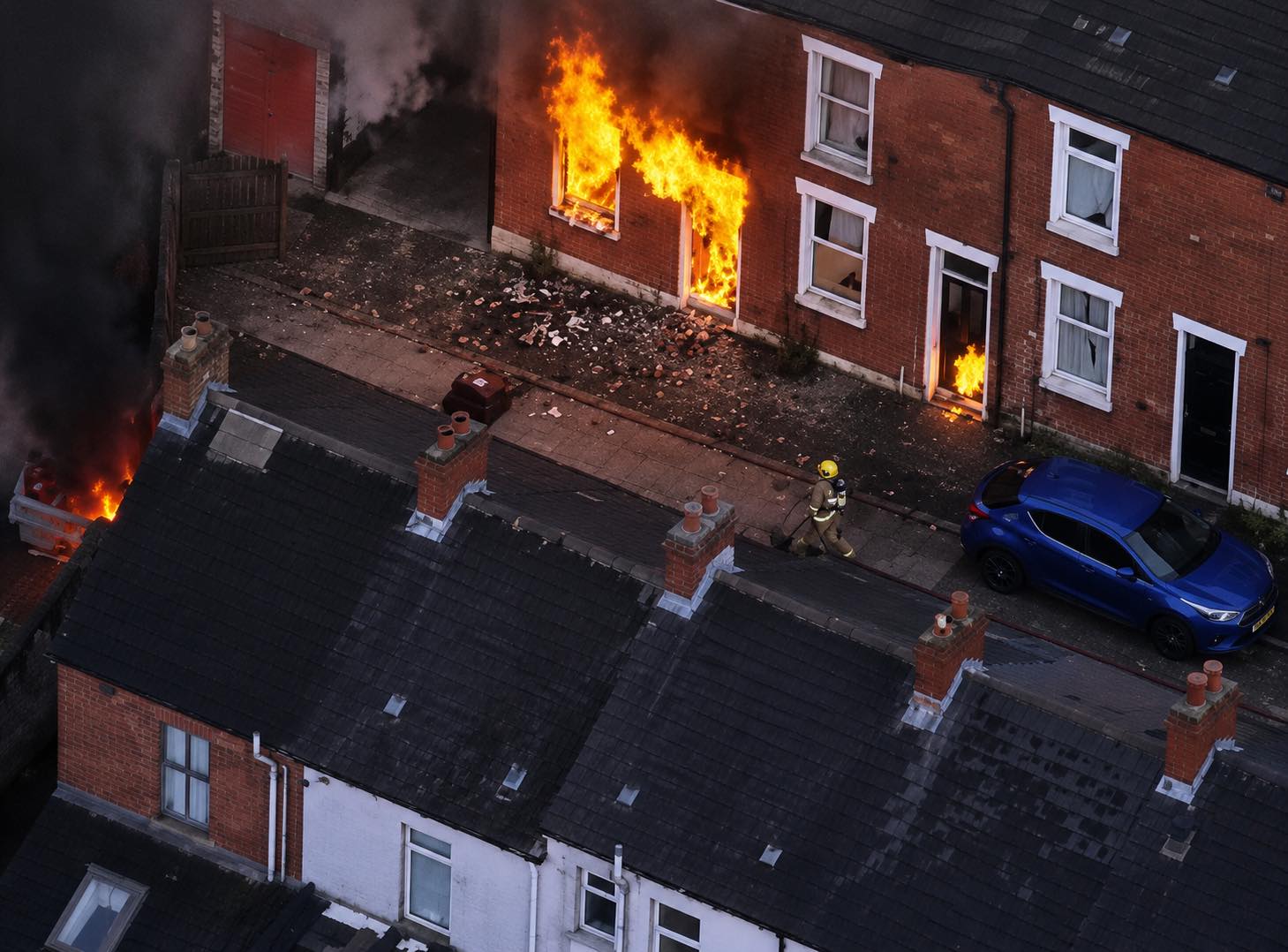
Against this backdrop Northern Ireland has again been thrust into the headlines for all the wrong reasons. The images of anti-immigrant violence and disorder that followed the attempted decapitation of a man in the streets of Belfast by a Sudanese immigrant have prompted the now familiar cycle of official condemnation, appeals for calm and insistence that responsibility lies solely with those who took to the streets.
Of course, those who commit acts of violence must answer for their actions. Civil society depends upon the rule of law. But politics cannot be divorced from consequences. Governments do not merely react to events; they create the conditions in which those events unfold.
On that score, Sir Keir Starmer’s government has serious questions to answer.
For months, ministers have appeared remarkably indifferent to growing concerns over immigration policy, community cohesion and public confidence in policing. Those concerns are frequently dismissed as the preserve of extremists or opportunists. Yet in doing so, policymakers have overlooked an uncomfortable truth: perceptions matter. When large sections of the public believe that the authorities apply different standards depending upon who is involved, trust in institutions begins to erode.
The phrase “two-tier policing” has become politically charged. Critics argue that the police have demonstrated inconsistency in their handling of public disorder, protest and criminality. Supporters of the police reject the accusation outright, insisting that operational decisions reflect circumstances rather than ideology.
Whatever one’s position, the perception itself has become politically significant. Governments ignore such perceptions at their peril. Confidence in law enforcement is among the most fragile assets a democracy possesses. Once lost, it is extraordinarily difficult to rebuild.
Northern Ireland presents an even more complex challenge. It remains a society shaped by decades of conflict, delicate political balances and enduring communal tensions. Policymaking there requires a degree of sensitivity and foresight that appears increasingly absent from Westminster.
Against that backdrop, the decision to place African economic migrants in areas already characterised by social fragility – although the perpetrator in yesterday’s incident may have arrived in Belfast via the Republic of Ireland – demands scrutiny.
This is not an argument against immigration per se, it is a criticism of a state apparatus that too often treats communities as administrative units rather than living social ecosystems. Housing newcomers in locations with limited resources, unresolved grievances and historic mistrust, without meaningful consultation or integration strategies, is not compassionate governance. It is bureaucratic complacency.
The inevitable consequence is that migrants themselves become exposed to heightened risks. Communities feel ignored. New arrivals feel isolated. Mutual suspicion flourishes in the vacuum left by political leadership.

Northern Ireland’s history should have served as a warning. The region has repeatedly demonstrated how quickly local grievances can assume wider significance when people conclude that established institutions neither understand nor represent them.
Yet Westminster has too often approached Northern Ireland with a mixture of managerial detachment and wishful thinking. The assumption appears to be that policies developed elsewhere can simply be transplanted into a uniquely sensitive environment without consequence.
Yesterday’s events suggests otherwise.
It would be wrong to claim that any single policy decision directly caused the subsequent unrest. Human behaviour is more complex than that. Equally, however, it would be naïve to pretend that such events emerge spontaneously from nowhere.
They arise from accumulated frustrations, perceived injustices and the belief—rightly or wrongly—that political elites are unwilling to acknowledge legitimate public concerns. When those sentiments are repeatedly dismissed rather than addressed, the space for moderation contracts.
Sir Keir Starmer came to office promising competence, seriousness and stability. His supporters argued that a technocratic approach to government would restore trust after years of turbulence. Instead, critics increasingly detect a leadership style that prioritises reputational management over substantive engagement with difficult questions.
No prime minister can prevent every tragedy. No government can eliminate social tensions entirely. But governments can recognise warning signs – although Keir Starmer’s inability to read seemingly any situation often appears to verge on autism.
Society should avoid placing vulnerable populations in combustible circumstances. They can engage honestly with concerns surrounding policing and social cohesion rather than reducing every disagreement to a contest between enlightenment and prejudice.
Last night’s scenes should prompt precisely that conversation.
To describe them as unforeseeable would be to misunderstand both Northern Ireland and politics itself. Leaders are judged not only by how they respond to crises, but by whether they helped create the conditions in which those crises became more likely.
That is the uncomfortable question now confronting Sir Keir Starmer’s government. It is a question that cannot indefinitely be answered with expressions of regret alone.
Click here for more News & Current Affairs at EU Today
Click here to check out EU TODAY’S SPORTS PAGE!
___________________________________________________________________________________________________________________