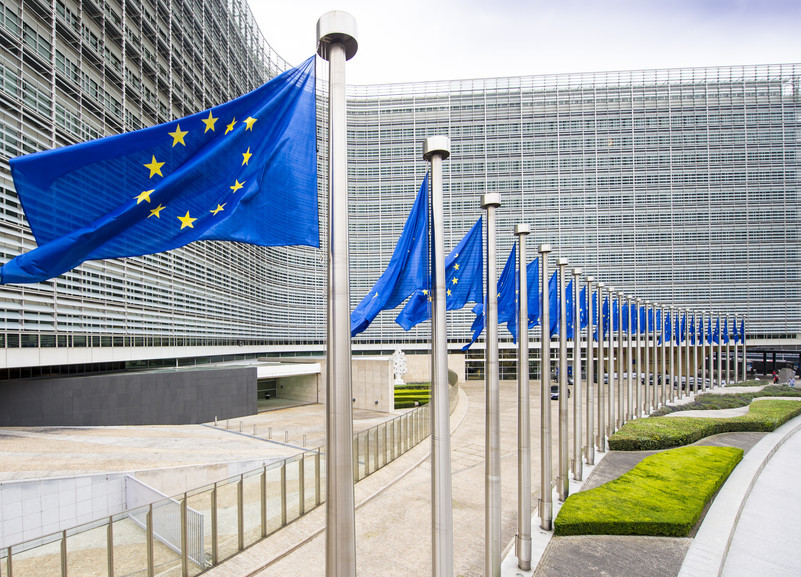
The first oil has begun to move again along the great arteries of Central Europe, and with it a renewed sense of momentum in the continent’s support for Ukraine.
After months of stalemate, Kyiv has confirmed the resumption of Russian crude transit through the Druzhba pipeline towards Hungary and Slovakia — a development that has unlocked a long-delayed €90 billion European Union loan widely seen as critical to sustaining Ukraine’s resilience.
The symbolism is as potent as the substance. What had become a knot of political obstruction, wartime disruption and mutual suspicion has, at last, been loosened. Within hours of the announcement from Kyiv, EU ambassadors in Brussels moved to grant preliminary approval for both the financial package and a fresh round of sanctions against Russia. Formal ratification is now expected imminently, signalling a renewed coherence in Europe’s strategic posture.
For Ukraine, the breakthrough carries existential weight. Taras Kachka, the country’s deputy prime minister, has described the funding in stark terms: a matter of life and death. Roughly two-thirds of the loan is earmarked for defence — a reflection of the grinding reality on the front lines — while the remainder will stabilise public finances strained by more than two years of full-scale war.
Yet it was not battlefield developments alone that had held up the agreement. The interruption of oil flows earlier this year, following damage to infrastructure caused by Russian strikes, had given rise to a fierce dispute with Hungary. Prime Minister Viktor Orbán, long an outlier within the EU for his conciliatory stance towards Moscow, seized upon the disruption to veto the disbursement of funds, demanding that supplies be restored before he would lift his objections.
That condition has now been met. Ukrainian engineers, working under the constant threat of renewed attack, have completed repairs to the damaged sections of pipeline. According to Slovak officials, pressurisation began on Wednesday morning, with crude expected to reach Slovak refineries within a day. Hungary’s MOL has likewise indicated that deliveries are imminent.
The technical resumption of flows, however, belies a deeper political shift. Orbán’s recent electoral defeat has ushered in a new chapter for Hungary, ending a 16-year premiership often marked by friction with Brussels. His successor, Péter Magyar, has signalled a desire to repair those strained ties, and the timing of the pipeline’s reopening has provided an early opportunity to reset relations.
Even before formally leaving office, Orbán had indicated that he would no longer stand in the way of the loan once oil transit resumed. That assurance has now cleared the final obstacle to a package that European officials regard as both practical support and a statement of intent.
Kaja Kallas, the EU’s foreign policy chief, captured the prevailing mood when she observed that the agreement demonstrates Russia’s inability to outlast Ukraine. It is a message aimed not only at Moscow but at European audiences, where questions of endurance — economic, political and military — have become increasingly salient.
The episode also underscores the intricate interdependence that continues to define Europe’s energy landscape. Despite concerted efforts to diversify away from Russian supplies, the Druzhba pipeline remains a crucial conduit for several member states. Ensuring its operation, even amid war, has therefore required a delicate balancing act between principle and pragmatism.
In this instance, pragmatism has prevailed without sacrificing unity. The EU has managed to secure the flow of energy to its eastern members while simultaneously advancing a substantial package of support for Ukraine and tightening sanctions on the Kremlin. It is, in effect, a demonstration of strategic patience — and of the bloc’s capacity to navigate internal divisions without fracturing.
There are, of course, no illusions about the challenges that lie ahead. The war continues to exact a heavy toll, and the infrastructure underpinning Europe’s energy security remains vulnerable. Satellite imagery earlier this year revealed the extent of the damage inflicted on facilities near Brody, a reminder of how easily the situation could again deteriorate.
And yet, for now, the direction of travel is unmistakably positive. Oil is flowing, funds are forthcoming, and Europe appears, once more, aligned in its support for Ukraine. The convergence of these developments offers a timely boost to Kyiv at a moment when sustained backing from its partners is more crucial than ever.
In Brussels, where negotiations have so often seemed mired in complexity, the past 24 hours have delivered a rare clarity. Cooperation, rather than confrontation, has carried the day. And in a conflict defined by uncertainty, that in itself is no small achievement.
Click here for more News & Current Affairs at EU Today
Click here to check out EU TODAY’S SPORTS PAGE!
___________________________________________________________________________________________________________________