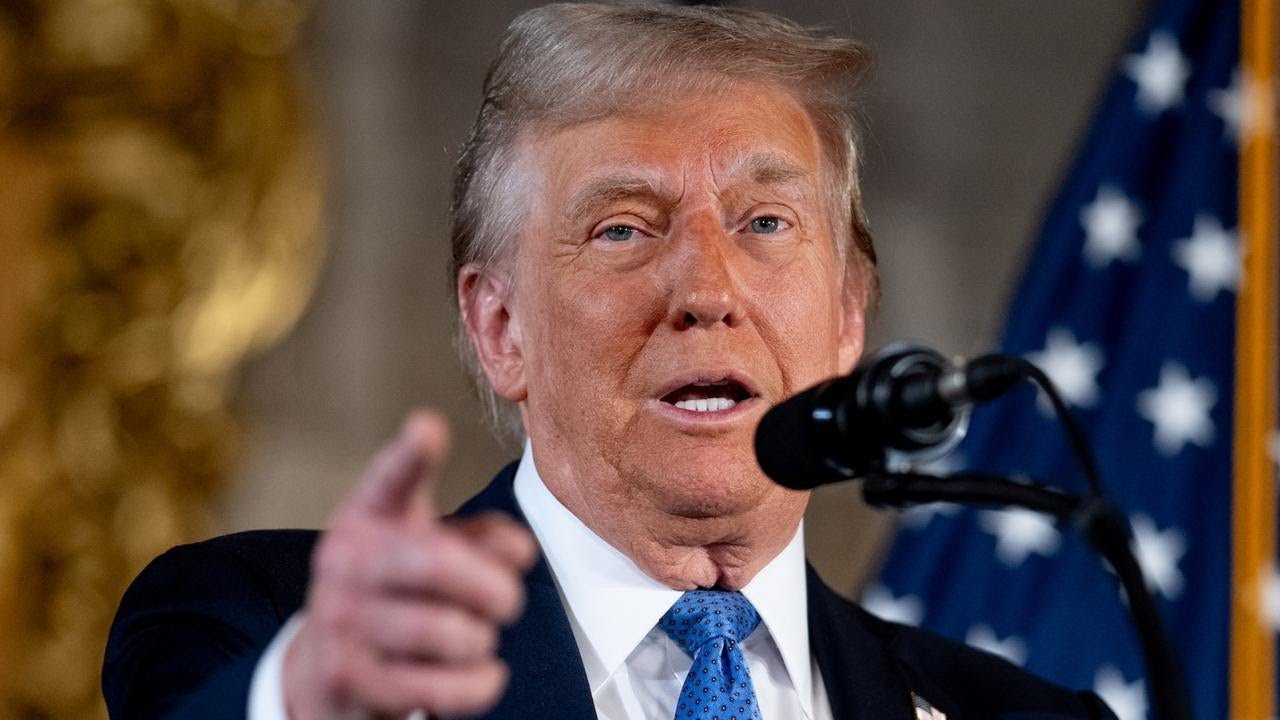
Reports from multiple U.S. media outlets, citing an anonymous White House official, indicate that President Donald Trump has ordered a suspension of all military aid to Ukraine.
The official stated that Trump is committed to peace and expects U.S. allies to share this commitment. However, the decision could be reconsidered if Ukrainian President Volodymyr Zelensky demonstrates “genuine efforts” towards engaging in peace talks.
Discussions regarding the potential suspension of aid began immediately after a controversial meeting between Trump and Zelensky. Following that meeting, Trump convened a high-level meeting on Monday, attended by Vice President J.D. Vance, Secretary of State Marco Rubio, Defence Secretary Pete Hegseth, Director of National Intelligence Tulsi Gabbard, and Steve Witkoff, the U.S. special representative for the Middle East, who also participates in negotiations between Washington and Moscow. It was during this meeting that the decision to suspend military assistance to Ukraine was made, though it remains unclear whether this decision is final. Notably, Trump himself has yet to make any public statement on the matter.
This move raises a fundamental question: What does Trump actually want from Zelensky? Does he simply want a statement expressing a desire for peace? Does he demand Zelensky’s readiness to negotiate with Moscow, even at the cost of making concessions that Ukraine finds unacceptable? Or does Trump require someone else to make those concessions on Ukraine’s behalf?
There is currently no established framework for direct U.S.-Russia negotiations on ending the war in Ukraine. If Trump had reached an agreement with Russian President Vladimir Putin on a ceasefire or peace settlement, Ukraine’s exclusion from such talks would be a serious issue. However, no such deal exists. In fact, Putin continues to insist that any cessation of hostilities must be conditional on addressing the so-called root causes of the war—a vague demand that effectively calls for Ukraine’s capitulation.
Given these circumstances, Trump’s pressure on Ukraine appears to be an attempt to force Kyiv into a more conciliatory stance rather than a genuine effort to broker peace. This approach echoes previous Republican stalling tactics on military aid, ostensibly due to domestic U.S. border security concerns. Speaker of the House Mike Johnson recently apologised to Israel for delays in U.S. support caused by congressional wrangling over Ukraine, demonstrating that the same logic applied to Kyiv.
Trump’s strategy aligns with a broader effort by right-wing forces in both the U.S. and Europe to pressure Ukraine into accepting a peace deal on Russian terms. Hungarian Prime Minister Viktor Orbán, a known ally of Trump and the American far right, has played a key role in stalling EU assistance to Ukraine. The 20-billion-euro aid package for Kyiv remains blocked due to Hungary’s opposition, further underscoring how Trump’s influence extends beyond U.S. borders.
The immediate consequence of withholding military aid will not necessarily be an immediate collapse of Ukrainian forces, but the impact on civilians could be catastrophic. A reduction in air defence capabilities could lead to devastating Russian missile strikes, resulting in mass casualties and destruction. Any such attack, if enabled by the suspension of U.S. aid, would not only implicate Putin but also Trump, whose decision would have directly contributed to the suffering of Ukrainian civilians.
From a geopolitical perspective, Trump’s actions do not merely threaten Ukraine but also undermine the United States’ standing in the democratic world. While Trump may not seek an explicit alliance with Putin, his decisions serve Moscow’s strategic interests by weakening Western unity and emboldening the Kremlin’s aggressive posture.
Trump’s tactics mirror broader Russian efforts to erode Western resolve, whether by fostering support for pro-Kremlin political factions or by pushing for the removal of sanctions against Putin’s inner circle. The long-term goal of such manoeuvres is to legitimise Russia’s territorial ambitions and destabilise Europe.
Despite this dire outlook, Ukraine has no choice but to continue engaging with U.S. officials to secure the resumption of military aid. Trump cannot afford to openly declare himself a Putin ally, nor can he completely isolate the U.S. from its allies in Europe. Ukraine must leverage these realities in its diplomatic efforts, ensuring that bipartisan support within the U.S. for aiding Kyiv remains intact.
The stakes go beyond Ukraine’s survival. If Trump’s policies lead to Kyiv’s defeat, it will signal a broader shift in global power, potentially isolating the U.S. from its traditional democratic partners and emboldening authoritarian regimes. By pursuing an approach that strengthens Putin’s hand, Trump risks eroding American credibility and its role as a leader of the free world. The consequences of this strategy will be long-lasting, and history will remember who was responsible for enabling further bloodshed in Ukraine.
Read also:
The Impact of Suspended US Military Aid on Ukraine’s Defence