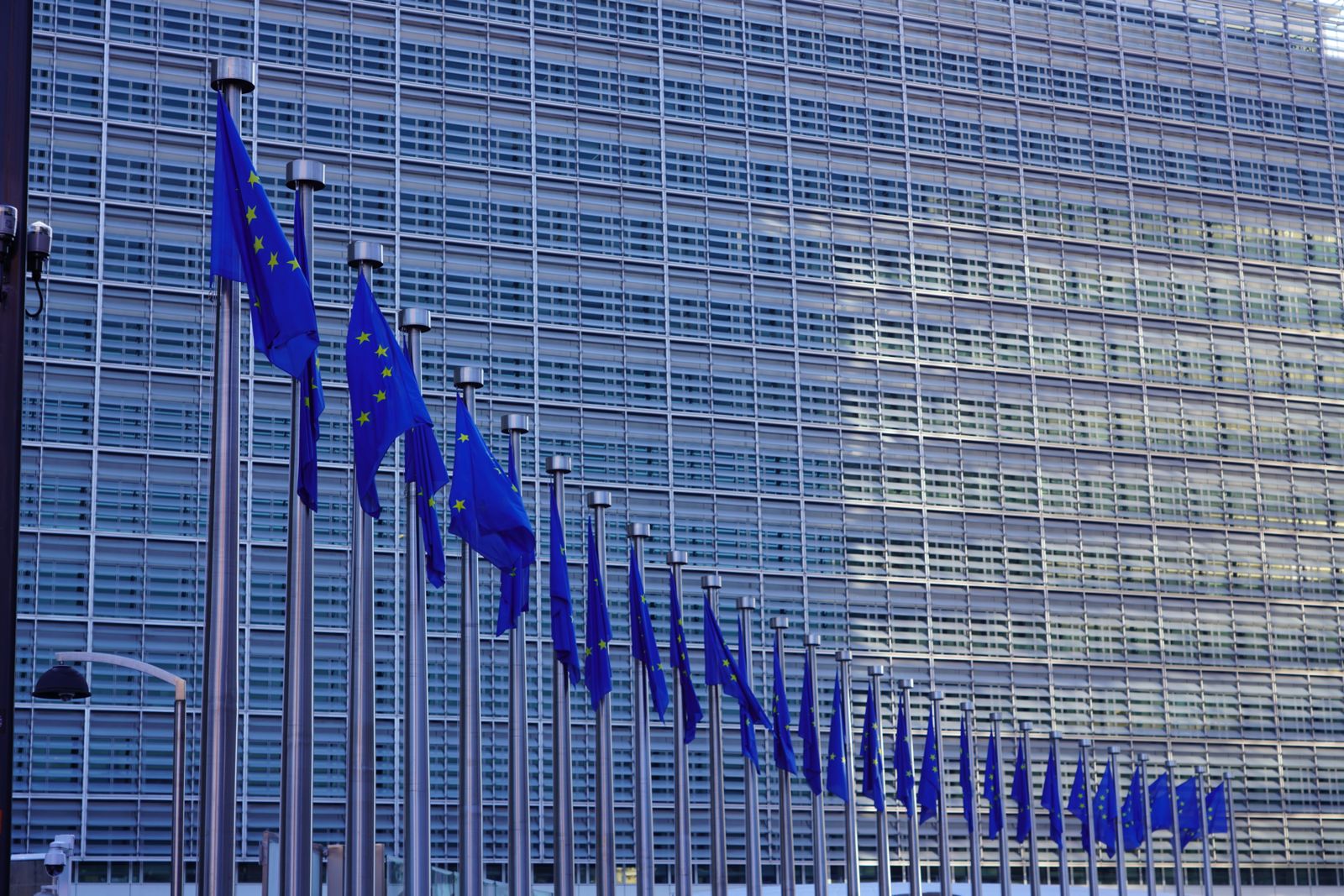
The European Commission, conceived as the executive body of the European Union, was designed to serve the interests of the Union as a whole, detached from the individual interests of member states.
Its founding ideal was that of an impartial, supranational body, working independently to promote the collective good of Europe. However, a critical examination of its structure, operation, and political influence reveals systemic flaws that fundamentally undermine democratic legitimacy, accountability, and responsiveness.
Far from being a neutral arbiter or an efficient executive, the Commission has evolved into an opaque, bureaucratic, and increasingly autocratic institution. This critique argues that the disestablishment of the European Commission is not merely a radical proposition, but a necessary precondition for restoring democratic governance, national sovereignty, and genuine political accountability within Europe.
.
The Democratic Deficit and the Question of Legitimacy
One of the most persistent criticisms levied against the European Union is its pronounced “democratic deficit“. At the heart of this deficit lies the European Commission. Unlike national governments that are directly elected or fully accountable to an elected legislature, the Commission occupies a hybrid space, accountable neither to the European Parliament nor directly to the people of Europe.
Commissioners are nominated by national governments and, while subject to parliamentary approval, they cannot be dismissed individually by Parliament once appointed, barring extreme circumstances. Furthermore, the Commission holds the near-exclusive right to formulate new legislation, a monopoly on legislative initiative that fundamentally distorts democratic governance. Although the European Parliament can amend or reject proposals, its reactive role significantly weakens popular responsiveness.
The appointment of Commissioners, often based on political bargaining among states rather than merit or voter input, further alienates citizens from decision-making processes. As a result, the Commission has become symbolic of the EU’s democratic shortcomings, a source of growing popular disillusionment.
Bureaucratic Overreach and Centralisation of Power
The Commission’s bureaucratic expansion has been relentless. Originally mandated to oversee treaty administration and ensure the smooth functioning of the common market, the Commission has steadily extended its reach into new policy areas—ranging from education to national security—through expansive interpretations of its competencies.
This bureaucratic overreach is not accidental. Like any political institution, the Commission has developed a logic of self-preservation and growth. Its combination of legislative initiative, executive authority, and quasi-judicial power creates a concentration of influence that would be unacceptable within a domestic democratic framework.
Moreover, this centralisation runs counter to the principle of subsidiarity, which holds that decisions should be taken as closely as possible to the citizen. Rather than respecting local differences, the Commission’s push for regulatory harmonisation often imposes uniform standards across vastly different societies and economies, exacerbating tensions rather than fostering unity.
The European Commission employs approximately 32,800 individuals, including permanent officials and temporary staff. Around 66.2% of these employees, which amounts to about 21,700 staff members, are based in Brussels.
Opacity and the Influence of Lobbyists
Despite public commitments to transparency, the European Commission remains largely opaque. Decision-making occurs within a labyrinth of committees, working groups, and informal consultations, shielded from effective public scrutiny.

Neither his former position as President of the Commission nor his previous devotion to the politics of Chairman Mao prevented José Manuel Barroso from taking up the role of Chairman of Goldman Sachs International in 2016.
This opacity facilitates disproportionate influence by corporate lobbyists and organised interest groups.
The “Brussels bubble” houses tens of thousands of lobbyists, with corporations and industry bodies often securing privileged access to policymakers. Regulatory capture—the process whereby agencies come to be dominated by the interests they regulate—is a persistent risk.
Numerous scandals, including controversies surrounding former Commissioners taking private sector jobs immediately after leaving office, highlight the porous boundaries between public governance and private profit.
The revolving door phenomenon reinforces perceptions of elitism, undermining public trust and fueling populist critiques.
The Clash Between Centralisation and European Diversity
The centralising tendencies of the European Commission are particularly damaging to the rich political, economic, and cultural diversity that defines Europe. Attempts to impose uniform policies often provoke resistance from national populations who view such interventions as illegitimate and overreaching.
This clash has been starkly illustrated by events such as Brexit, the rise of Eurosceptic parties in France, Italy, Hungary, and Poland, and mounting popular dissatisfaction across the Union. In many cases, it is not European cooperation itself that is rejected, but the Commission’s bureaucratic and autocratic model of governance.
By insisting on conformity, the Commission exacerbates fault lines between northern and southern Europe, western and eastern Europe, richer and poorer states. Instead of fostering solidarity, its heavy-handed approach often fuels nationalist and separatist movements, undermining the very stability it was meant to promote.
Alternatives to the Commission: Toward a Democratic Europe
Disestablishing the European Commission does not imply the abandonment of the European project. Rather, it offers an opportunity to revive it along more democratic, accountable, and pluralistic lines.
Executive functions could be returned to national governments working through an intergovernmental council where transparency and consensus-building are paramount. Legislative initiative could be vested jointly in the European Parliament and national parliaments, with the Council of Ministers taking a greater role, thus ensuring that lawmaking is driven by directly elected representatives with clear mandates.
Moreover, competences could be reallocated according to strict subsidiarity, with the EU focusing only on those areas where collective action is demonstrably necessary—such as cross-border trade, environmental protection, and security cooperation—while leaving most regulatory decisions to national or regional governments.
Such a reformed Union would be better equipped to respect Europe’s diversity, enhance democratic legitimacy, and respond more flexibly to the needs and preferences of its citizens.
Disestablishment as a Democratic Imperative
The European Commission, for all its achievements in promoting integration and peace, has become an impediment to further democratic progress in Europe. Its structural flaws—democratic illegitimacy, bureaucratic overreach, opacity, and disregard for national diversity—are not easily remediable through minor reforms.
Disestablishing the Commission is therefore not a step backward but a necessary act of political renewal. A reimagined European Union, rooted in democratic cooperation among sovereign states, would better serve the aspirations of its peoples. Only by dismantling the existing bureaucratic supranationalism can Europe rekindle the democratic spirit that first inspired its unification.