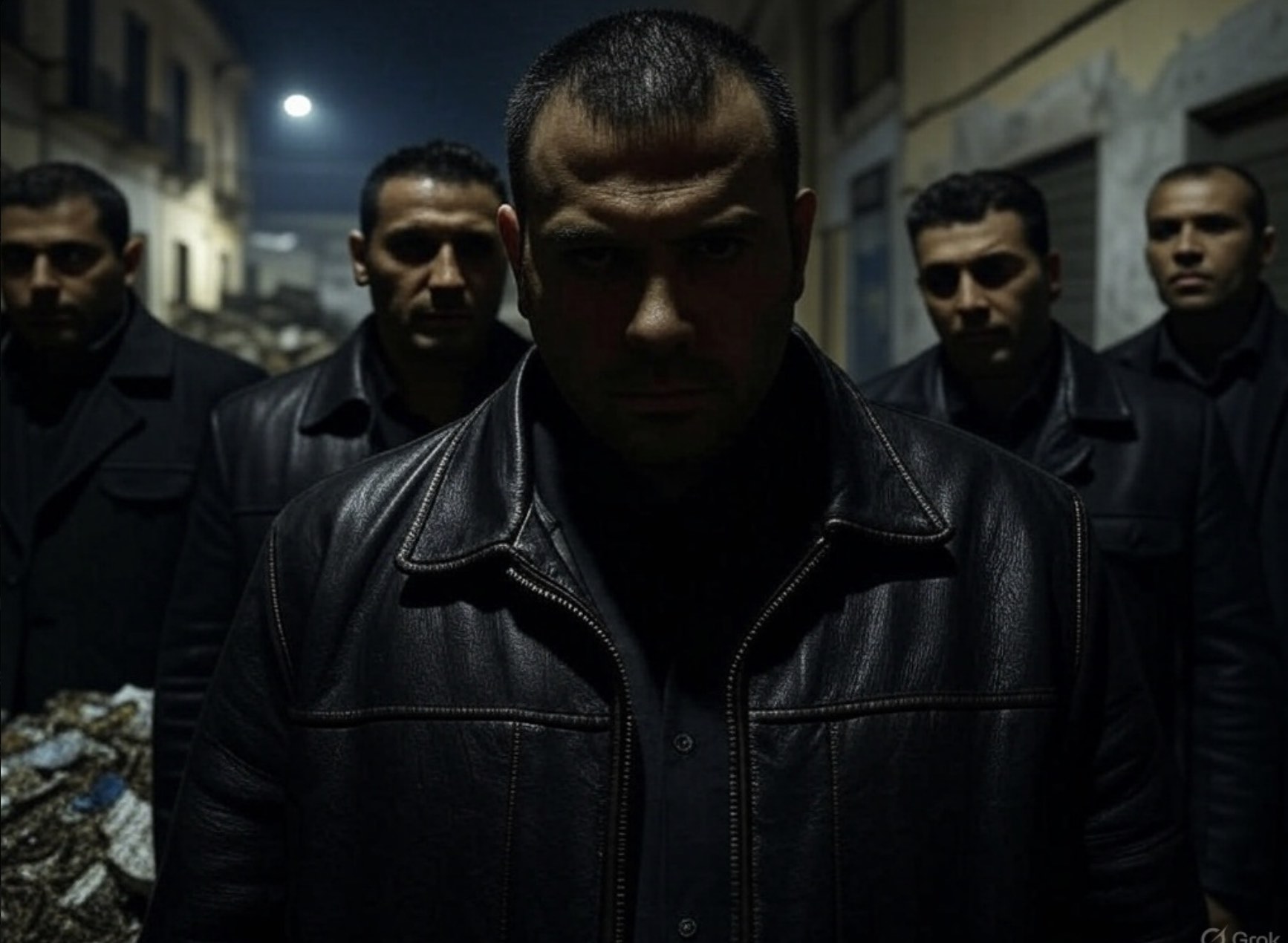
Rubbish overflows in the narrow alleys of Quartieri Spagnoli, graffiti-tagged shutters mark the slow death of legitimate businesses, and the sinister spectre of the Camorra—the Neapolitan mafia—looms large over both the cobbled streets and the corridors of local power.
As tourists sip espresso near Piazza del Plebiscito, they remain oblivious to the creeping rot undermining the city’s foundations. Yet to residents, the signs are all too familiar: uncollected garbage piling up for weeks, street lamps broken for months, and local council meetings where vital public contracts are whispered about in backroom deals rather than debated in public forums.
For years, the Camorra has been synonymous with violence and vice. But now, its new frontier is subtler, more insidious: local governance. With political figures compromised and civic structures hollowed out, the mafia no longer merely challenges the state—it is beginning to replace it.
The Politics of Decay
The Camorra’s infiltration into politics is neither new nor accidental. Historically embedded in Naples’ socio-economic landscape, the crime syndicate has evolved from extortion rackets and drug trafficking to an elaborate operation that blends illegality with the appearance of civic duty.
According to prosecutors in the anti-mafia unit of Naples, numerous local politicians and municipal officials are under investigation for alleged collusion with Camorra clans, most notably the Contini, Mallardo, and Licciardi families—once disparate entities now aligned under the so-called “Secondigliano Alliance.” Their influence ranges from public works tenders to waste management contracts and even appointments in local health boards.
“It’s not simply corruption,” one magistrate, speaking anonymously, explained. “It’s institutional capture. The mafia no longer merely bribes councillors—it sponsors them.”
Recent court documents revealed that contracts for waste collection—worth tens of millions—were allegedly handed to firms tied to Camorra operatives. The result has been both grotesque and tragic: vast sections of Naples left strewn with rotting garbage while companies with phantom workers invoice the city for services never rendered.
Streets of Fear
Outside the realm of politics, Naples’ street-level malaise tells its own damning tale. Unchecked petty crime, rampant drug dealing, and gangland shootings have become near-daily occurrences. In areas such as Scampia and Forcella, the sight of children running errands for local pushers is as common as that of pensioners queueing outside pharmacies.
The city’s once-proud Carabinieri now operate with caution, their patrols overstretched and demoralised. One retired officer, now living in Rome, remarked: “It used to be we went after the Camorra. Now, young officers are told not to ‘provoke’ them.”
Public outrage spikes when high-profile incidents occur, such as the drive-by shooting last autumn that left a 14-year-old girl wounded in crossfire outside a pizzeria. But without sustained political will, such anger evaporates, leaving behind only despair and resignation.
Local residents have adapted through necessity. Shopkeepers pay “security contributions” to the Camorra. Cafés hire relatives of known clan members as “advisors” to avoid trouble. Even religious processions are not immune—recently, a statue of the Madonna was seen pausing in front of a local Camorra boss’s house during a celebration, a tacit act of deference witnessed but unchallenged.
The Business of Chaos
Behind the scenes, the Camorra has mastered the art of profiting from collapse. In the rubble of Naples’ civic failure lies a lucrative economy of subcontracts, favours, and extortion.
One of the mafia’s most profitable enterprises in recent years has been its strategic capture of EU tenders. Brussels, in an effort to revitalise Italy’s south, has channelled billions into regional development funds—ostensibly earmarked for infrastructure, environmental protection, education, and social cohesion. Yet much of this funding, prosecutors warn, has been diverted through carefully orchestrated fraud involving mafia-front companies.
In several high-profile investigations, including the Operazione Hydra case of 2023, anti-mafia authorities detailed how Camorra-linked construction firms used forged credentials, rigged bids, and colluded with corrupt officials to win contracts financed by the European Regional Development Fund (ERDF). The proceeds were then laundered through offshore accounts or reinvested in narcotics trafficking.
A recent report by the Court of Auditors found that up to 20% of EU-backed contracts awarded in Campania between 2014 and 2020 showed evidence of irregularities, many tied to mafia interference. “The Camorra have become experts in bureaucracy,” said one investigator. “They exploit the opacity of public procurement systems, particularly where local oversight is weak.”
The construction sector remains emblematic. Naples, desperate to rehabilitate its crumbling infrastructure, has pushed through dozens of minor public works projects in recent years—from road resurfacing to school repairs. But investigative journalists have uncovered a familiar pattern: contracts funnelled to shell companies with ties to Camorra clans, budgets inflated, deadlines missed, and safety standards ignored.
A €3.5 million initiative to refurbish municipal housing in Ponticelli, for example, stalled indefinitely after funds were siphoned through a chain of subcontractors—many of which dissolved shortly after receiving payments. Residents remain in half-finished buildings with exposed wiring and leaky roofs, while no arrests have yet been made.
Waste management—perhaps the Camorra’s most notorious stronghold—remains a glaring indictment. Despite millions in EU funding allocated for Naples’ environmental improvement, rubbish remains a daily blight. Recycling rates are abysmally low, and entire neighbourhoods report no regular bin collection. Experts claim that mafia-linked firms exploit both the absence and the chaos: charging inflated prices for ad hoc clean-ups and controlling informal networks of waste disposal.
In some quarters, notably the port districts, illegal toxic dumping continues unabated. Several local NGOs have documented mysterious illnesses, including respiratory and gastrointestinal ailments, spiking in areas closest to known illegal landfill sites.
A City Abandoned
Perhaps most disheartening is the sense that Naples has been abandoned—by the state, by national media, even by its own institutions.
Mayor Gaetano Manfredi, once hailed as a clean reformist academic, now struggles to assert control over even the most basic city functions. Critics claim his administration is paralysed by internal divisions, lack of funds, and fear of confrontation with entrenched interests. Meanwhile, Rome appears preoccupied with crises elsewhere—from immigration to energy policy—leaving Naples to manage its malaise alone.
Civic trust has collapsed. Turnout in local elections is perilously low, and public rallies against corruption are sparsely attended. “Why protest when nothing changes?” asked Carla, a schoolteacher in San Giovanni a Teduccio. “We know who really runs this city. And it’s not the mayor.”
Yet glimmers of resistance remain. Small volunteer groups, like CleanNapoli and Libera, continue to campaign against mafia infiltration, organise street clean-ups, and provide legal support to whistleblowers. One local priest, Father Antonio Loffredo of the Rione Sanità parish, runs youth programmes to divert children from Camorra recruitment—a task he calls “a daily fight for their souls.”
The Road Ahead
What hope remains for Naples? The answer lies not just in police raids or new legislation but in the painful reconstruction of civic pride and accountability. The Camorra thrives on despair, on the breakdown of the social contract between citizen and state. Rebuilding that trust will require more than promises.
Naples has weathered plagues, foreign rule, and economic collapse. But its greatest test now lies in confronting an enemy within—an enemy wearing suits, shaking hands, and trading favours beneath the chandeliers of City Hall.
Until then, the city of Pulcinella and Caravaggio remains gripped not by tragedy, but by farce—an ancient city ruled by modern gangsters, while the world looks away.