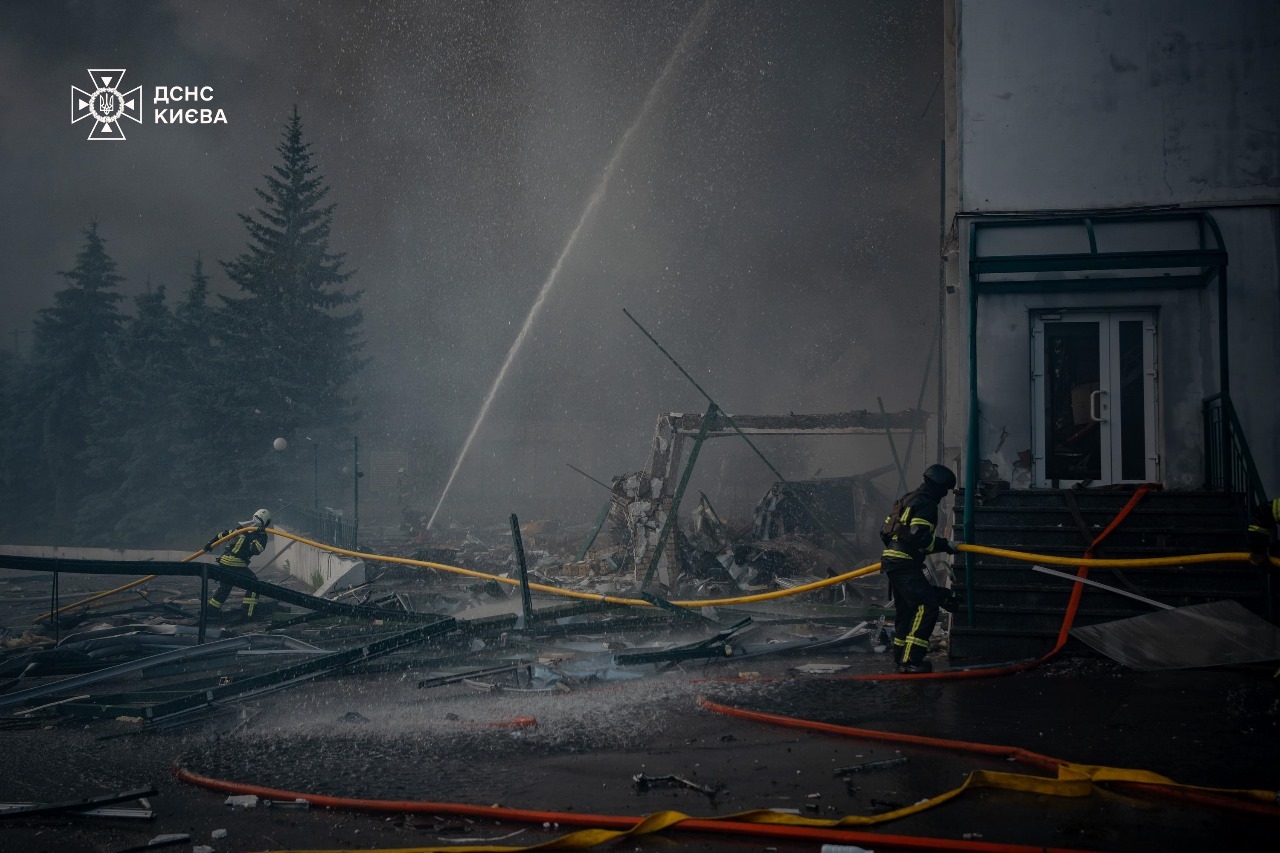
In the early hours of 10 June, Russia conducted a large-scale combined drone and missile attack on multiple Ukrainian cities, with Kyiv as the principal target.
Odesa also came under sustained fire. According to Ukraine’s Air Force, Russia deployed a total of 315 unmanned aerial vehicles, including Shahed-type strike drones and various decoy UAVs, alongside two KN-23 ballistic missiles and five Iskander-K cruise missiles.
The assault lasted several hours, with explosions heard throughout the night in both Kyiv and Odesa. Fires broke out in several residential districts, and emergency services remained active into the morning. Preliminary reports indicate damage to housing and civilian infrastructure, with casualties reported, though exact figures have yet to be confirmed.
Air defence units engaged a significant portion of the incoming drones and missiles. Despite these efforts, debris from interceptions and direct hits caused multiple fires and structural damage, particularly in Kyiv, which bore the brunt of the attack. Authorities confirmed that the scale of the operation represented one of the most extensive overnight bombardments in recent weeks.
Ukrainian officials state that such strikes cannot be explained by any coherent military objective. While the Russian side typically claims it is targeting strategic or military infrastructure, the nature of the strikes and their impact on civilian areas are cited as evidence to the contrary. Ukrainian assessments describe the operation as an act of terror intended to pressure the civilian population and destabilise morale.
President Volodymyr Zelenskyy and members of his administration argue that Moscow’s actions reflect a long-term strategy of intimidation. They draw parallels with Russia’s previous military operations in Chechnya, particularly the carpet bombing of Grozny and the imposition of a puppet regime through violence. Ukrainian officials describe this model — characterised by destruction, fear, and coercion — as the template Russia now seeks to replicate in Ukraine.
According to sources close to Ukraine’s negotiating team, Russia’s behaviour during past diplomatic efforts, such as the talks in Istanbul, confirmed its intention to demand full political subjugation rather than seek compromise. Proposals reportedly submitted by the Russian side were described by Kyiv as unrealistic and designed to facilitate Ukraine’s capitulation.
In the absence of military success on the battlefield, the current Russian objective, Ukrainian officials contend, is to make life unliveable for civilians. By maintaining a state of permanent fear through systematic drone and missile attacks, Moscow aims to force submission without formal negotiations. The precise justification for the attacks — whether framed as defence of the Donbas or pursuit of demilitarisation — is, in Kyiv’s view, secondary to the primary objective of civilian terror.
While both Russia and Ukraine continue to employ drones in the conflict, Ukraine insists that its strikes focus exclusively on military and industrial targets. In recent months, Ukrainian drones have targeted Russian oil refineries, arms factories, and military logistics hubs. Russian media has acknowledged some of these hits, noting disruptions to domestic supply chains and defence production.
By contrast, Russian strikes frequently target residential neighbourhoods, energy infrastructure, and public buildings. Ukrainian officials state that this approach reflects the Kremlin’s strategic priorities and is consistent with its broader political messaging. Footage broadcast on Russian state television often highlights the destruction of Ukrainian homes, portraying it as a response to defiance.
Ukrainian authorities maintain that such actions are not incidental, but calculated measures intended to generate fear and suppress resistance. They argue that the enjoyment some Russian commentators express when describing such destruction reveals the political culture underpinning the war — one where domination and punishment are central motivators.
In response, Kyiv continues to call for further international action. Ukrainian leaders are urging allied governments to tighten sanctions, restrict Russian access to financial markets, and increase the supply of defensive systems. They warn that the cost of inaction will be borne not only by Ukraine but also by European and transatlantic partners.
There are growing concerns in Western capitals regarding Russia’s potential to escalate hybrid operations beyond Ukraine’s borders. In the United States, recent revelations about Russian cyber activities targeting strategic infrastructure have led to renewed debate over homeland security. In Europe, fears of sabotage and the potential for armed incidents have prompted a reassessment of internal preparedness and deterrence mechanisms.
Ukrainian commentators have also voiced criticism of renewed diplomatic engagement between the Kremlin and US President Donald Trump. In Kyiv’s view, previous overtures from Trump towards Vladimir Putin contributed to the deterioration of deterrence and encouraged the Kremlin to pursue bolder actions, including intensified missile and drone strikes on Ukrainian cities.
Ukrainian officials argue that each perceived concession or conciliatory gesture from the West is interpreted in Moscow as weakness. They maintain that the Russian president is not interested in negotiation but draws political capital from sustaining the war and projecting resolve through violence.
According to Ukraine, the war is no longer a regional crisis but a global security threat. The red lines that previously contained the conflict have, they say, been moved repeatedly — not by military force, but by political permissiveness. Unless a coordinated and sustained effort is made to stop Russia’s escalation, Ukrainian officials warn, the consequences will eventually extend beyond Ukraine’s borders.
Read also:
Kyiv Hit Hard in Overnight Russian Air Assault: Four Dead, Metro Line Severely Damaged