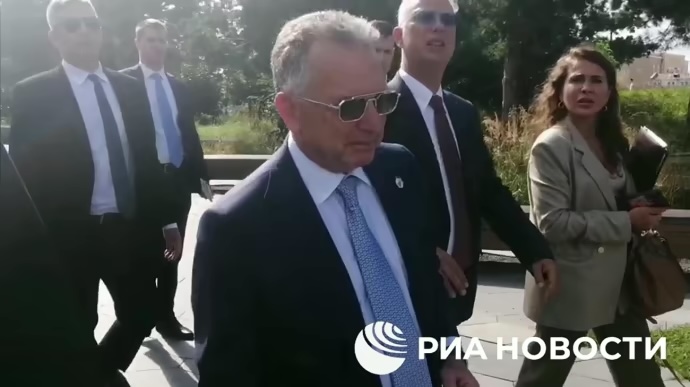
Steve Witkoff, special envoy of U.S. President Donald Trump, arrived in Moscow on Wednesday morning, just days ahead of Washington’s deadline for Russia to reach a negotiated peace agreement with Ukraine or face expanded economic sanctions. The visit, which has not been formally confirmed by the Kremlin or the White House, was first reported by Russian state media.
Footage broadcast by the TASS agency showed Witkoff walking through Zaryadye Park, near the Kremlin, in the company of Kirill Dmitriev, head of the Russian Direct Investment Fund (RDIF) and President Vladimir Putin’s designated envoy for investment and economic cooperation. Dmitriev has been involved in recent rounds of direct peace talks between Russian and Ukrainian officials, including backchannel discussions with the United States. The pair were later seen entering a government vehicle, reportedly en route to the Kremlin.
There has been no official statement from the U.S. State Department regarding the purpose of Witkoff’s trip. A White House spokesperson declined to comment on whether President Trump had issued specific instructions for the mission or whether a meeting with President Putin is scheduled. Kremlin spokesperson Dmitry Peskov, speaking earlier this week, described talks with Witkoff as “important, substantive and very useful,” but did not provide further details.
Witkoff’s presence in Moscow follows Trump’s announcement of a firm deadline for the Kremlin to halt military operations in Ukraine. That deadline expires on Friday, 8 August. The White House has warned of “severe tariffs” and additional economic penalties should the Russian government fail to comply. These may include measures aimed not only at the Russian economy but also secondary sanctions targeting countries continuing to purchase Russian oil, including India and China.
Despite the ultimatum, there is little indication of a shift in Russia’s posture. On the contrary, Russian forces have continued their offensive in eastern Ukraine, reportedly making territorial gains in recent weeks. While there is no evidence of an imminent collapse in Ukrainian defences, the military pressure remains high, and the pace of Western support has slowed amid political debates in Washington and Brussels.
President Trump initially gave Moscow a 50-day window to enter peace negotiations, but subsequently brought the deadline forward in response to ongoing missile strikes against Ukrainian cities. However, U.S. officials privately acknowledge that Trump’s combination of diplomatic threats and promises has not yet succeeded in altering the Kremlin’s strategic calculations.
Speaking at Teterboro Airport last month, Witkoff was seen awaiting Trump’s departure to attend the Club World Cup final, but made no comment regarding his Moscow itinerary. Trump himself, speaking on Sunday, described Russian officials as “wily characters” and acknowledged that Moscow has been largely effective in circumventing sanctions. “They’re pretty good at avoiding sanctions,” the President said. “We’ll see what works.”
For its part, the Kremlin continues to downplay the impact of Western economic pressure. Since the start of its full-scale invasion of Ukraine in February 2022, Russia has absorbed multiple rounds of EU, U.S., and UK sanctions, including restrictions on banking, defence and aviation sectors. Nevertheless, its economy has remained functional, supported by export revenues and parallel trade networks.
Ukraine, meanwhile, has called on Western allies to reinforce existing measures. President Volodymyr Zelenskyy, in a statement on Monday, urged the United States and European Union to impose stronger secondary sanctions on Russia’s energy, trade and banking sectors. He said current restrictions were insufficient to degrade Russia’s military capacity or shift the trajectory of the war.
The presence of Dmitriev at Witkoff’s side may indicate that the Moscow visit is focused as much on financial and commercial matters as on diplomatic or military ones. Dmitriev has long served as an intermediary figure between Russian business interests and Western institutions and was involved in informal contacts during Trump’s first term.
Whether Witkoff’s mission is a last-minute effort to avert further escalation or part of a broader informal dialogue remains unclear. No public schedule has been released, and neither side has disclosed the content of any planned meetings. Analysts remain cautious about the prospects of progress in what has become a protracted diplomatic deadlock.
The Dmitriev-Witkoff Pact as the Basis of the Putin-Trump Partnership