
Brigitte Bardot occupies a singular place in modern cultural history: not merely as a film star, but as a cultural and humanitarian symbol.
Few performers have so decisively embodied the spirit of an age — and fewer still have walked away from it with such finality.
Born in Paris in 1934 to a conservative bourgeois family, Bardot was trained as a classical ballerina before cinema intervened. Her screen debut came in the early 1950s, but it was And God Created Woman (1956), directed by her then-husband Roger Vadim, that detonated her global fame.
As Juliette Hardy — barefoot, defiant and unapologetically sensual — Bardot did not simply play a role; she redefined what female sexuality looked like on screen. In an era still governed by post-war restraint, she was sunlight and scandal in equal measure.
Hollywood came calling, but Bardot never fully belonged to it. She appeared in high-profile productions such as Dear Brigitte (1965) opposite Jimmy Stewart, yet she remained resolutely European — instinctive rather than technical, emotional rather than calculated. Her finest performances were rooted in French cinema: Le Mépris (Contempt, 1963), Jean-Luc Godard’s coolly devastating study of love and betrayal, remains her most critically revered work. Godard framed her not as an object, but as a tragic presence — exposed, weary, and painfully human.
Other notable films followed: Viva Maria! (1965), a flamboyant adventure with Jeanne Moreau that showcased her comic timing; La Vérité (1960), in which her courtroom performance silenced critics who doubted her seriousness; and Shalako (1968), an unlikely western opposite Sean Connery that underlined her international reach. By the late 1960s, Bardot was among the most photographed women in the world — a face that sold films, fashion, and France itself.
Yet fame sat uneasily upon her. Bardot loathed the machinery of celebrity, the relentless scrutiny, and the sense that her image had consumed the person beneath it. In 1973, at the height of her powers and still in her thirties, she simply stopped. No farewell tour, no re-invention. She turned her back on cinema entirely, a decision as radical as any of her screen roles.
What followed was not retreat, but redirection. Bardot devoted herself to animal welfare with an intensity that bordered on monastic. In 1986 she founded the Fondation Brigitte Bardot, which became one of the most influential animal rights organisations in Europe. Long before such causes were fashionable, she campaigned against seal hunting, factory farming, animal testing and the fur trade, using her fame as leverage rather than ornament.
Her activism was uncompromising, sometimes abrasive, and frequently controversial — qualities that, to her supporters, only underscored her sincerity. Governments took notice. Practices were altered. Laws were debated. Bardot proved that celebrity, when stripped of vanity, could be a weapon rather than a distraction.
It is important to distinguish her legacy carefully. Bardot was not a conventional human rights campaigner, nor did she always express her views with diplomatic restraint. She attracted criticism and legal sanction in France for comments widely condemned as inflammatory. These controversies complicate her story and resist easy absolution. Yet they also reveal a woman constitutionally incapable of moderation — one who spoke as she felt, indifferent to reputation once she had renounced it.
Culturally, her influence is incalculable. The “Bardot look” — the tousled hair, heavy eyeliner, insouciant glamour — became a template for generations of performers from Jane Birkin to Madonna. More profoundly, she changed how women could exist on screen: not as symbols of virtue or punishment, but as autonomous beings whose desires did not require apology.
Brigitte Bardot’s life defies neat moral accounting. She was a revolutionary who distrusted movements, a recluse who reshaped public life, a sex symbol who rejected sexual politics.
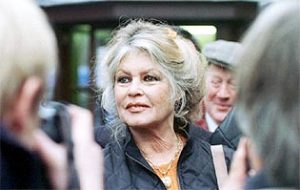
Brigitte Bardot 1934- 2025 (Image:Par Cdrik b06)
She remains, even now, an uncomfortable figure — and that discomfort is central to her importance.
In leaving cinema behind, she preserved her myth. In dedicating herself to causes she believed just, she gave that myth purpose.
Brigitte Bardot did not ask to be liked, forgiven, or explained. She asked only to be left free — and in that, she was entirely consistent.
Main Image: Par ETH-Bibliothek Zürich, Bildarchiv / Fotograf: Comet Photo AG (Zürich) / Com_L10-0171-0015 / CC BY-SA 4.0, CC BY-SA 4.0, https://commons.wikimedia.org/w/index.php?curid=111165569
_____________________________________________________________________________________________________________________________
Click here for more News & Current Affairs at EU Today
Click here to check out EU TODAY’S SPORTS PAGE!
_____________________________________________________________________________________________________________________________



