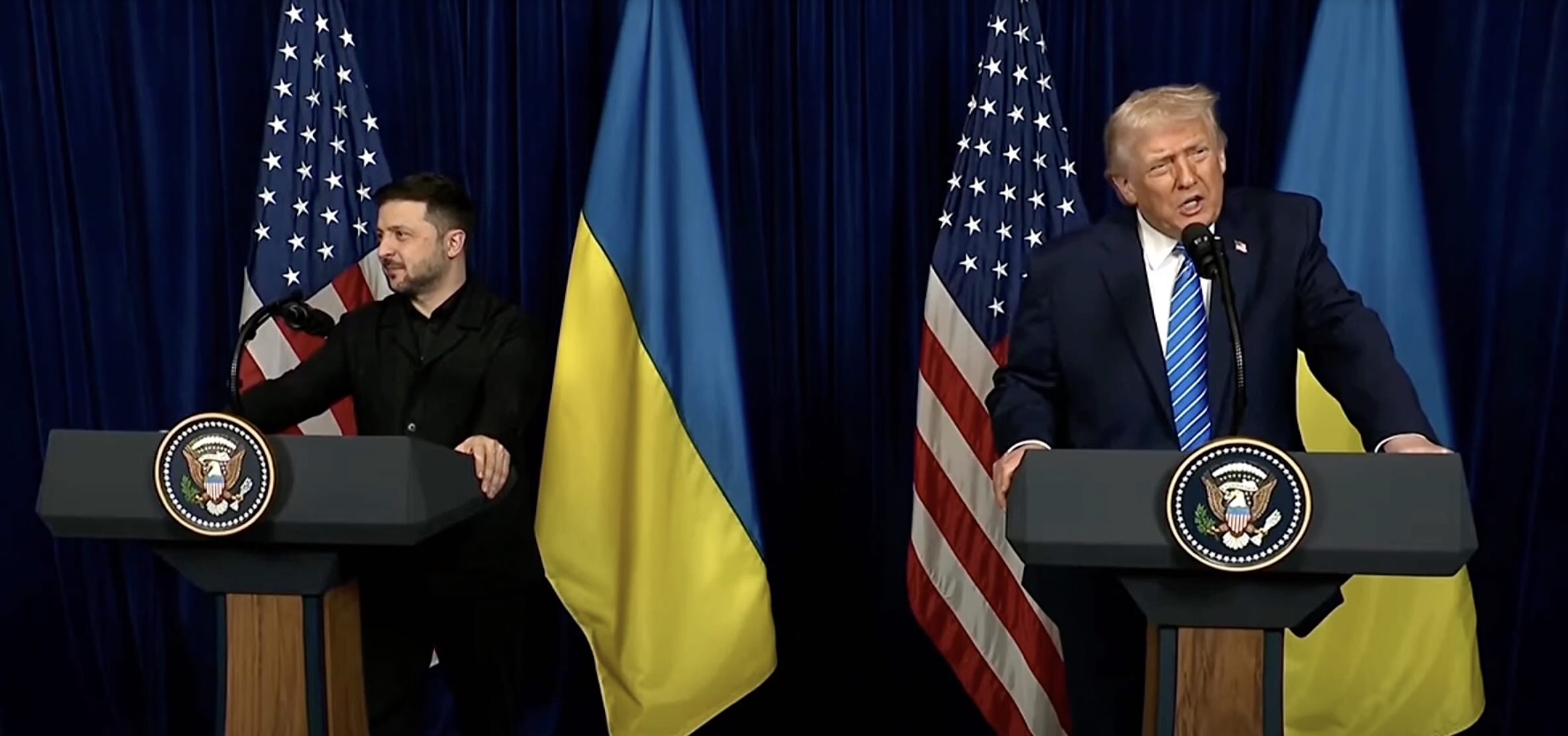
Donald Trump and Volodymyr Zelenskyy emerged from their Florida meeting with the public choreography of progress: a short press appearance, upbeat signalling, and talk of an agreement taking shape.
Yet the central issue is not whether a document can be produced. It is whether any document, however elegantly drafted, would protect Ukraine or merely freeze the war on terms that can be rewritten later.
The atmosphere around the talks mattered. Trump framed the meeting as exceptionally consequential and leaned heavily on urgency. That style is familiar: deadlines concentrate minds, but they also compress scrutiny. In negotiations, speed is not neutral. It decides who has time to test the fine print and who is pushed towards acceptance because delay is made to look irresponsible.
A second feature was Trump’s acknowledged contact with Vladimir Putin before and after the Zelenskyy meeting. The optics invite the suspicion that Moscow’s preferences are being relayed into the room and then reported back out again. Even if that is not the intention, it is the kind of sequencing that signals who is treated as indispensable and who is treated as adjustable.
Not a peace process, but a process of pressure
The emerging shape of the diplomacy looks less like a balanced attempt to reconcile positions and more like an effort to design a package that Ukraine can be urged to accept. The core question becomes: pressure on whom, and for what purpose?
If the goal is a rapid ceasefire, the temptation is to focus on the party that relies most on Western support and therefore has the least room to refuse. That pushes leverage towards Washington and away from Moscow. It also creates a dangerous asymmetry: Russia can hold out for terms that legitimise its gains, while Ukraine is pressed to show “flexibility” as the price of Western political momentum.
Form beats slogans: why enforceability is the real battlefield
The most important dispute is legal, not rhetorical. A settlement can contain soaring language about sovereignty and security while remaining politically reversible. For Kyiv, the difference between an assurance and a binding commitment is not academic. It is the difference between an agreement that deters renewed aggression and one that merely pauses the fighting until circumstances change.
Any pledge that rests on political goodwill, executive discretion, or ambiguous drafting can be narrowed or abandoned by a future administration. A mechanism that is formal, clearly worded and hard to unwind is a different category altogether. This is why the debate gravitates to ratification, statutory obligations, and the practical machinery of enforcement — not the soundbites offered at a press lectern.
The “split package” risk: territory nailed down, guarantees postponed
The most obvious structural hazard is a settlement divided into separate tracks: a ceasefire and territorial “realities” agreed now, while security guarantees and reconstruction money are parked in later protocols. That sequencing would suit Moscow. It would lock in what Russia wants first — control and lines on the map — while leaving what Ukraine needs most — deterrence and resources — as promises to be negotiated after the fact.
In practice, this is how weak agreements are built. The hard concessions are written into the initial text; the compensating commitments are relegated to future arrangements where they can be diluted, delayed or traded away. The result can look like peace while functioning as an intermission.
Zaporizhzhia: the asset that keeps returning
Trump’s public attention to the Zaporizhzhia nuclear power plant was striking. The plant is not merely a symbol. It is a strategic asset: a vast source of power in a region where energy, industry and infrastructure are all part of the conflict’s economic geometry.
Control over Zaporizhzhia carries leverage. It can be presented as a confidence-building measure, an economic prize, or a technical necessity for post-war recovery. It can also be used as a bargaining chip to dress up a wider settlement as “pragmatic” while shifting attention away from the harder question of enforceable security.
Referendum politics: shield, or trap
A referendum is often floated as a democratic valve for territorial questions. It can serve as a shield against deadline pressure — a way of saying that immediate signature is impossible because constitutional procedure requires time and public legitimacy.
But it can also become a trap if it is used to translate coercion into domestic consent and then presented as a substitute for international law. If a referendum is staged under conditions of displacement, fear, and relentless external pressure, it may deliver a result that is politically useful to those who want closure, while leaving Ukraine strategically exposed. Any such mechanism would demand strict clarity about the question, transparent conditions, and a legal framework that prevents it being used to launder outcomes that would not stand under international norms.
Russia’s favourite technique: ambiguity dressed as diplomacy
Moscow has long preferred texts that sound reasonable yet carry multiple meanings. In an agreement built on elastic phrasing — “realities on the ground”, “mutual understanding”, “security indivisibility” — each party can later claim the document validates its interpretation. That is a recipe for disputes baked into the settlement itself.
Ambiguity does not make unlawful acts lawful. What it does is allow political actors to pretend that the argument has been resolved when it has only been deferred.
What comes next
The next stage will hinge on drafting choices and sequencing. A ceasefire that fixes territorial outcomes while leaving security commitments vague will be sold as peace but function as postponement. An agreement that binds guarantees tightly, defines enforcement, and prevents backsliding is harder to sign — but more likely to prevent a return to war.
The decisive test is simple: does the settlement contain obligations that cannot be casually reversed, with enforcement that does not rely on goodwill, and with benefits tied to compliance rather than promises? If not, the document may end the headlines before it ends the conflict.