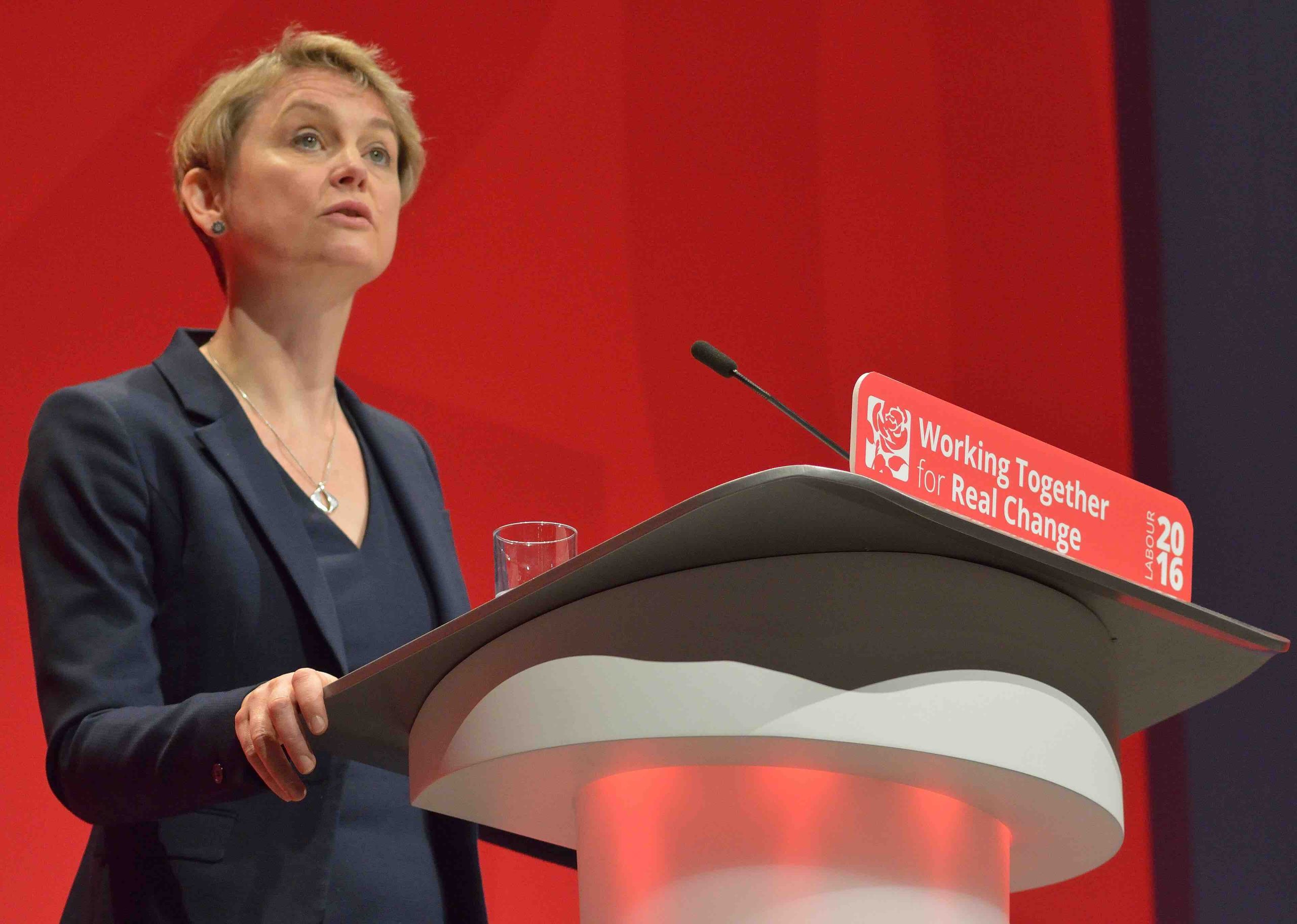
Yvette Cooper’s abrupt return to London has exposed how a domestic political scandal is disrupting Britain’s role in efforts to stabilise the Strait of Hormuz, just as London was trying to position itself at the centre of a wider European diplomatic response.
Yvette Cooper’s decision to cut short her diplomatic tour is more than a Westminster embarrassment. It is a foreign-policy disruption at a moment when Britain had been trying to help shape the next phase of the response to the war with Iran, the fragility of the ceasefire, and the reopening of the Strait of Hormuz. Planned engagements in Tokyo and the Gulf have been cancelled as the Foreign Secretary returns to London, where the government is under renewed pressure over the handling of Peter Mandelson’s appointment as ambassador to Washington.
The immediate significance lies in timing. On 17 April, Britain and France co-chaired an international summit on the Strait of Hormuz and secured backing from 51 countries for the reopening of the waterway, freedom of navigation, and further work on a defensive multinational mission. That made London one of the principal European actors in trying to move the issue from emergency diplomacy towards practical maritime stabilisation. Three days later, one of the key British ministers involved in that effort has been pulled back into a domestic political crisis.
This is not a minor loss of tempo. By the afternoon of 20 April, the wider regional picture remained unstable. Oil had moved higher again after the seizure of an Iranian cargo vessel cast fresh doubt on the ceasefire, and tanker traffic through Hormuz was still being watched for signs of whether confidence was genuinely returning. In such conditions, diplomacy is not decorative. It is part of the mechanism by which governments try to keep a ceasefire from unravelling and a commercial corridor from slipping back into paralysis.
The political scandal that forced Cooper home is by now familiar in outline, but its effects are not confined to domestic damage. The government has acknowledged that Mandelson was announced for the Washington post before the vetting process had been completed, and ministers have admitted that this was a mistake. The row has widened into a broader argument about who knew what, who overruled earlier advice, and whether the Prime Minister was properly informed. Keir Starmer was due to address Parliament on Monday, while the dismissal of the Foreign Office’s top civil servant has deepened the sense of institutional disorder.
The cost is not merely reputational. Britain had been trying to position itself as one of the few European states capable of combining diplomacy, military planning and broader coalition work on Hormuz. That effort depended on sustained ministerial engagement with partners in Europe, the Gulf and Asia. Cooper’s trip had been designed to help build support for a more durable ceasefire and to prepare the ground for the next steps on shipping security. Interrupting it does not end that process, but it does weaken British continuity at a delicate moment.
There is also a broader point about statecraft. Britain has spent the past week presenting itself as a serious actor in a crisis that touches energy markets, maritime law and global trade. The joint statement issued after the Paris summit was carefully drafted and strategically sound. It argued for the immediate reopening of the Strait, reaffirmed the principle of transit passage, and set out a framework for international action. Yet such diplomacy depends on governmental credibility. When a foreign minister has to abandon a live international tour because her department is engulfed in an appointments scandal, that credibility is weakened, however polished the communiqués may be.
What makes this more serious is that the UK is not operating in a vacuum. Washington has preferred coercive pressure and a more unilateral line. European governments, led by London and Paris, have instead tried to construct a broader, law-based and multinational response. That approach requires sustained coordination and patient diplomacy. It is less theatrical than presidential declarations, but more likely to prove durable. The trouble for Britain is that it now risks looking distracted just as it was trying to claim a central organising role.
None of this means British diplomacy has collapsed. The Paris framework remains in place, allied military planning can continue, and the broader case for reopening Hormuz is unchanged. Nor should the story be inflated into a constitutional drama every hour. But the interruption matters because it comes at exactly the wrong moment. A government that wants to be taken seriously abroad must first show that it can keep its own house in order. On 20 April, Britain is being reminded that foreign policy is not only made in summits and statements. It is also made, and sometimes undone, by competence at home.
Main Image: Par Rwendland — Travail personnel, CC BY-SA 4.0, https://commons.wikimedia.org/w/index.php?curid=52384938