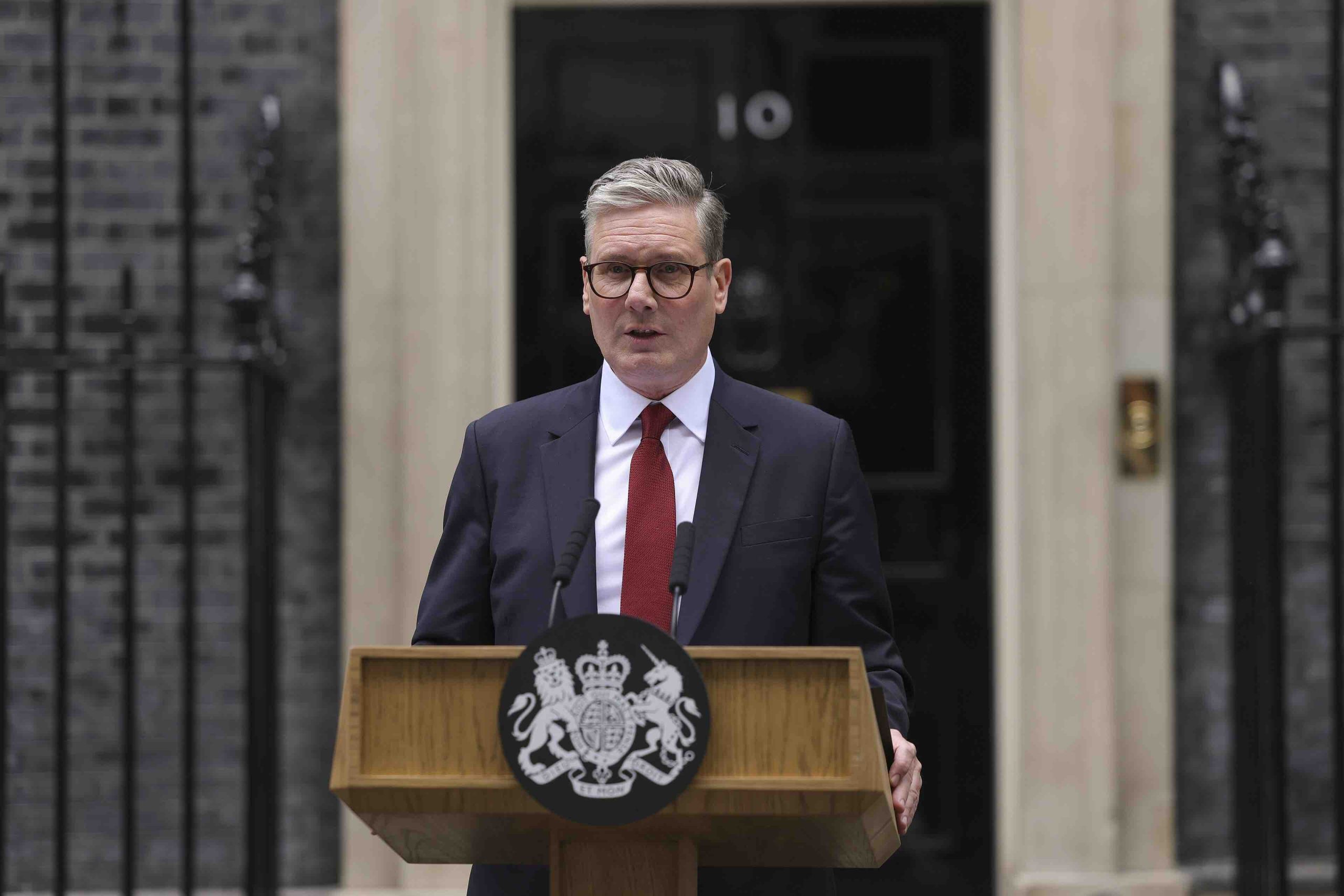
Sir Keir Starmer’s resignation as prime minister and Labour leader marks a dramatic turning point for a government that arrived in office promising stability and competence but now departs amid mounting questions about its political direction.
Standing outside Downing Street, an emotional Starmer acknowledged the doubts that had grown within his party over recent months.
“Labour has been asking whether I am best placed to lead us into the next general election,” he said. “I have heard the answer.”
Starmer framed his departure as an act of service, insisting that every decision he had taken in office had been guided by a desire to put “the country I love first”. At times visibly moved, he paid tribute to his wife, Vic, whom he described as his “rock”, and spoke of wanting to devote more time to his family.
The immediate political consequence is a leadership contest that Labour’s governing body has been asked to conclude before Parliament returns in September. The broader significance lies in what Starmer’s departure reveals about the governing party’s uncertainty over its future course.
Attention is already turning to Andy Burnham, the former cabinet minister and Mayor of Greater Manchester, who is widely viewed as a leading contender to succeed him. Burnham’s arrival in Westminster this week, following his by-election victory in Makerfield, is likely to intensify speculation about his intentions.
For many within Labour, Burnham offers qualities that Starmer increasingly struggled to project. He is regarded as a more instinctive political communicator and has cultivated a reputation as a champion of regional England and public services. His supporters believe he could reconnect the party with voters who have become disillusioned with Westminster politics.
Yet the prospect of a Burnham leadership also raises difficult questions about how much substantive change Labour is prepared to embrace.
While personalities may change, policy assumptions often prove more durable. Burnham has long advocated an active role for the state in economic and social policy, supporting greater public investment and intervention in areas ranging from transport to housing and healthcare. Admirers see this as a pragmatic response to Britain’s structural challenges. Critics view it as a continuation of a model that relies heavily on public spending and, ultimately, higher taxation.
That debate comes at a sensitive moment for the UK economy. Growth remains subdued by historical standards, public finances are under pressure and productivity performance continues to lag behind many international competitors. Any incoming leader will face difficult choices between fiscal discipline and demands for additional investment.
The challenge for Labour extends beyond questions of tax and spending. Starmer’s resignation highlights a deeper issue that has shadowed the party throughout its time in government: the tension between managerial competence and political vision.
Labour entered office presenting itself as a corrective to years of instability. That message resonated with voters seeking predictability after a prolonged period of political turbulence. Yet governing requires more than reassurance. Over time, critics increasingly argued that the administration struggled to articulate a compelling long-term economic narrative capable of inspiring confidence among businesses, investors and voters alike.
The party now faces a fundamental question. Does it believe Britain’s economic difficulties can be addressed primarily through a larger and more interventionist state, or is there a need for a broader agenda centred on growth, productivity and private-sector dynamism?
Burnham’s supporters would argue that the distinction is overstated. They contend that active government and economic growth are complementary rather than contradictory objectives. Nevertheless, sceptics see continuity rather than renewal in many of the ideas associated with his political outlook.
More broadly, Starmer’s departure is likely to reignite criticism that Labour has become overly preoccupied with internal ideological debates and political symbolism at a time when many voters are focused on living standards, housing affordability and economic opportunity.
The next leader will inherit a party that remains electorally significant but strategically uncertain. Winning a leadership contest will be considerably easier than addressing the structural problems facing the country.
For Labour, the coming months represent more than a change of personnel. They are a test of whether the party can develop a clearer and more persuasive vision for economic growth and national renewal.
For the electorate, meanwhile, the question is simpler. After years of political upheaval and economic pressure, voters are likely to demand not merely a new leader, but evidence that Britain’s governing class can offer solutions that extend beyond the assumptions and arguments of the past.
Main Image: – Prime Minister Sir Keir Starmer arrives at Number 10 Downing St
___________________________________________________________________________________________________________________
Click here for more News & Current Affairs at EU Today
Click here to check out EU TODAY’S SPORTS PAGE!
___________________________________________________________________________________________________________________