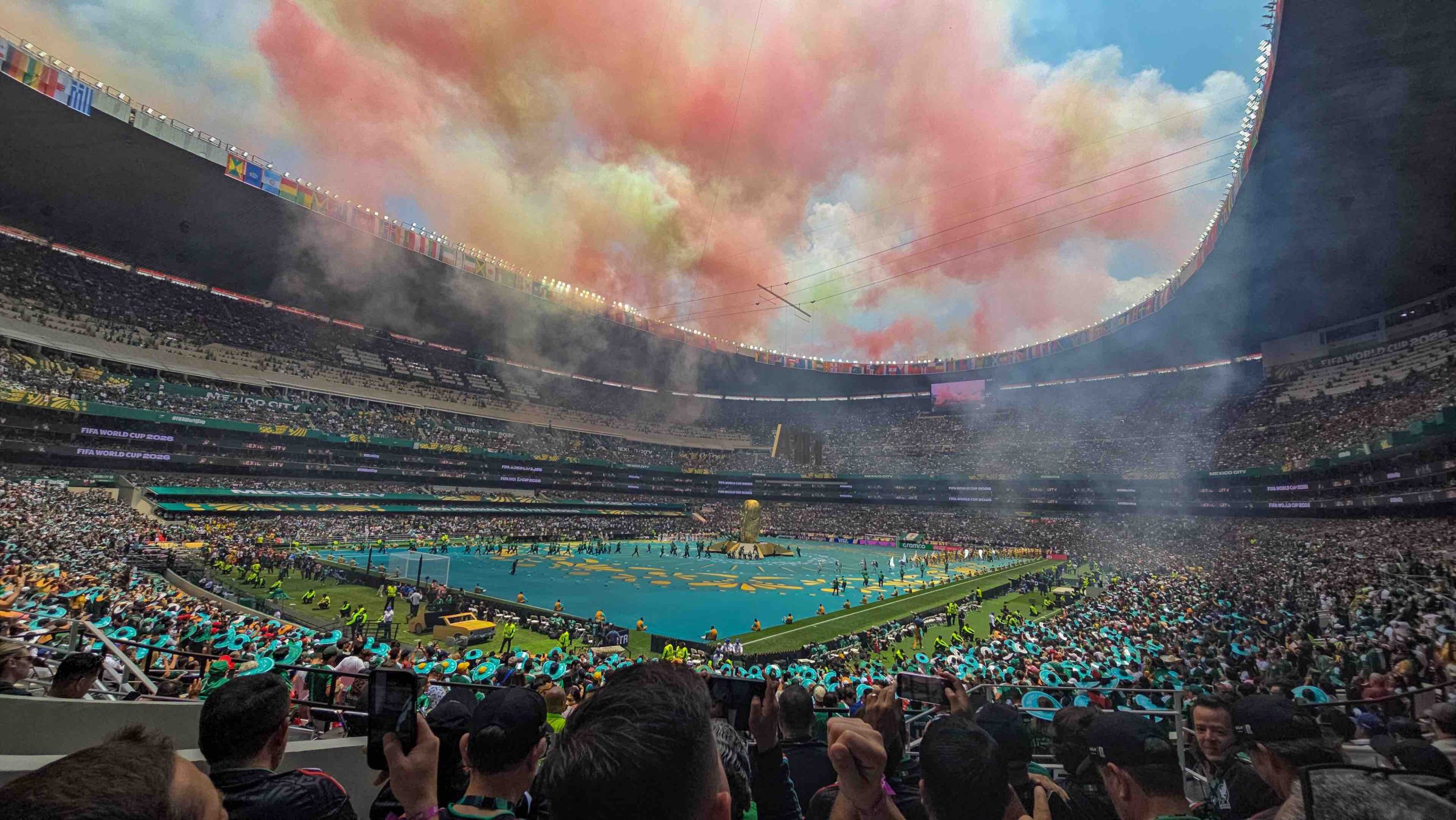
For FIFA, the 2026 World Cup is already a commercial triumph. Stadiums are full, television audiences are vast and sponsors are enjoying unprecedented exposure across three host nations.
Yet beneath the spectacle lies a growing sense of dissatisfaction among many travelling supporters, particularly those arriving from Europe expecting a football festival and finding instead an expensive, fragmented and often frustrating customer experience.
The tournament was sold as football’s grandest celebration. For many fans, however, it has become a lesson in the economics of modern sport, where the costs of participation increasingly appear detached from the traditions that made the game the world’s most popular sport.
As the competition moves into its latter stages, a provocative question is beginning to emerge in supporter circles. Will the 2026 tournament ultimately be remembered not for its football, but as the “Rip-Off World Cup”?
The most persistent complaint has been price.
Months before a ball was kicked, supporter organisations warned that dynamic pricing risked turning access to matches into a privilege for the affluent rather than a realistic aspiration for ordinary fans. Many European supporters found themselves paying several times more than they had anticipated for tickets, while accommodation costs in host cities frequently soared to levels more familiar to luxury tourism than mass sporting events.
What has particularly irritated many visitors is not merely the headline cost of tickets but the cumulative expense of attendance. Flights, hotels, food, drinks and local transport have combined to create what some supporters describe as the most expensive World Cup ever staged. Fans who had spent years saving for the experience reported finding themselves confronted by a seemingly endless sequence of charges and surcharges.
The result has been a growing perception that supporters have been treated less as guests and more as consumers to be monetised.
Transport has become another flashpoint.
European football supporters are accustomed to major tournaments where public transport forms an integral part of the match-day experience. Germany’s Euro 2024 was widely praised for its extensive rail network and relatively seamless integration between transport systems and supporter travel.
By contrast, many visitors to North America encountered a vastly different reality.
Supporters reported expensive rail fares, costly ride-sharing services and journeys that often involved travelling considerable distances to stadiums located far from city centres. Parking charges around some venues reached levels that many fans described as extraordinary, in some cases rivaling or even exceeding the price of match tickets themselves.
The issue is not simply one of cost. It is also one of value.
Many supporters have complained that they were paying premium prices for transport systems that, in their view, delivered a service that was often confusing, overcrowded or poorly coordinated. Long queues, limited information and difficult transfers became recurring themes in fan accounts shared across European media and social platforms.
For visitors accustomed to compact football cities such as Berlin, Munich, Madrid or Manchester, the experience often felt alien. Travelling to a World Cup match frequently resembled a logistical exercise rather than a celebration of sport.
Customer service has generated further criticism.
Nothing illustrates this more clearly than the ticketing controversies that have periodically overshadowed the tournament. Reports of ticket cancellations, confusing communications and limited assistance have fuelled anger among supporters who had already invested substantial sums in flights and accommodation.
Many fans complained not only about the problems themselves but about the difficulty of obtaining clear answers when things went wrong. Some described customer-service systems that appeared designed to deflect responsibility rather than resolve disputes. Others expressed frustration that, despite spending thousands of dollars to attend the event, they often felt like anonymous entries in a vast commercial database.
None of this diminishes the quality of the football itself. The matches have frequently been dramatic, entertaining and memorable. Nor should criticism of the tournament obscure the efforts of volunteers and local workers who have often gone out of their way to assist visitors.
Yet the contrast between the quality of the action on the pitch and the experience off it has become increasingly difficult to ignore.
In some of the harsher corners of supporter forums and social media, critics have begun contrasting America’s self-image as the “Land of the Free” with what they perceive as a World Cup dominated by fees, surcharges and relentless commercialisation. A particularly biting phrase has begun to circulate among some disgruntled fans: “the Land of the Freebie and the Home of the Depraved.”
The slogan is intentionally provocative and undoubtedly unfair to many Americans. Yet its emergence reflects something important. It captures a growing frustration among visitors who feel that nearly every aspect of the tournament experience has carried a premium price tag while delivering a level of service that often failed to justify the cost.
Whether that perception is justified will be debated long after the final whistle.
What is clear is that the economics of modern football are pushing the World Cup towards a crossroads. The tournament’s mythology was built by ordinary supporters travelling across borders to follow their national teams. Increasingly, however, attending the event appears to require corporate-level budgets and a willingness to absorb costs that would once have been considered unimaginable.
The crowds remain large. Television audiences continue to break records. Commercial revenues are soaring.
Yet among many travelling supporters there is a growing suspicion that football’s greatest festival is drifting away from the people who gave it life. If that sentiment endures, then the enduring legacy of 2026 may not be the goals, the upsets or even the champions themselves.
Instead, this tournament risks being remembered as the World Cup where football became a luxury product — and where too many fans felt they had paid a premium price for a decidedly second-rate experience.
By Omar David Sandoval Sida – Own work, CC BY-SA 4.0, https://commons.wikimedia.org/w/index.php?curid=194648358
__________________________________________________________________________________________________________________
Click here for more News & Current Affairs at EU Today
Click here to check out EU TODAY’S SPORTS PAGE!
___________________________________________________________________________________________________________________