India’s request for relief from planned EU restrictions on metal-scrap exports exposes a difficult contradiction: Brussels wants to retain recyclable materials for its own low-carbon industry while promising a deeper and more predictable trading relationship with New Delhi.
India has asked the European Union for relief from planned restrictions on exports of metal scrap, warning that tighter European controls could raise input costs for Indian steel and aluminium producers just as the two sides prepare to implement a major trade agreement.
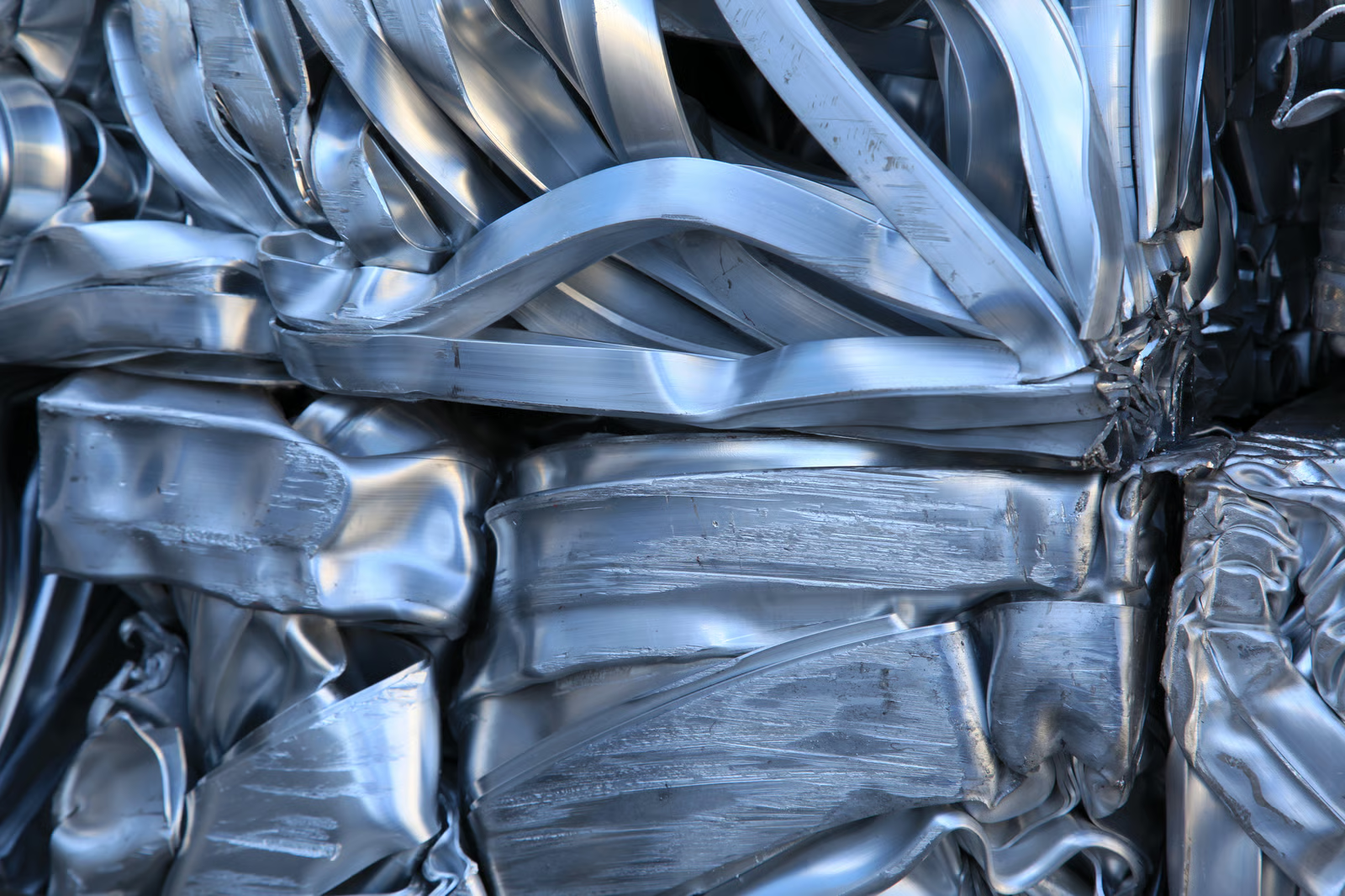
The request concerns an increasingly strategic commodity. Scrap is no longer treated simply as waste sold to the highest bidder. It is a lower-carbon feedstock for metals production and a resource that the EU wants to retain as it expands recycling, reduces dependence on imported raw materials and decarbonises heavy industry.
India imported about 366,000 tonnes of aluminium scrap from the EU in 2025 and was the bloc’s largest buyer during the first quarter of 2026, according to industry estimates cited by officials. Indian producers argue that restrictions would tighten supply and erode some of the market-access benefits expected from the new trade pact.
The dispute is an early warning that tariff liberalisation will not remove the friction created by Europe’s industrial and environmental regulation.
Scrap has become an industrial asset
Recycled aluminium and steel generally require less energy than production from primary ores. As carbon costs rise and manufacturers seek lower-emission materials, high-quality scrap has become more valuable.
The EU also wants its circular economy to generate industrial capacity inside Europe. If recyclable material is collected in the bloc but exported for processing elsewhere, European policymakers fear losing both the environmental benefit and the commercial value.
From Brussels’ perspective, export controls can therefore support climate policy, resource security and domestic manufacturing. From New Delhi’s perspective, the same controls restrict access to a traded industrial input and make the recently negotiated partnership less valuable.
That conflict cannot be dismissed as a technical complaint. It goes to the definition of an open green economy: whether circularity means keeping materials within Europe or creating reliable recycling supply chains with trusted partners.
The trade agreement raises expectations
The EU and India have spent years negotiating a broad agreement covering tariffs, services, standards and investment-related rules. EU Today previously examined how the emerging legal text tied market access to World Trade Organization disciplines and digital standards.
For India, the value of the deal depends not only on lower tariffs for finished goods but on predictable access to inputs. A producer cannot take full advantage of export preferences if the cost of scrap, energy or other raw materials rises sharply.
For the EU, agreeing a blanket exemption could weaken its ability to preserve secondary materials for European mills. Other partners would demand equivalent treatment, and the environmental justification for the restriction could be challenged if exceptions appeared commercially selective.
The solution may lie in conditions rather than a simple exemption. Brussels could distinguish between exports to facilities that meet environmental and traceability standards and exports to destinations where recycling creates pollution or leakage. Quotas, monitoring or joint recycling investments could preserve supply without abandoning the EU’s circular-economy objectives.
Resource security is reshaping trade policy
The dispute belongs to a broader change in European policy. Raw materials, recycled feedstocks and industrial components are increasingly treated as security assets rather than ordinary commodities.
The Commission has opened a platform intended to connect European buyers with diversified critical-material suppliers. It is also developing stockpiles and procurement preferences designed to support European production.
These policies can conflict with the EU’s role as an advocate of open, rules-based trade. Export restrictions imposed by other countries are often criticised in Brussels for distorting markets. The EU must therefore show that its own measures are transparent, proportionate and genuinely connected to environmental or security needs.
India will be particularly sensitive to unequal treatment. It has already criticised European climate measures that impose costs on carbon-intensive imports. Scrap restrictions could be presented domestically as another example of the EU opening its market selectively while protecting its own industrial transition.
The Gulf adds urgency
Indian industry also faces pressure because the United Arab Emirates introduced an export ban in June. India obtains roughly a fifth of its scrap from Gulf states, meaning restrictions from two important sources could arrive at the same time.
This concentration gives New Delhi a strong incentive to seek assurances before the EU trade agreement takes full effect. It also gives Brussels leverage to propose deeper industrial cooperation: investment in collection, sorting and recycling capacity inside India could reduce dependence on imported scrap while creating business for European technology suppliers.
Such cooperation would fit the strategic language surrounding the trade deal better than a narrow argument over tonnage. Both sides want resilient supply chains and lower-carbon industry. They disagree over where the valuable material should remain.
A test of policy coherence
The European Commission will need to reconcile three objectives: retaining resources for European industry, meeting environmental standards and maintaining credibility with a major new trade partner.
An indiscriminate restriction risks raising costs in India and undermining trust. A broad exemption risks draining European scrap markets and weakening the business case for domestic recycling. A standards-based arrangement would be more complex, but it could connect trade access to verified environmental performance.
This is precisely the kind of dispute that modern trade agreements must manage. Tariffs are no longer the only barrier. Climate rules, resource security, recycling standards and industrial subsidies increasingly determine who can buy what, and on which terms.
India’s request has arrived before implementation because both sides understand the precedent. If they can resolve the scrap issue transparently, the agreement may prove capable of managing the regulatory conflicts that shape contemporary trade. If they cannot, the first serious dispute may begin before the promised gains have reached either side.