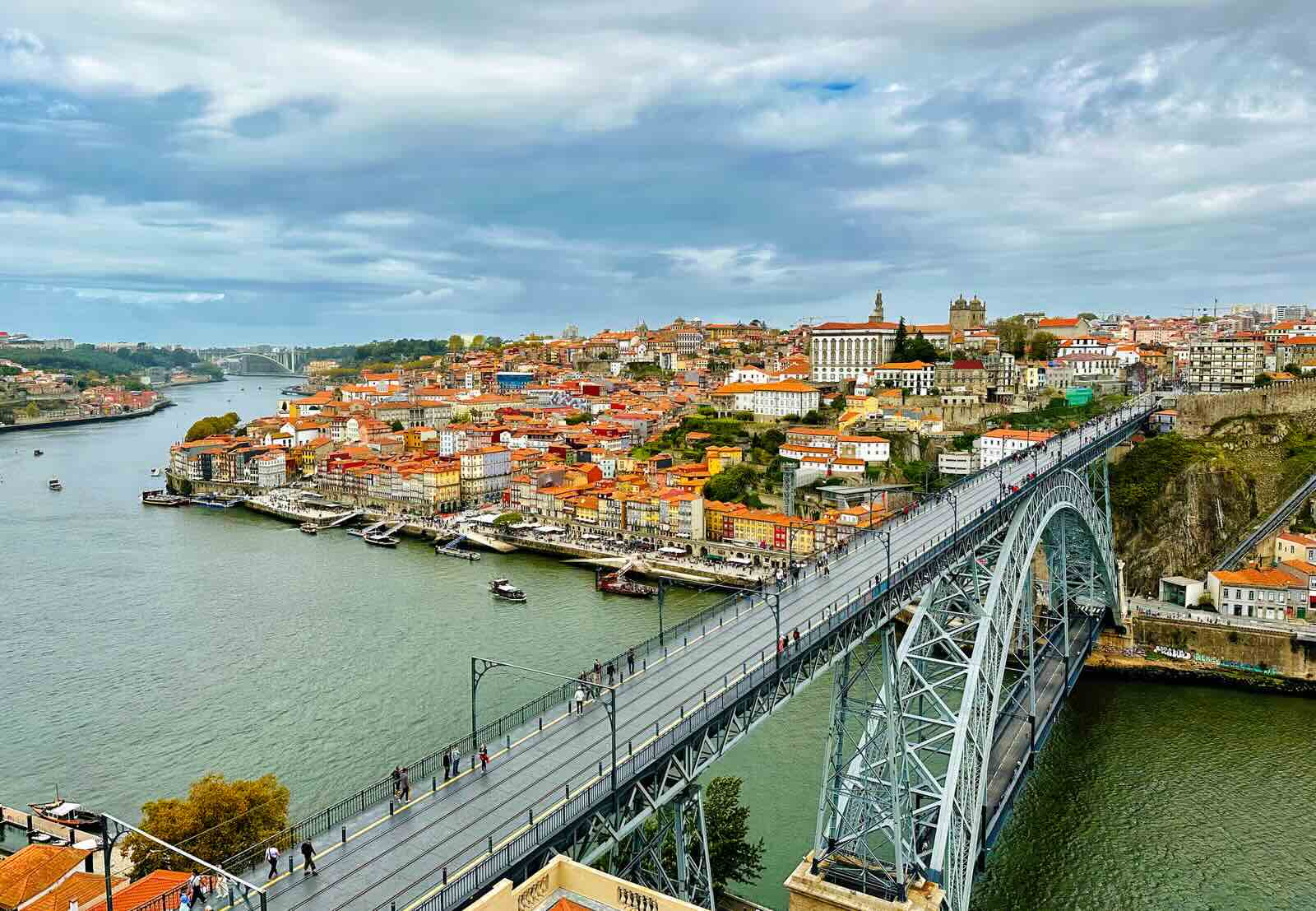
Residents of Portugal’s second-largest city can now travel free of charge across the Porto metropolitan public transport network, under a municipal programme expected to cost up to €25 million a year.
Porto has introduced free public transport for its residents, allowing eligible passengers to use metro, bus, suburban rail, tram and river services across the wider metropolitan area without paying fares.
The measure came into force on Friday, July 10, and applies to people whose registered residence is within the municipality of Porto. Although the scheme is funded by Porto City Council, eligible residents are not restricted to journeys within the city boundary and may travel throughout the Porto Metropolitan Area.
The free entitlement covers services included in the Andante integrated transport network, which brings together different operators and modes of transport under a single ticketing system. Residents can use Porto Metro services, buses operated by STCP and the Unir network, CP suburban trains, the city’s tram network and river crossings integrated into the Andante system.
The municipality had initially planned to introduce the measure later in 2026 but brought forward its implementation after concluding that the necessary technical and administrative arrangements could be completed sooner.
The entitlement is linked to the municipal Cartão Porto., which is used to confirm that a passenger is resident in the city.
Residents who already hold the card must visit an Andante shop or a Payshop outlet to activate the free metropolitan pass. Porto Mayor Pedro Duarte said the update should take only a few seconds.
Those who do not yet have a Cartão Porto. can apply online or through the city’s municipal residents’ office. The free travel entitlement is expected to be renewed annually.
Young passengers who already hold Portugal’s free public transport pass for people aged up to 23 do not need to change their existing arrangements. The national youth scheme already provides eligible passengers with free monthly travel, although users must continue to load and validate their passes in accordance with Andante rules.
The wider free-transport programme was among Duarte’s principal promises during the 2025 municipal election campaign. He won the mayoralty as the candidate of a coalition formed by the centre-right Social Democratic Party, CDS–People’s Party and Liberal Initiative.
Porto’s municipal executive approved the proposal in April, and the Municipal Assembly endorsed it in May. The scheme was initially estimated to cost approximately €20.5 million a year, although Duarte has since said that the annual financial requirement is likely to be between €20 million and €25 million.
The mayor has acknowledged that the programme will require a substantial and continuing commitment from the municipal budget. He has suggested that Porto could raise its tourist tax from €3 to €4 per night, matching the rate charged in Lisbon, as one possible source of additional revenue.
During the launch, Duarte said the municipality believed the estimated funding would be sufficient to operate the scheme. He nevertheless accepted that its long-term cost would depend on passenger demand and the number of residents who register for the free pass.
The policy is intended to encourage more people to leave their cars at home and use public transport for journeys within Porto and the surrounding urban region.
Duarte has cautioned that abolishing fares will not, by itself, resolve Porto’s congestion problems. He described the programme as part of a broader mobility strategy that must also include faster services, better connections, increased capacity and more reliable journey times.
Porto currently has about 16 kilometres of dedicated bus lanes. The municipality plans to increase this to approximately 22 kilometres by the end of 2026, giving buses greater priority over private vehicles on some of the city’s busiest routes.
The mayor said public transport would need to become more convenient and dependable than travelling by car before a substantial change in daily habits could be expected. The municipality’s objective is for public transport to become the main means of travelling around Porto, with private cars taking a secondary role.
The scheme is unusual because Porto is paying for its residents to travel across the entire metropolitan network rather than offering free journeys only inside the municipality.
The Porto Metropolitan Area comprises 17 municipalities, each of which remains responsible for its own spending decisions. Residents of neighbouring municipalities will therefore continue to pay for travel unless their local authorities introduce comparable arrangements.
Duarte, who also chairs the metropolitan authority, has said he would like the policy eventually to be extended across the region. However, he acknowledged that Porto cannot impose the programme on other councils or commit them to its financial cost.
The free pass applies only to Porto residents. Tourists, occasional visitors and commuters who live elsewhere in the metropolitan area must continue to buy the appropriate Andante ticket or subscription.
The programme expands earlier concessions introduced for children, young people and other eligible groups. Porto had already offered limited free travel to some city residents, while national and metropolitan schemes provide fare exemptions for passengers including young people and former combatants.
The new arrangement is considerably broader, covering adult residents regardless of age or income.
Its effect will depend on whether the removal of fares produces a sustained increase in public transport use and whether operators can accommodate additional passengers without damaging service frequency or reliability.
For Porto’s municipal government, the programme is both a household cost-reduction measure and a test of whether fare-free travel can change transport behaviour in one of Portugal’s largest and most heavily visited cities.