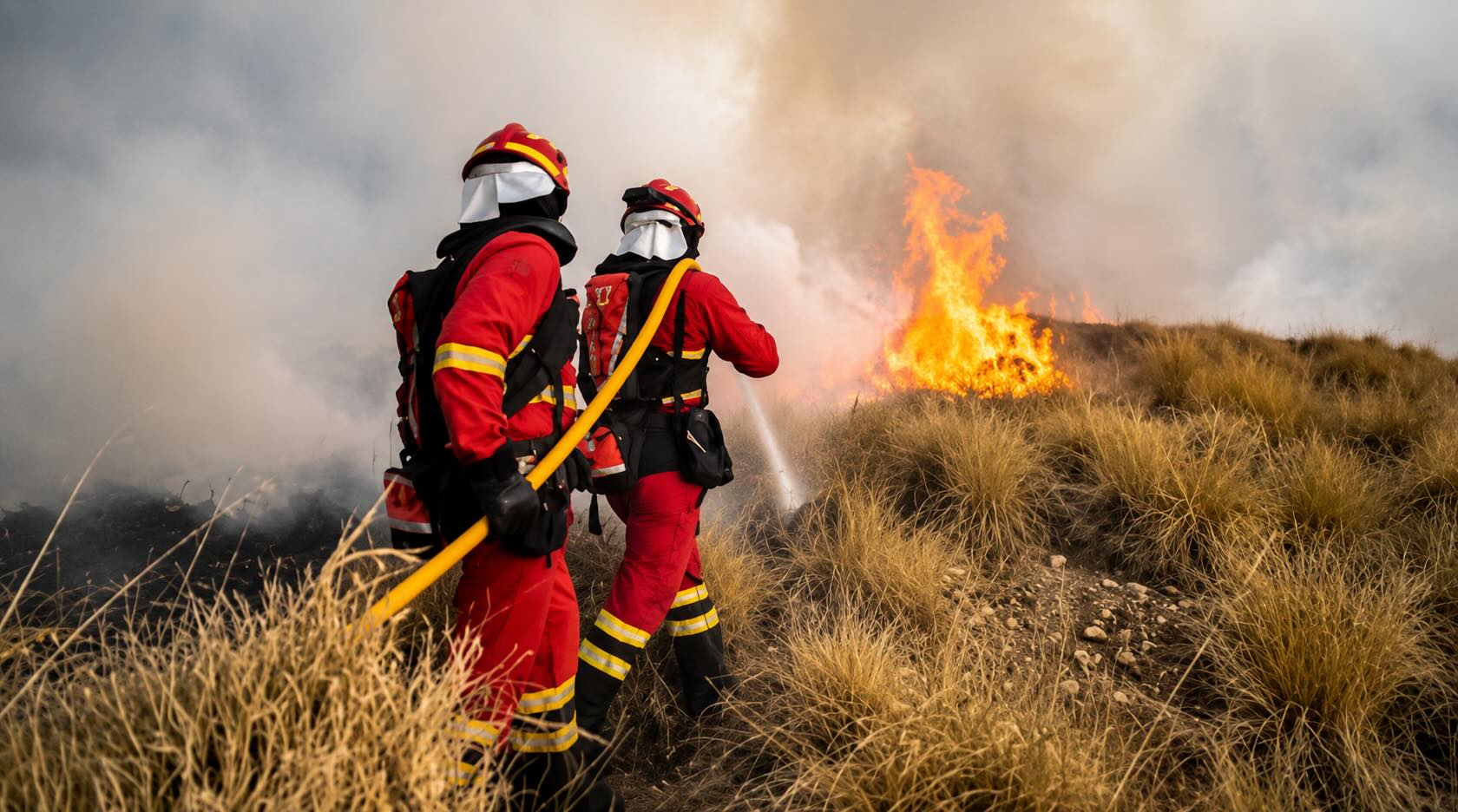
The rescue of a severely injured British couple after a deadly wildfire in Spain highlights the pressure on European civil-protection systems as summer fires threaten residents, tourists and emergency services.
Spanish rescuers have found a British couple semi-conscious in a ravine after a deadly wildfire swept through part of Almeria province, raising questions about evacuation timing, emergency warnings and public safety during Europe’s summer fire season.
Reuters reported that Spanish firefighters had moved onto the offensive against the deadly Almeria blaze after police and rescuers confirmed the discovery of the injured couple. The incident involved fatalities and severely injured tourists, making it more than a routine weather or fire update.
The immediate priority is medical and operational. But the case also has wider relevance for European travel and civil-protection planning as heat, drought and strong winds increase wildfire risk across southern Europe.
A search-and-rescue case
The couple were reportedly found badly burned and semi-conscious in difficult terrain. That detail matters because wildfire emergencies can quickly become search-and-rescue operations when residents or visitors fail to evacuate in time, miss warnings or become trapped by changing fire behaviour.
Visitors are often more vulnerable than residents. They may not know local escape routes, emergency-alert systems or terrain. Language barriers and unfamiliar accommodation locations can complicate evacuation.
Evacuation information
The key public-safety question is what information was available as the fire spread. Were residents and visitors warned early enough? Were evacuation orders clear? Did people know where to go? Were roads closed or congested?
Those questions should not be answered prematurely. Fire conditions can change quickly, and emergency services often operate under extreme pressure. But after severe injuries and fatalities, authorities will need to reconstruct the evacuation sequence.
The EU’s civil-protection framework, including the EU Civil Protection Mechanism, is designed to support member states when emergencies exceed national capacity. Spain has strong firefighting capabilities, but the growing intensity of wildfire seasons is stretching systems across Europe.
Tourism and risk
The incident is also a travel-safety story. Southern Europe remains a major destination for British and other European tourists during peak summer months. Wildfires can move faster than visitors expect, especially in rural or coastal areas with dry vegetation and limited roads.
Tour operators, rental platforms, hotels and local authorities may face increasing pressure to provide clearer fire-risk information, evacuation instructions and multilingual alerts.
Climate pressure
No single wildfire should be treated as a simple climate case without detailed evidence. But the broader trend is clear: hotter, drier conditions are increasing fire danger in parts of Europe. Emergency planning must assume more frequent high-risk days and more complex evacuations involving both residents and tourists.
For local governments, that means investing in warning systems, evacuation mapping, firebreaks, public information and coordination between police, firefighters and health services.
The immediate lesson
The rescue of the British couple is first a human tragedy. It is also a reminder that wildfire preparedness is now a European public-safety issue, not only an environmental one.
As the summer season continues, the Almeria fire will likely prompt renewed scrutiny of how authorities warn visitors, manage evacuations and search for missing people when fires move faster than expected.