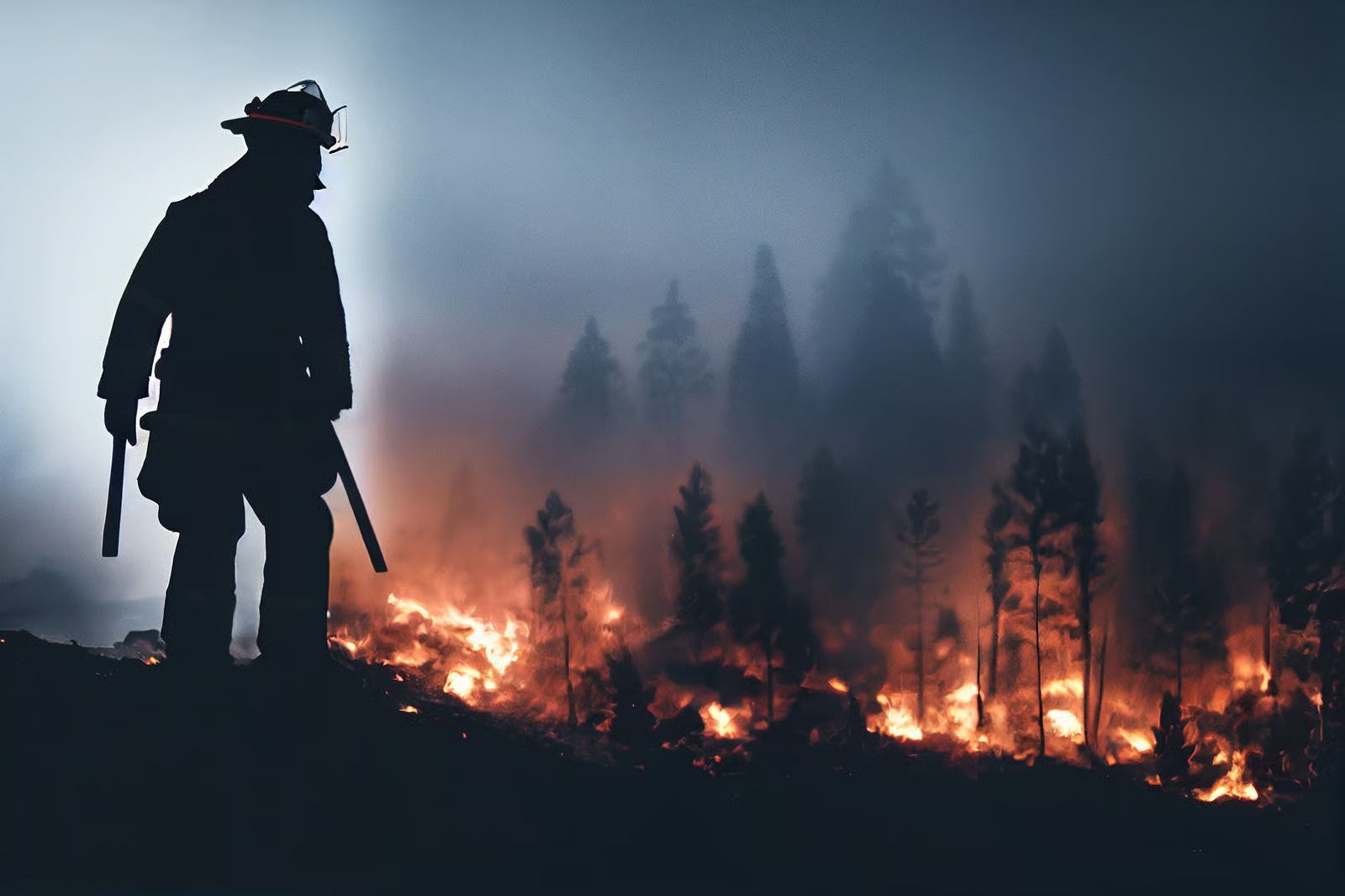
A wildfire near Fontainebleau forced evacuations and transport closures, with investigators examining multiple ignition points and France deploying water bombers near Paris.
A wildfire near Fontainebleau has forced evacuations and transport closures in the Paris region, prompting investigators to examine suspected arson and raising new questions about firefighting capacity beyond France’s traditional high-risk zones.
France sent water bombers to tackle a wildfire outside Paris, the first such deployment in Greater Paris. The fire disrupted road and rail links and forced local evacuations as emergency crews worked to contain the blaze.
The operational detail that changes the story is the reported presence of multiple ignition points. Ten separate starting locations would point investigators toward deliberate fire-setting rather than a single accidental spark. If confirmed, that would turn the incident from a weather-driven emergency into a criminal and security problem as well.
EU Today recently covered the human cost of wildfires in southern Europe, including the deadly Almeria fire in Spain. The Fontainebleau case is different because it brings large-fire aviation operations into the Paris region, an area not usually associated with the most intense Mediterranean fire risk.
That matters for preparedness. Heatwaves and drought are widening the geography of wildfire exposure. Regions that once treated major fires as exceptional may now need access to aircraft, trained crews, evacuation plans and transport-continuity protocols. When fire reaches a main motorway or rail corridor near Paris, the economic impact can spread quickly.
Suspected arson makes the problem harder. Fire services can prepare for dry vegetation, wind and heat. They cannot fully predict deliberate ignition across multiple locations. If investigators confirm criminal activity, authorities will need to consider surveillance, patrols and public-warning systems during high-risk weather periods.
The use of water bombers near Paris is symbolically important. France has long deployed aerial firefighting assets in the south, where summer fires are expected. Moving such assets toward the capital region suggests a broader redistribution of risk. It also raises the question of whether aircraft numbers and crew availability are sufficient if several regions face simultaneous fire outbreaks.
Transport disruption adds another layer. Fires near railways and motorways can close evacuation routes, delay emergency access and interrupt national logistics. In densely populated regions, smoke and road closures can create cascading effects far beyond the fire perimeter.
The policy lesson is that wildfire planning can no longer be geographically narrow. Climate conditions, land management and criminal behaviour can combine to create major incidents in places where emergency systems are less accustomed to them.
The Fontainebleau fire will be judged by investigators and emergency reviews in the coming days. But the immediate warning is already visible: Europe’s wildfire season is no longer confined to the usual map, and firefighting resources may have to follow the risk north.