The reported intervention by the Trump administration places Ukraine’s campaign against Russian maritime logistics alongside European dependence on Kazakh oil and the growing disruption of Black Sea agricultural exports.
The Trump administration has reportedly warned Ukraine against attacking non-Russian shipments in the Black Sea after drone strikes hit tankers near the Caspian Pipeline Consortium’s terminal outside Novorossiysk.
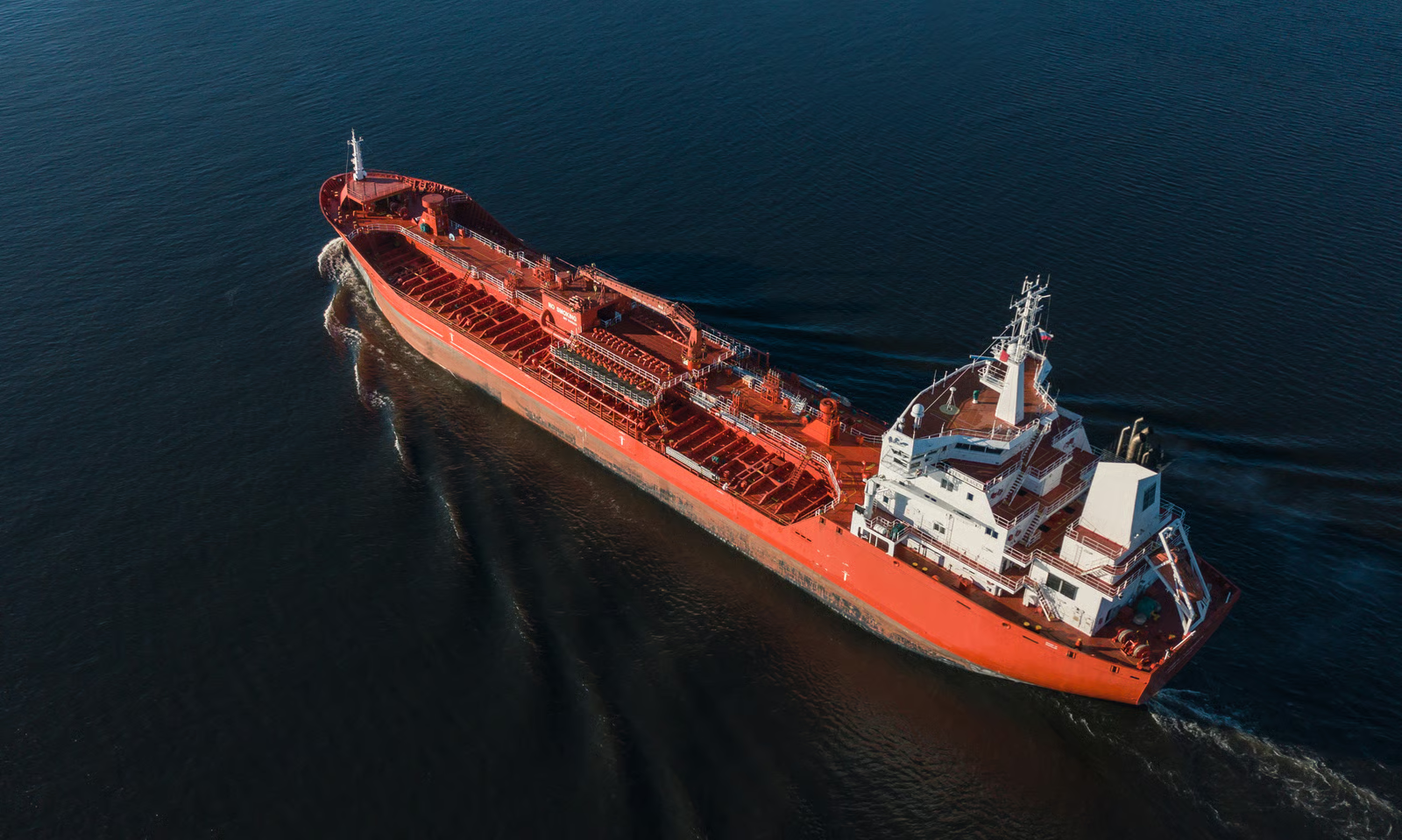
The warning followed discussions between Chevron chief executive Mike Wirth and US officials over the protection of the company’s substantial investments in Kazakhstan. According to an account of those discussions, four tankers were struck near the Russian port, including one chartered by Chevron. The White House subsequently cautioned Kyiv against targeting cargoes that were not Russian.
The dispute has direct implications for the European Union because the affected infrastructure is one of the principal routes through which Kazakh oil reaches European markets.
The Caspian Pipeline Consortium route runs for 1,511 kilometres from western Kazakhstan, through Russian territory, to a dedicated terminal near Novorossiysk. Chevron owns a 15 per cent interest in the consortium, while about 90 per cent of the crude transported by the pipeline originates in Kazakhstan. The company also owns 50 per cent of the Tengizchevroil partnership, which operates the Tengiz field.
Kazakhstan was the EU’s third-largest supplier of petroleum oils in 2025, accounting for 12.7 per cent of imports, behind only the United States and Norway, according to the latest Eurostat data. Most Kazakh oil exports to Europe travel through the CPC system, making a pipeline located partly inside Russia an important component of the EU’s attempt to diversify away from Russian energy.
This creates an awkward distinction for European and American policymakers. Ukraine has a strategic interest in disrupting Russian oil revenue and transport networks that support Moscow’s war economy. However, not every tanker approaching Novorossiysk carries Russian crude, and not every energy installation there serves exclusively Russian commercial interests.
The immediate economic effects are already visible. Kazakhstan reduced oil production after CPC suspended operationsfor safety reasons. Production at the Chevron-led Tengiz field reportedly fell to about 406,000 barrels per day, from an average of 925,000 earlier in July. Kazakhstan’s total oil and gas condensate production fell to 1.63 million barrels per day, compared with an average of 2.07 million.
Ukraine has not publicly accepted responsibility for the attacks on CPC-linked tankers. Russia has accused Kyiv, while the consortium did not identify the party responsible when the Exxon-chartered Nordic Zenith was damaged by two drones near the terminal. A fire was extinguished, 13 crew members were evacuated and the vessel was removed from the loading schedule.
The controversy also comes as Russia intensifies attacks on Ukraine’s own access to the Black Sea.
Shipowners have suspended arrivals intended to collect Ukrainian agricultural products after repeated Russian strikes on ports and civilian vessels in the Odesa region. Ukrainian officials said 28 civilian ships were struck and 21 people killed between 20 June and 20 July. Traders and analysts estimated that Ukraine had lost about one third of its Black Sea grain-export capacity.
This places two internationally important supply chains under pressure at the same time. Kazakh oil exports depend on a terminal situated on Russia’s coast, while Ukrainian grain exports depend on ports exposed to Russian missiles and drones.
The EU therefore has interests on both sides of the Black Sea confrontation. It needs Ukraine to maintain sufficient export capacity to support its economy and agricultural sector. It also benefits from stable supplies of Kazakh crude, which Brussels regards as part of its energy diversification strategy.
Alternative routes exist, but their capacity is limited. Ukrainian agricultural cargo can move through Danube ports and European railway connections, while Kazakhstan is seeking to expand Trans-Caspian transport links that avoid Russia. Neither system currently offers a complete replacement for the principal Black Sea corridors.
The reported American warning does not necessarily mean Washington opposes Ukrainian attacks on Russian energy assets. It indicates that the administration is attempting to draw a boundary between Russian war-related commerce and third-country oil transported through Russian infrastructure.
For Brussels, the question is equally difficult. The EU supports Ukraine’s right to defend itself and has imposed extensive restrictions on Russian energy revenue. At the same time, it depends on the continued operation of an export route in which Russian, Kazakh, American and European interests are closely interconnected.
The tanker incidents show that the economic geography of the Black Sea does not correspond neatly with political or military boundaries. As attacks extend further into commercial shipping networks, European energy security and Ukrainian economic survival are increasingly being affected by the same maritime confrontation.