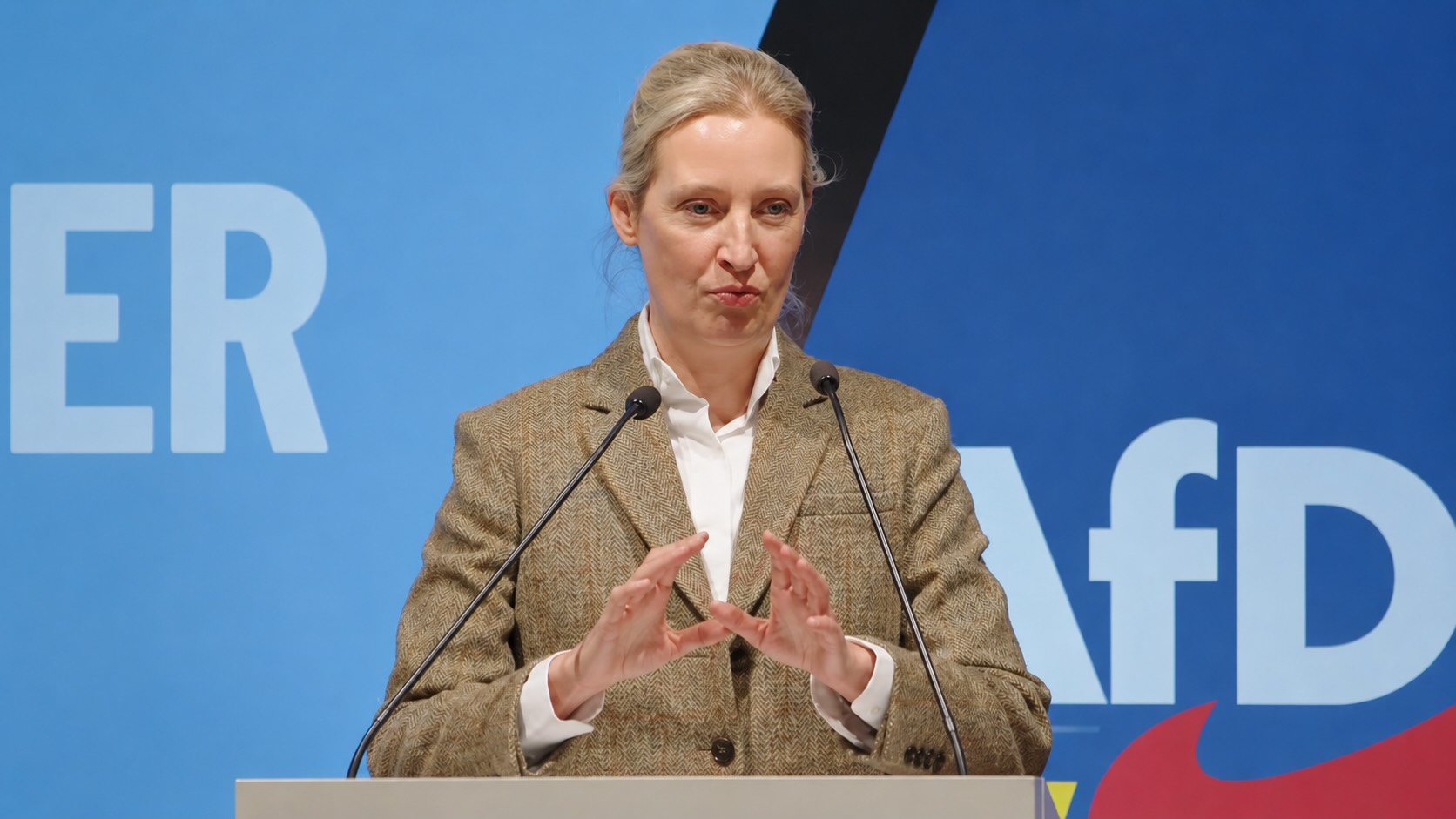
Alice Weidel’s call for Germany to restore Russian oil and gas ties gives the AfD’s economic message a concrete European consequence. Any reversal by Berlin would collide with EU sanctions, the Russian gas phase-out and Germany’s post-2022 security policy.
Alternative for Germany co-leader Alice Weidel has called for Germany to end its boycott of Russian oil and gas and rebuild relations with Moscow, turning the party’s criticism of high energy prices into a direct challenge to the European Union’s Russia policy.
In an interview published on 30 June, Weidel argued that restoring Russian energy supplies would help revive Germany’s weak economy. Her position moves beyond complaints about sanctions or industrial decline. It commits the AfD to reversing one of Berlin’s most consequential strategic changes since Russia’s full-scale invasion of Ukraine.
That pledge may be aimed at German voters, but it cannot be implemented as a purely national energy decision. Russian fuel imports now sit inside a dense framework of EU sanctions, phase-out legislation, infrastructure rules and commitments to Ukraine.
Energy prices become a political weapon
Germany’s pre-war economic model relied heavily on relatively cheap Russian pipeline gas. That gas supported chemicals, metals, glass, fertiliser and other energy-intensive industries while helping households heat their homes at manageable cost.
The break after 2022 forced Germany to replace pipeline supplies with Norwegian gas, liquefied natural gas, lower consumption and new import infrastructure. The adjustment succeeded in preventing the most severe shortage scenarios, but it did not restore the old cost structure.
The AfD has used that distinction effectively. It argues that Germany’s industrial pressure is not simply the result of war, global competition or technological change, but of political decisions taken in Berlin and Brussels.
Weidel’s intervention turns that argument into a proposed policy: resume trade with Russia and present cheaper energy as the route to economic recovery.
Nord Stream is already back in the debate
The proposal does not appear in isolation. Earlier this month, EU Today examined how Vladimir Putin’s offer to restart gas deliveries through the surviving Nord Stream 2 line reopened Germany’s Russian gas dilemma.
The technical existence of an intact pipeline does not make a restart straightforward. Nord Stream 2 was completed but never certified, remains affected by US sanctions and has become a symbol of the strategic dependence Germany is trying to leave behind.
The AfD nevertheless benefits politically from the pipeline’s continued physical presence. It can portray Russian gas not as a lost resource, but as a supply Germany is choosing to reject. That framing transfers responsibility for high prices from Moscow to the German government and its European partners.
A German reversal would become an EU dispute
Energy policy remains partly national, but Germany could not restore large-scale Russian ties without affecting the rest of the Union. The EU has moved from emergency diversification towards a binding phase-out of Russian gas imports, while sanctions restrict parts of Russia’s energy economy and financial system.
Reopening oil and gas trade would therefore require more than a commercial contract. Berlin would have to challenge or amend European rules, confront governments that regard Russian energy as a security threat and explain why Moscow should regain revenue while its war against Ukraine continues.
Poland, the Baltic states and other eastern members warned for years that Germany’s Russian gas relationship created strategic leverage for the Kremlin. Their objections were not mainly about price. They concerned infrastructure that bypassed transit countries and concentrated political influence in a bilateral German-Russian relationship.
An AfD-led effort to reverse course would revive that conflict with greater intensity because the risks are no longer theoretical.
Industry does not face a one-variable problem
Weidel’s diagnosis also simplifies Germany’s industrial weakness. Energy costs are important, particularly for chemical and heavy manufacturing. But German companies are simultaneously dealing with weak demand, Chinese competition, the cost of electrification, ageing infrastructure, labour shortages and slow investment.
Russian gas could lower some input costs if supplied reliably and cheaply. It would not by itself solve falling competitiveness in cars, software, batteries or advanced manufacturing. Nor would it eliminate the risk that Moscow could again manipulate supply during a political confrontation.
The central policy question is therefore not whether cheaper fuel would help industry. It is whether the short-term price benefit would justify rebuilding dependence on a state that has already demonstrated its willingness to use energy as leverage.
Sanctions fatigue gains an electoral vehicle
The greater importance of Weidel’s statement is political. Sanctions fatigue has often appeared through quiet demands for exemptions, delayed enforcement or criticism from individual industries. The AfD is offering it an electoral programme.
If that message gains support, mainstream parties will have to defend the cost of energy independence more clearly. General appeals to solidarity with Ukraine may not be enough for voters worried about factory closures, household bills and economic stagnation.
Berlin and Brussels will need to show that diversification produces durable security, that energy infrastructure can support competitive prices and that industrial policy is addressing the sectors most exposed to the transition.
Weidel’s pledge does not mean Russian oil and gas are about to return to Germany. The AfD remains separated from national power by political and coalition barriers. But the statement matters because it identifies the policy reversal the party would seek if those barriers weaken.
Germany’s Russian energy debate is no longer only an argument about the mistakes made before 2022. It is becoming a choice presented to voters about whether those ties should be restored. That makes the AfD’s rise an EU sanctions and security question, not merely a German electoral story.