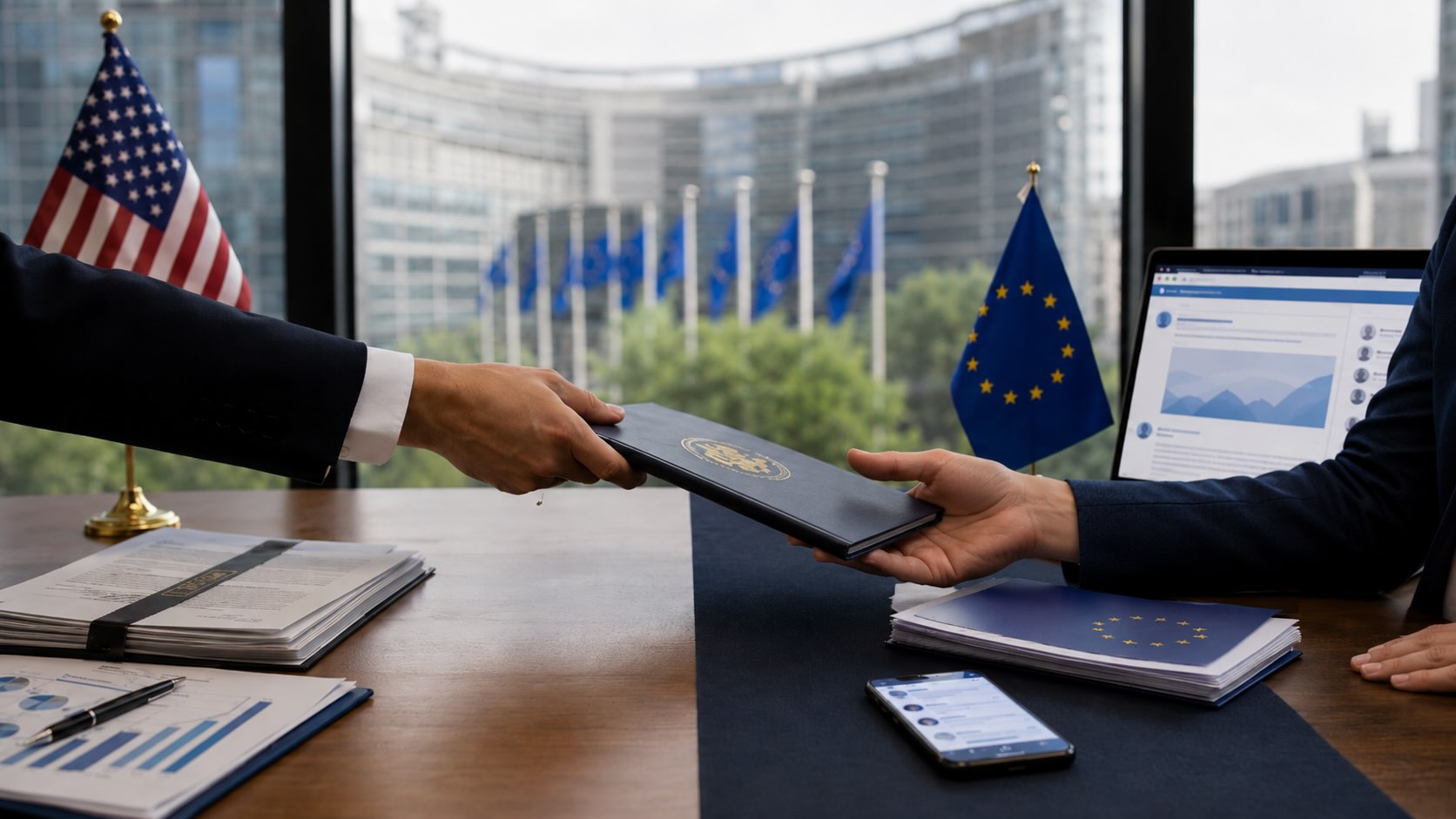
A reported State Department notice would move opposition to the Digital Services Act and Digital Markets Act from rhetoric into organised funding, raising questions about sovereignty and lobbying transparency.
The Trump administration is reportedly preparing to use US foreign-aid funding to support projects challenging European technology regulation, including the Digital Services Act and Digital Markets Act.
The Financial Times reported that a State Department notice allocated $2 million to projects opposing alleged censorship linked to the EU rules. Reuters subsequently reported the FT account, while noting that it had not independently verified the document.
The attribution matters. If confirmed, the programme would turn a policy disagreement into a funding and political-influence story. Washington has repeatedly criticised European digital regulation, but using foreign-aid money to support organised opposition inside Europe would raise a different set of questions.
The Digital Services Act regulates systemic online risks, platform accountability, illegal content and transparency obligations. The Digital Markets Act targets the market power of large digital gatekeepers. Both have become points of friction between Brussels and US technology companies, which argue that compliance can be burdensome, uneven or harmful to innovation.
EU Today has covered the enforcement pressure around the DMA, including recent scrutiny of Google’s search and Play Store rules and the broader political context around US technology companies opposing EU regulation. The reported funding plan would add a sharper question: whether the US government itself is trying to sponsor opposition to EU regulatory choices.
The notice reportedly refers to censorship and free speech. That language fits a wider US political argument that European platform rules threaten expression. EU officials generally reject that framing, arguing that the DSA is about accountability, due process, risk mitigation and illegal content, not ideological censorship.
The practical question is who would receive the money and what activities would qualify. Funding could go to NGOs, legal projects, research groups, advocacy campaigns or litigation support. Each route would raise different transparency concerns. If money supports litigation or lobbying, European institutions may ask whether recipients must disclose the source and purpose of funding.
For Brussels, the issue is regulatory sovereignty. The EU regularly funds civil society and governance projects abroad, so it cannot object in principle to foreign funding of public-interest activity. But funding targeted at undermining specific EU laws would be seen as direct political pressure, especially if aligned with major US platform interests.
For technology companies, the development may create opportunity and risk. A US-funded campaign could amplify criticism of the DSA and DMA, but it could also make corporate opposition look less like ordinary lobbying and more like a geopolitical campaign.
The funding question is especially sensitive because the DSA and DMA are already being tested through enforcement. EU Today has covered the Commission’s supervision of X’s transparency plan and the separate pressure around Google’s DMA compliance. A foreign-funded campaign against the same rules would give regulators reason to examine not only platform conduct, but also the political environment around enforcement.
The enforcement environment is already tense. Platforms face investigations, fines and compliance deadlines. If Washington funds opposition projects, EU regulators may become less willing to treat disputes as technical compliance disagreements.
The reported notice therefore matters even before any grants are awarded. It suggests that the fight over Europe’s digital rulebook is moving from boardrooms and courtrooms into foreign-policy funding. That is a much more sensitive battlefield.
There is also a transparency question for recipients. If European organisations receive US money to challenge EU laws, they may face pressure to disclose funding sources, policy objectives and any links to technology companies. That is not merely administrative. It affects whether advocacy is understood as domestic civil-society work, corporate lobbying or foreign political influence.
The Commission’s response will be important. A restrained response would avoid escalating the dispute before the State Department notice is formally confirmed. A sharper response could frame the reported programme as interference in democratic law-making. Either path would show how digital regulation has become a strategic transatlantic dispute rather than a specialist compliance file.