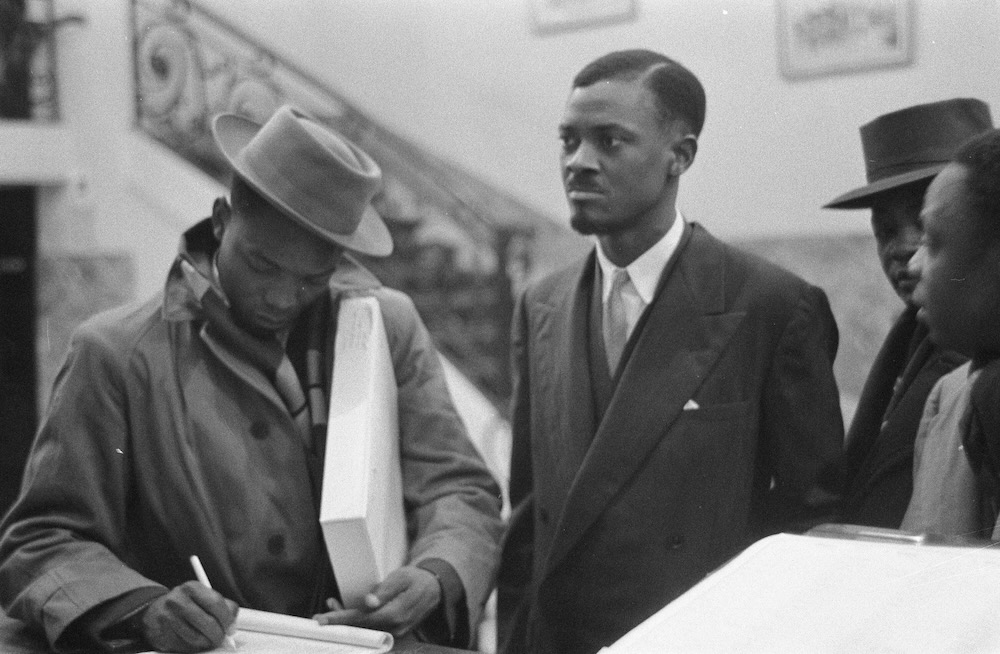
A Brussels court has ordered former Belgian diplomat Étienne Davignon, now 93, to stand trial over his alleged role in the 1961 killing of Patrice Lumumba, the first prime minister of the Democratic Republic of the Congo.
The ruling, delivered on Tuesday 17 March, marks the first criminal prosecution in Belgium linked to one of the most consequential political murders of the decolonisation era.
Davignon, a former European Commissioner and one of the most prominent figures in post-war Belgian public life, is accused by prosecutors of participation in war crimes. The allegations relate not only to Lumumba’s fate, but also to the deaths of two of his political associates, Maurice Mpolo and Joseph Okito. Prosecutors say Davignon was involved in Lumumba’s unlawful detention or transfer, the denial of his right to a fair and impartial trial, and humiliating and degrading treatment.
The case is the latest development in a judicial process that has moved slowly for years. In June 2025, the Belgian federal prosecutor’s office requested that Davignon be referred to the Brussels criminal court. That request followed a long-running complaint brought by Lumumba’s family and renewed debate in Belgium over responsibility for crimescommitted during the violent end of colonial rule in Congo.
Davignon is the only surviving Belgian among those originally accused in the case. Other suspects have died. He has denied the allegations, and reports from earlier proceedings said his legal team challenged the basis for a trial, including on grounds linked to the passage of time. Davignon did not appear in court on Tuesday.
Lumumba became Congo’s first prime minister in 1960, immediately after independence from Belgium. His government lasted only a few months before he was removed during the Congo crisis, a period marked by mutiny, secession, foreign intervention and Cold War rivalry. He was killed in January 1961 after being transferred to Katanga, then a breakaway province backed by Belgian interests. His death became a defining symbol of the failure of Congo’s first independence government and of the enduring reach of outside powers in central Africa.
A Belgian parliamentary inquiry completed in 2001 and acknowledged in 2002 concluded that Belgium bore “moral responsibility” for Lumumba’s death. That finding stopped short of criminal accountability, but it established a formal recognition that Belgian officials had contributed to the circumstances leading to the killing. For many years, that was the furthest the Belgian state had gone in confronting the case.
The legal proceedings against Davignon therefore carry significance beyond the fate of one defendant. They open, for the first time, the possibility that a Belgian court will examine individual criminal responsibility in the Lumumba case, rather than limiting Belgium’s role to historical or political acknowledgement. Human rights lawyers and members of the Lumumba family have presented the referral as an overdue step towards establishing facts and assigning responsibility in open court. After Tuesday’s ruling, Lumumba’s granddaughter Yema Lumumba told Reuters that the decision was “a step in the right direction” and said the family wanted truth and clarity over responsibility.
The case also returns attention to Belgium’s broader reckoning with its colonial record in Congo. In June 2022, Belgium returned a tooth believed to be the only surviving remains of Lumumba, decades after his body was destroyed. The handover was presented as a symbolic gesture, but it also revived public discussion about what forms of accountability remain possible more than six decades after the killing.
Davignon’s later career ensured that any prosecution would attract exceptional attention in Belgium and Brussels. After his early diplomatic service, he went on to hold senior posts in European and international institutions, including as a European Commissioner and as head of the International Energy Agency, before moving into major business roles. That prominence has sharpened interest in the trial, which now stands to become one of the most politically sensitive colonial-era proceedings ever heard in a Belgian court.
Sixty-five years after Lumumba’s killing, the court’s decision does not settle the historical argument. It does, however, move the case from the realm of inquiry, apology and symbolism into that of criminal justice. Whether that process can still deliver definitive answers after so much time has passed is uncertain. But Tuesday’s ruling ensures that Belgium’s unresolved colonial past will now be tested in court, not only in parliament or public debate.