
Rule of Law covers judicial independence, constitutional safeguards, democratic standards, corruption, institutional checks and EU enforcement mechanisms.
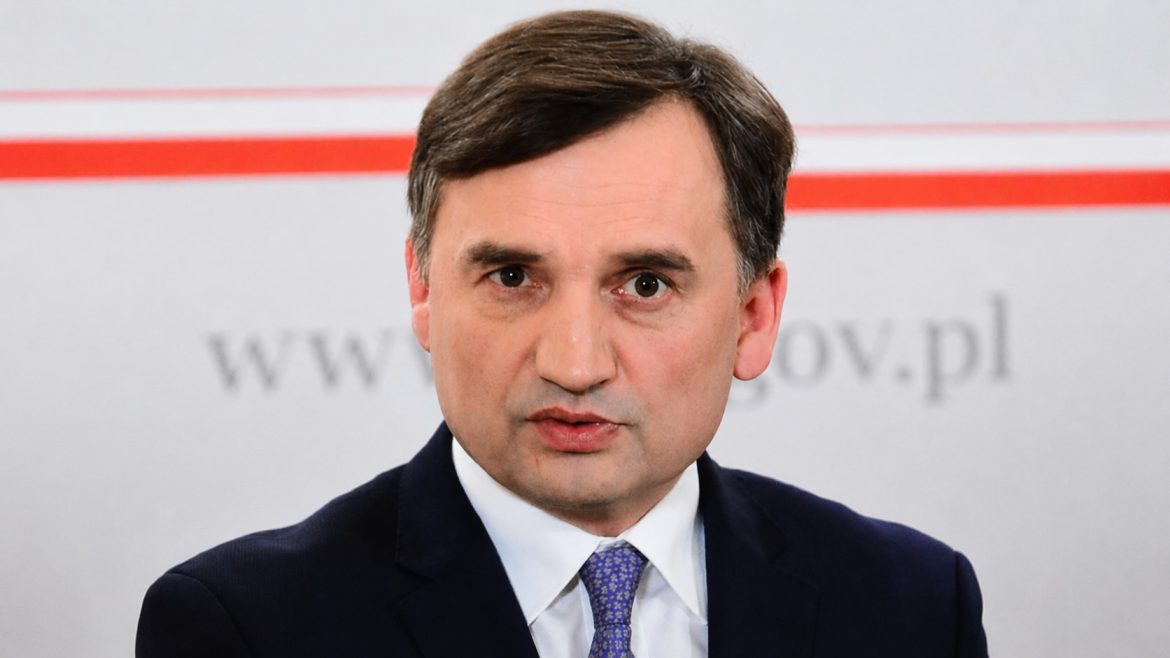
Poland’s effort to prosecute its former justice minister has moved into the American legal system, where allegations of political persecution will be weighed against 26 criminal charges.
Polish prosecutors have formally asked the United States to extradite Zbigniew Ziobro, the former justice minister and prosecutor-general accused of directing the misuse of money from a fund intended to assist victims of crime.
The transmission of the request changes the case from a threatened legal step into an active American process. Ziobro faces 26 charges, most connected to the Justice Fund, but he denies wrongdoing and says the prosecution is political retaliation by the government of Donald Tusk.
The United States will not decide whether Ziobro is guilty. Its authorities and courts will examine whether the request satisfies the applicable extradition rules, whether the alleged conduct corresponds to offences recognised in American law and whether any legal bar prevents surrender.
The dispute is therefore both criminal and political without being reducible to either. A former minister cannot defeat an extradition request merely by alleging persecution; nor should a foreign government accept a request without scrutinising whether prosecution is being used for partisan ends.
From Warsaw to Washington
Ziobro was one of the most powerful figures in Poland’s previous Law and Justice-led government. As justice minister and prosecutor-general, he oversaw institutions that became central to Poland’s conflict with the European Union over judicial independence and the rule of law.
The current investigation concerns the Justice Fund, established to support crime victims and related public-interest programmes. Prosecutors allege that money was diverted or allocated improperly for political and other unauthorised purposes.
Polish Press Agency reported that the extradition documents had been sent to Washington. Reuters subsequently confirmed the development.
Ziobro had previously been associated with Hungary, where his political allies found a sympathetic government. Poland’s National Prosecutor’s Office said in July that he entered the United States on 9 May. That move rendered the earlier European Arrest Warrant route inadequate for his present location.
An official prosecution statement criticised delays in considering the European warrant application and said Ziobro had left Europe while the issue remained before the court.
The American test
Extradition is rarely quick, particularly where the requested person has resources, political connections and several possible grounds of challenge.
American authorities will first assess the Polish submission. If the request proceeds, a court generally determines whether the legal conditions for extradition are met. The executive branch retains a role in the final surrender decision.
The evidence need not amount to a full criminal trial, but it must support the request under the relevant standard. Ziobro’s lawyers are likely to challenge the description of the alleged offences, the quality of the evidence and the independence of the process.
Claims of political motivation will receive attention because Ziobro is a prominent opposition figure. Yet political prominence does not immunise a former official from ordinary corruption or misuse-of-funds charges.
The strongest Polish case will be one built on documents, payment decisions, identifiable beneficiaries and statutory duties rather than broad claims about the previous government. The more precisely prosecutors connect Ziobro to particular decisions, the harder it becomes to portray the case as a general purge.
Poland’s rule-of-law paradox
The prosecution is politically charged because Ziobro was a principal architect of judicial changes that Tusk’s coalition promised to reverse.
The new government argues that accountability is necessary after years in which prosecution and public money were politicised. Law and Justice argues that the new authorities are using those same institutions against their opponents.
Both claims cannot be resolved by rhetoric. The answer lies in procedure: independent judicial scrutiny, access to evidence, a clear statement of charges and equal treatment.
EU Today previously followed Ziobro’s movement between Poland and Hungary. The American request materially advances the story because Warsaw must now persuade another democratic legal system that its case is criminal rather than political.
That external scrutiny may ultimately strengthen Poland’s position. An extradition granted after contested proceedings would carry more legitimacy than a purely domestic demand. A refusal, however, would be politically damaging and could be used by Ziobro to discredit the investigation.
A diplomatic complication
The case arrives at a time when relations between European governments and Washington are influenced by security, trade and ideological disputes. Ziobro and Law and Justice may seek support from American conservatives who view Tusk’s government and EU rule-of-law institutions with suspicion.
The US administration should resist turning the case into an ideological favour. Extradition decisions need to rest on law and evidence, whether that helps or frustrates Warsaw.
Poland, meanwhile, should avoid presenting compliance as a test of friendship. Washington is entitled to examine the request and Ziobro is entitled to challenge it.
The process may take months or years. During that time, Polish proceedings concerning other suspects and evidence will continue, potentially strengthening or weakening the case against the former minister.
Accountability without spectacle
The Justice Fund allegations concern money intended for vulnerable victims. If prosecutors can prove that it was redirected for political power or private advantage, the public interest in prosecution is substantial.
But the case also concerns a former justice minister who exercised exceptional influence over the prosecution service. That makes procedural restraint especially important. The government should not reproduce the practices it says it is correcting.
Every claim should be attributed, and the presumption of innocence must remain explicit. Ziobro faces charges; he has not been convicted of them.
The formal request places the next decision outside Poland. American officials will examine not the entire history of Polish judicial conflict but a defined set of allegations and extradition rules.
For Warsaw, that is both an opportunity and a risk. It can demonstrate that accountability survives international scrutiny—or discover that the political burden surrounding the case is heavier than the evidence submitted with it.

