
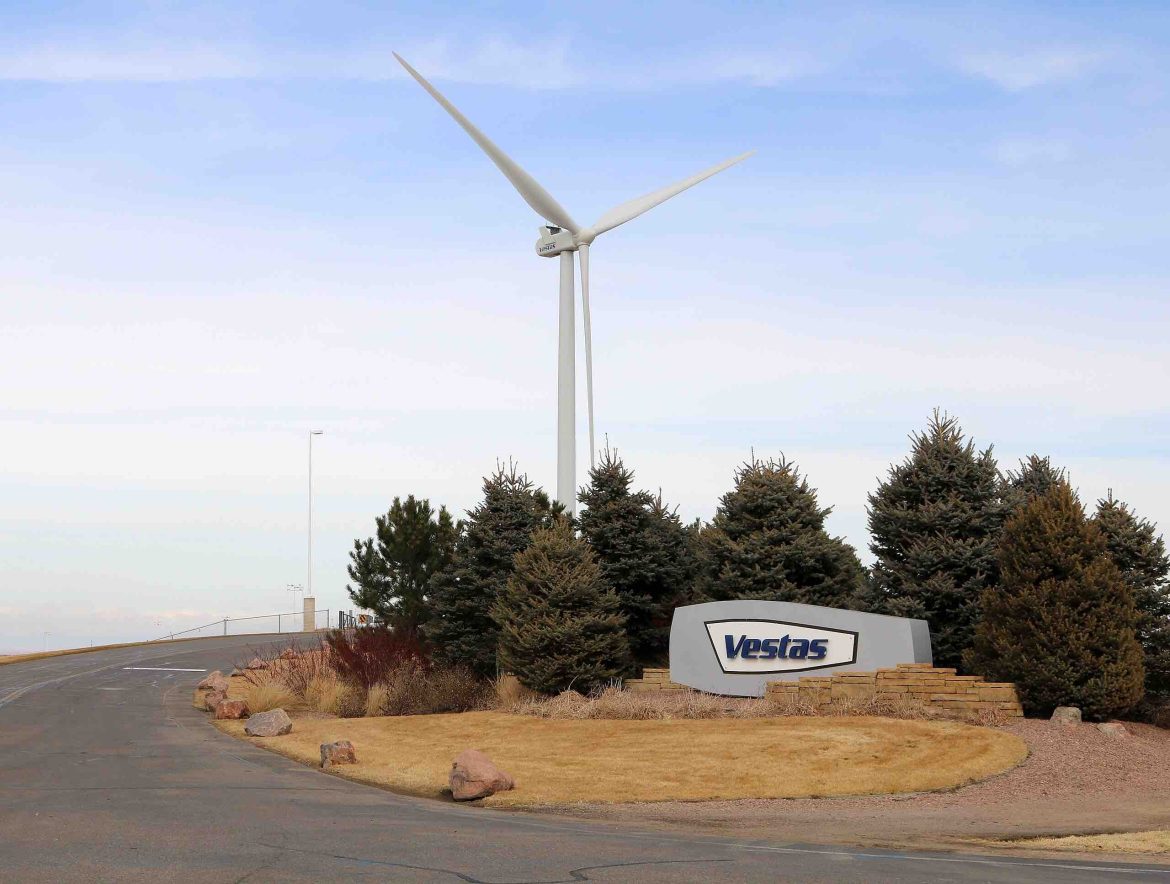
When Vestas, the Danish wind-turbine giant, announced over the weekend that it would shelve plans for its largest factory in Poland, the move left many observers asking why.
On its face, the decision reflects a painful reality: demand for offshore wind in Europe is softer than anticipated. But dig deeper, and the episode exposes larger tensions in the energy transition, the fragility of clean-energy supply chains, and the limits of ambition when market support, regulation, and politics don’t align.
In 2024, Vestas unveiled a bold plan to build a second offshore wind turbine factory in Poland, a facility that would produce blades and employ more than 1,000 workers. The new plant was slated to begin operations in 2026.
However, in an emailed statement to Reuters, Vestas said it has now “paused” those plans. The reason? Demand for offshore wind in Europe is lower than Vestas’s earlier projections. In other words: the pipeline isn’t strong enough to justify the investment.
Vestas reaffirmed that it will continue investing in manufacturing where the scale and certainty allow. But the suspension signals that even established renewables firms are growing cautious about placing big bets on European demand that may never materialise.
Compounding the problem in Poland was regulatory uncertainty. The Reuters article notes that, only months earlier, the Polish president vetoed a bill intended to streamline permitting for onshore wind farms. Prime Minister Donald Tusk responded by pledging to drastically expand wind capacity, but the political flip-flopping itself unsettled investors. Reuters
To be clear: Poland’s electricity mix is gradually shifting. In 2024 nearly 30 percent of its power came from renewables, diminishing coal’s dominance. However, the tensions between national energy goals and the ground reality of project deployment are now laid bare by Vestas’s retreat.
Interpretation: What’s at stake
Greener power isn’t enough, by itself, to support large manufacturing expansions. Wind turbines, especially large offshore models, are capital-intensive, require long lead times, and demand a pipeline of orders large and stable enough to absorb fixed costs. Vestas’s hedged projection assumed stronger growth or policy tailwinds in Europe than what the current market is delivering. The gap between ambitions and risk is catching up with firms.
Europe’s energy targets, ambitious as they are, may yet struggle to translate into sufficient procurement, especially when subsidy regimes, grid constraints, permitting delays, and public resistance (e.g. NIMBYism) slow deployments.
Even the most confident manufacturer hesitates when the rules of the game shift. Poland’s veto of a wind permitting bill likely sent a chilling signal to Vestas and others: even as governments commit rhetorically to clean energy, regulatory backsliding or political hesitation can impose existential risk on long-term capital investment.
In effect, the policy credibility gap in many European states weakens the “bankability” of clean energy projects—not just in Poland, but everywhere investors must judge whether today’s incentives will survive tomorrow’s political winds.
Vestas’s choice to pause, rather than cancel, the project reveals a strategic subtlety. The company evidently still considers Poland a potential hub for future growth—but only when demand is more assured. Until then, it will focus manufacturing where order books are more robust. This nimble posture reflects a broader lesson: clean-energy supply chains must now be as dynamic and risk-aware as those in high tech or autos.
At the same time, it suggests that the “race for clean-energy dominance” across Europe will be uneven. Countries with clearer, more stable incentives may draw more factory investment, exacerbating regional inequities in industrial capacity.
The optics of shelving a factory are stark. For many local stakeholders in Poland—the prospective workers, regional planners, component suppliers—the pause may feel like betrayal. But for global investors and rival firms, the signal is more cautious: there is still possibility here, just not yet enough market certainty to proceed.
Vestas may return when the risk-reward balance improves. But other firms will watch closely: if Europe’s offshore wind market does not rebound sharply, others may follow suit, leaving lofty decarbonization paths under-served.
Broader ramifications for Europe’s energy transition
This episode is not just about Poland or blades—it is a microcosm of the strain between ambition and pragmatism in Europe’s clean transition.
Demand volatility: Supply-side firms require multi-year visibility. If demand ebbs, factories become underutilized liabilities rather than assets.
Subsidy fatigue & financing constraints: Many European governments are grappling with debt, inflation, and competing priorities. Renewable subsidies may face tightening, reducing long-term project certainty.
Permitting bottlenecks: Across Europe, long lead times, environmental pushback, and legal hurdles slow projects to a trickle. Factories hesitate to commit when the “go button” is uncertain.
Localisation vs. competition: The push to “onshore” manufacturing of wind components is politically appealing (jobs, sovereignty), but economically risky when broader demand is weak. Nations that create the cleanest, most reliable market signals will win factories.
Adaptive corporate strategy: Turbine makers and clean-energy firms increasingly behave like tech firms—scaling up where opportunity exists and pulling back where risk is too high.
Risks, criticisms, and caveats
It is possible that Vestas’s pause is opportunistic rather than permanent. If European offshore wind rebounds, the company may revivify plans.
The report speaks only of “lower-than-projected demand,” a nuanced phrase that obfuscates whether underlying demand is shrinking or just uncertain. The precise gap between projections and orders is not public.
External macro pressures—interest rates, supply chain inflation, raw materials costs—may also have contributed to Vestas’s decision, beyond demand alone.
The report provides little detail on what commitments were already made (land, grid infrastructure, local suppliers), meaning investors in the region face ambiguity on sunk costs.
A cautionary moment for clean energy
Vestas’s shelving of its Polish factory is an alarm bell for Europe’s clean-energy aspirations. It warns that policy ambition, while necessary, is not sufficient. Real demand, regulatory stability, and supportive economics must underpin every plant, project, and investment.
This episode underscores how vulnerable the transition is when the gap between rhetoric and delivery widens. Nations that can’t translate climate goals into credible, stable market signals risk ceding industrial leadership to those that do. Meanwhile, clean-energy firms must act like strategists in a volatile market: wait patiently, invest selectively, and always watch the horizon for orders and policy shifts.
In essence, the transition is no longer just technological and ecological—it is a contest of credibility, commitment, and courage. Vestas’s move in Poland is a reminder that in this contest, factories are built only when the winds of certainty blow strong.
Main Image: Par Jeffrey Beall — Travail personnel, CC BY 4.0, https://commons.wikimedia.org/w/index.php?curid=66564926
Click here for more News & Current Affairs at EU Today
________________________________________________________________________________________________________________________

