The Council’s final approval of vehicle-circularity rules moves recycled-content targets, producer responsibility and export controls into EU law. Carmakers now face a long implementation timetable that will reshape design, dismantling and access to secondary raw materials.
The European Union has formally adopted new rules requiring cars and vans to be designed for reuse and recycling, while placing greater financial responsibility on manufacturers for vehicles after they leave the road.
The Council’s final approval on 29 June completes the ordinary legislative procedure. The regulation will replace the existing end-of-life vehicle framework and begin applying two years after it enters into force.
The law is presented as an environmental measure, but its industrial consequences are equally important. It will influence vehicle design, plastics procurement, dismantling businesses, exports of used cars and Europe’s effort to retain critical materials inside the single market.
Recycled plastic becomes a legal design requirement
Six years after the regulation enters into force, at least 15% of the plastic used in new vehicles must come from recycled material. The target rises to 25% after ten years.
At least 20% of the recycled-plastic requirement must be supplied through material recovered from end-of-life vehicles. This closed-loop element is intended to prevent compliance being met entirely through unrelated plastic waste while the automotive stream continues to lose valuable material.
For carmakers, the requirement reaches upstream into product development. Manufacturers will need reliable supplies that meet safety, durability, appearance and performance standards across vehicles designed years before sale.
The challenge will be especially significant where recycled polymers vary in quality or where components must satisfy demanding heat, impact or chemical-resistance tests.
Producers inherit more of the end-of-life bill
The regulation introduces extended producer responsibility across the vehicle lifecycle. Manufacturers will be financially and organisationally responsible for supporting free take-back and proper treatment when a vehicle becomes waste.
That changes the economics of design. A component that is difficult to remove, identify or recycle may create costs long after the vehicle is sold. Producers therefore gain a stronger incentive to simplify dismantling, label materials and design parts for reuse or remanufacturing.
The same obligation may create disputes over how costs are divided among vehicle manufacturers, importers, authorised treatment facilities and national collection systems. Implementation will need to prevent responsibility becoming an administrative charge detached from actual improvements in recovery.
The law targets Europe’s missing vehicles
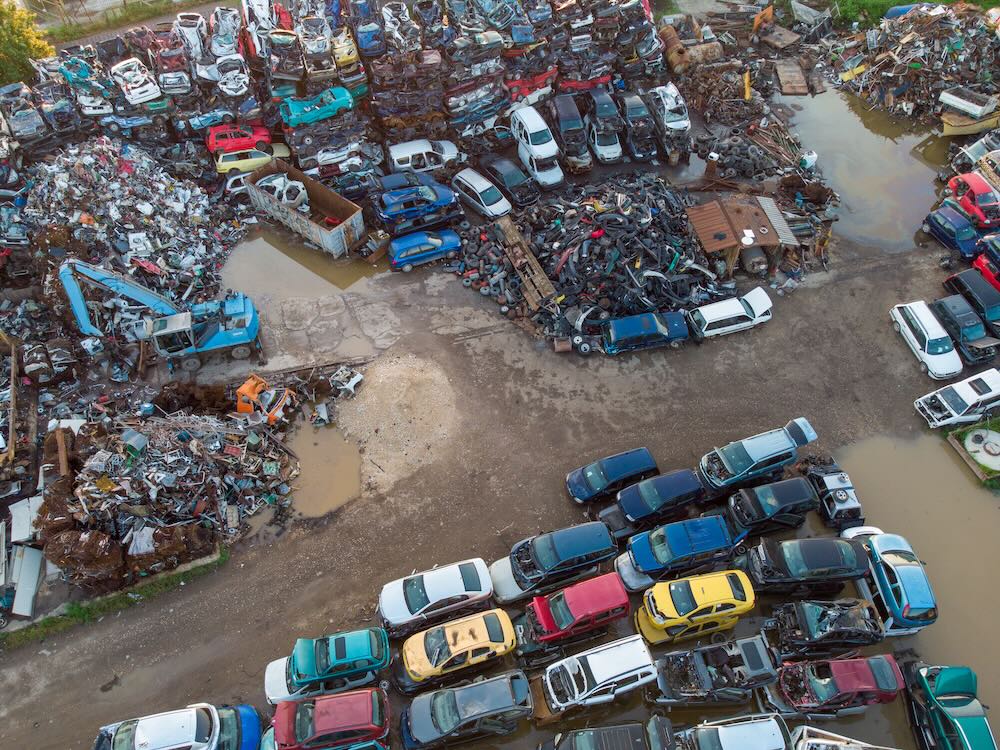
More than six million end-of-life vehicles are generated in the EU each year, but large numbers disappear from formal records. Some are dismantled illegally, abandoned or exported under the label of used vehicles.
The new rules strengthen traceability and establish that a vehicle meeting waste criteria must be treated by an authorised facility. It cannot legally be resold or exported as a functioning used vehicle.
Exports of vehicles that are no longer roadworthy will be prohibited. Brussels argues that this will reduce pollution transferred to third countries while keeping steel, aluminium, copper, plastics and components available to European recyclers.
Enforcement will determine whether the rule succeeds. Export restrictions can be evaded if inspections, digital records and roadworthiness definitions differ across member states.
The final vote is a genuine new step
EU Today covered the provisional political agreement on end-of-life vehicles in December 2025. That deal established the substance, but the 29 June approval matters because it converts the negotiated text into adopted legislation and starts the countdown towards implementation.
The timetable is deliberately long. Carmakers need to redesign models and supply contracts; recyclers need investment in sorting and processing; national authorities need interoperable systems for tracking vehicles.
The risk is that a long transition encourages delay. The opportunity is that it gives industry enough time to build secondary-material capacity rather than meeting targets through scarce and expensive imports.
Critical materials are the next stage
Plastic targets are only the beginning. The Commission must prepare future requirements for recycled steel, aluminium, magnesium and critical raw materials after completing feasibility work.
That connects the vehicle regulation to economic security. Electric cars contain valuable copper, rare-earth magnets, battery materials and electronic components. Recovering more of those resources will not eliminate Europe’s import dependence, but it can reduce waste and create a domestic supply buffer.
The automotive sector is already under pressure from high energy costs, Chinese competition and expensive technological change. EU Today recently reported how BMW’s profit warning exposed the combined effect of geopolitical and market pressure on European industry. Circularity obligations add cost in the short term, but may also reduce exposure to volatile raw-material markets.
A market will have to grow around the mandate
Legal targets cannot create high-quality recycled material by themselves. Europe will need collection, dismantling, sorting and reprocessing capacity capable of delivering predictable volumes.
Contracts between carmakers and recyclers are likely to become more strategic. Digital product information may help dismantlers identify materials and remove valuable components. Investment in chemical recycling and advanced sorting may grow where mechanical processes cannot meet automotive specifications.
Smaller manufacturers and treatment businesses could face disproportionate compliance costs. Regulators will need to preserve traceability without making participation so complex that activity consolidates into a few large groups.
The final law therefore moves the circular economy from aspiration into industrial planning. Its success will not be measured only by recycling percentages, but by whether Europe builds a functioning market for secondary automotive materials without weakening an industry already undergoing a difficult transition.