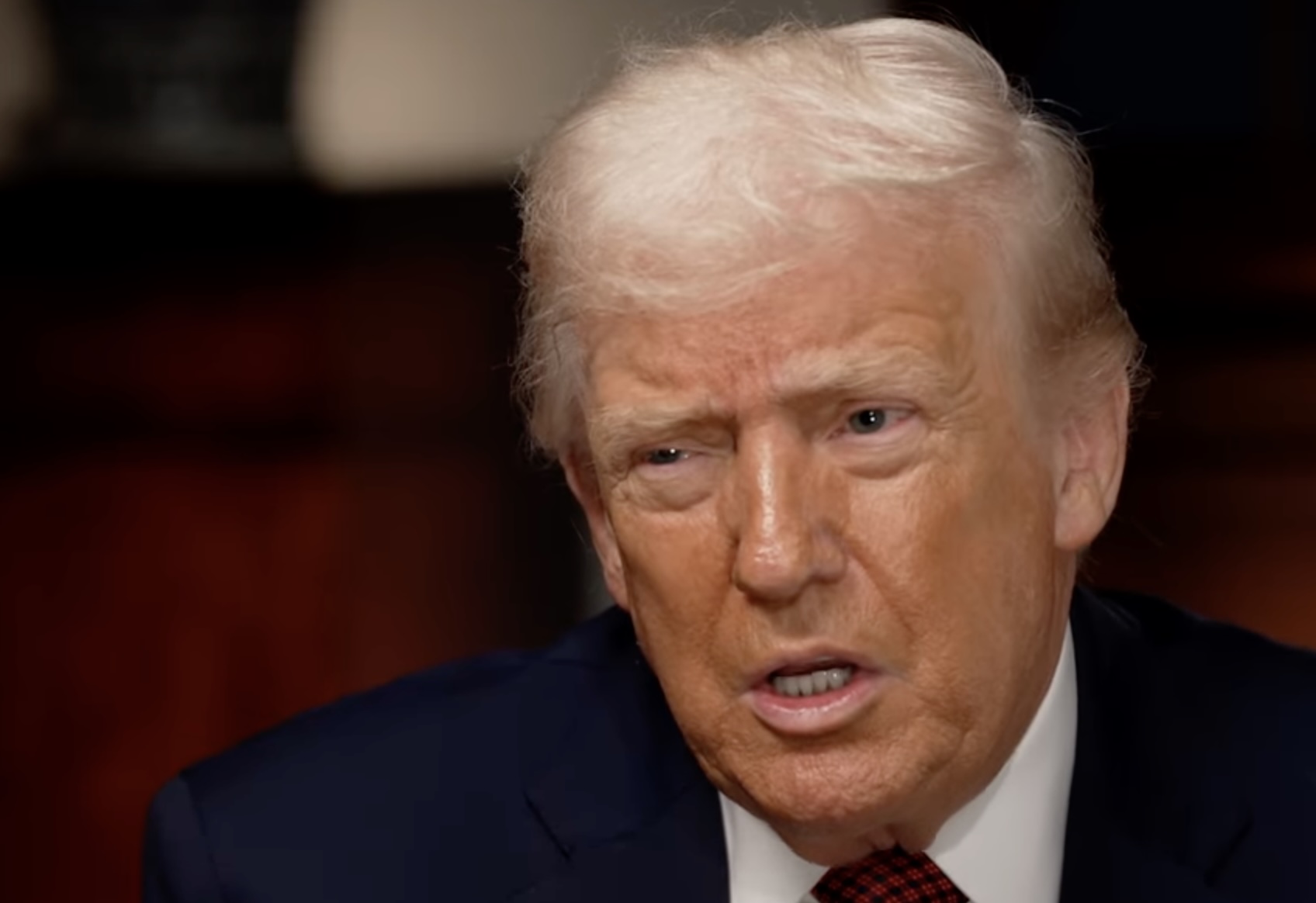
Recent interventions by Donald Trump into global energy markets have raised more questions than answers—and in some quarters, far more troubling suspicions.
At the centre of the controversy is a striking disconnect: the President’s confident assertion that the United States has “plenty” of jet fuel for Europe, versus hard market data suggesting precisely the opposite.
According to Reuters, the claim collapses under scrutiny. The United States exported roughly 219,000 barrels per day of jet fuel last year, while the disrupted Strait of Hormuz typically supplies around 500,000 barrels daily to global markets. In other words, even under ideal conditions, the U.S. simply lacks the capacity to replace the shortfall caused by escalating tensions in the Middle East. Domestic production, meanwhile, only marginally exceeds internal demand, leaving little room for large-scale exports without triggering price spikes at home.
And yet, the rhetoric from Washington has remained bullish—almost defiantly so.
This mismatch between political messaging and market reality has not gone unnoticed. Energy analysts have pointed out that U.S. stockpiles amount to only a few weeks of supply, while Europe relies heavily on Gulf imports for roughly half of its jet fuel needs. The implication is stark: the reassurance offered by Trump is not merely optimistic, but structurally implausible.
Markets appear to agree. Oil prices have surged dramatically, breaching $100 per barrel, while global equities have tumbled in response to mounting uncertainty. Investors, far from taking comfort in presidential assurances, seem to be pricing in prolonged disruption—and possibly something more opaque.
Because beyond the surface-level confusion lies a more unsettling question: who benefits from this narrative?
The past week has seen record U.S. fuel exports as Europe and Asia scramble to replace Middle Eastern supply. Prices have risen sharply, creating lucrative conditions for exporters, traders, and intermediaries positioned to exploit volatility. In such an environment, even small shifts in policy signals—or public statements—can trigger outsized financial consequences.
That is where speculation begins to darken.
Critics are increasingly asking whether the administration’s messaging is merely misguided, or whether it is serving a more calculated purpose. By projecting confidence in U.S. supply capacity, Washington may be encouraging European buyers to pivot toward American fuel—despite underlying constraints. This, in turn, tightens domestic supply, drives up prices, and boosts margins for those with access to export channels.
The pattern is difficult to ignore: geopolitical escalation, bullish rhetoric, tightening supply, rising prices. Each step feeds the next, creating a feedback loop that rewards those positioned closest to the levers of power.
Of course, there is no definitive proof of coordinated market manipulation. But the circumstances invite scrutiny. The same administration that is intensifying military action in the region—further destabilising one of the world’s most critical energy corridors—also appears to be promoting a narrative that contradicts its own data.
Meanwhile, domestic consumers are already feeling the strain. Increased exports have contributed to rising fuel prices within the United States, a politically sensitive outcome that would normally prompt caution. Yet the messaging continues unabated.
For Europe, the consequences are immediate and severe. With traditional supply routes disrupted and alternatives limited, airlines and industries face escalating costs and potential shortages. The idea that the U.S. can simply step in as a replacement supplier is not just misleading—it risks distorting policy decisions at a critical moment.
There is also a broader strategic dimension. By framing the crisis as one that can be solved through American supply, the administration reinforces U.S. leverage over European energy security. Whether intentional or not, this shifts the balance of dependency at a time when transatlantic relations are already under strain.
Still, the most troubling aspect may be the opacity of it all. Markets thrive on information, but they are equally vulnerable to misinformation—especially when it originates from the highest levels of political authority. When statements diverge so sharply from observable reality, confidence erodes, volatility increases, and opportunities for exploitation multiply.
In calmer times, such discrepancies might be dismissed as political bluster. In the current climate, they carry far greater weight.
As oil prices climb and supply chains tighten, the line between policy, messaging, and market movement becomes increasingly blurred. Whether this is the result of miscalculation or something more deliberate remains an open question. But one thing is clear: in the high-stakes world of global energy, perception can be as powerful as reality—and right now, both are in dangerously short supply.
Click here for more News & Current Affairs at EU Today
Click here to check out EU TODAY’S SPORTS PAGE!
___________________________________________________________________________________________________________________