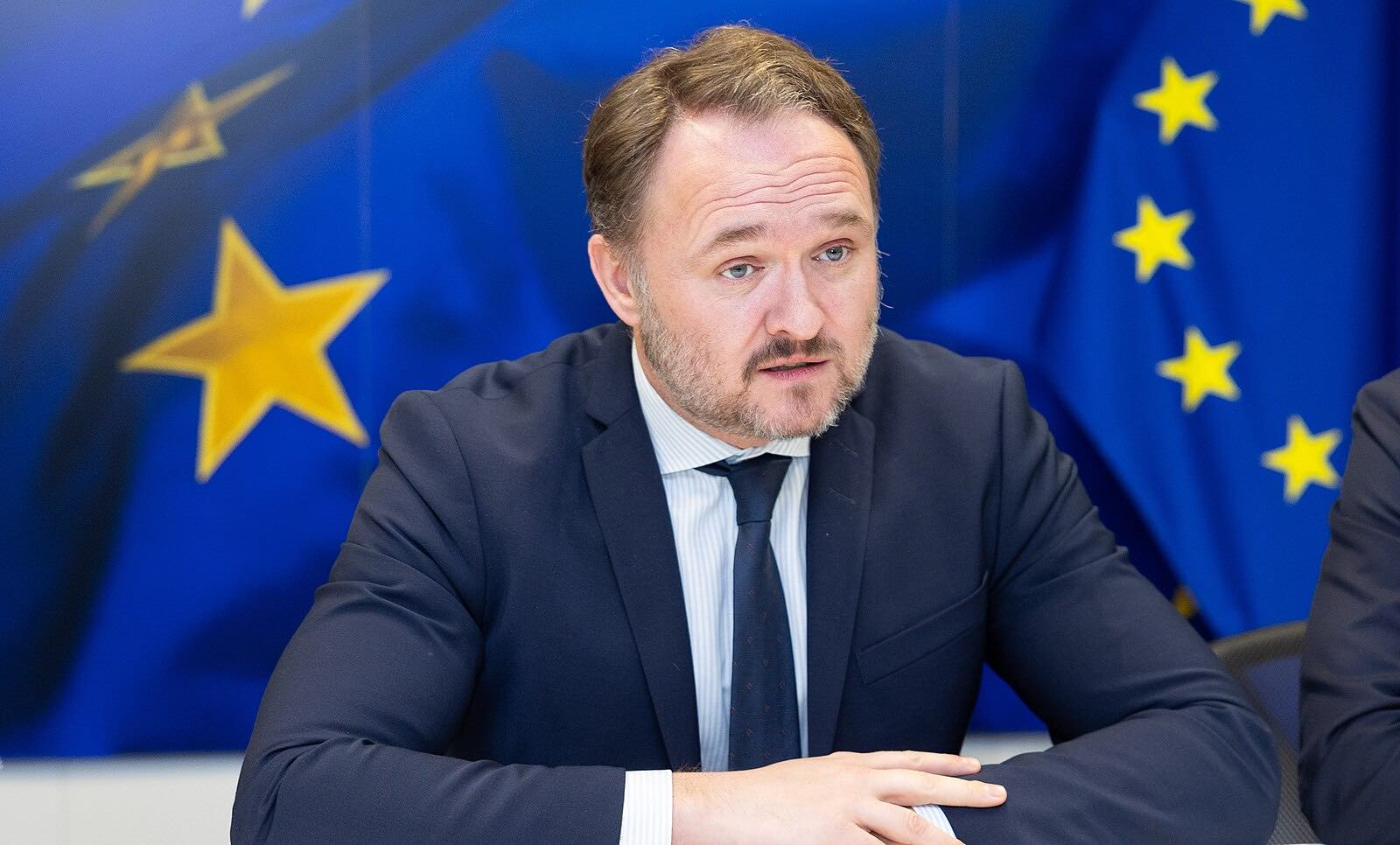
The European Union will keep to its plan to phase out Russian oil by 2028, Energy Commissioner Dan Jørgensen said on Friday, confirming that Brussels does not intend to bring the deadline forward.
Jørgensen, speaking in Copenhagen ahead of an informal meeting of EU energy ministers, added that he had not faced pressure from Washington to accelerate the timetable.
The Commission is negotiating legal proposals to end EU imports of Russian oil and gas by 1st January 2028.
Jørgensen said he would welcome US support for the effort, following remarks by US President Donald Trump urging European leaders to stop buying Russian oil, though without specifying a date. ‘Not only has Putin weaponised energy against us, blackmailed member states, we are actually also indirectly helping finance Putin’s war,’ Jørgensen told Reuters, describing the objective as to halt those flows by the set deadline.
Hungary and Slovakia remain the principal buyers of Russian crude within the bloc, importing an estimated 200,000–250,000 barrels per day via the Druzhba pipeline—around 3 per cent of EU oil demand. Both countries also import Russian gas and have opposed the phase-out, arguing that an abrupt shift would raise prices and risk shortages. Slovak Prime Minister Robert Fico, after meeting Ukrainian President Volodymyr Zelenskyy on Friday, said reliable supplies were needed and noted that several European states were buying both Russian gas and US liquefied natural gas.
Gas remains the larger exposure. EU purchases from Russia are expected to account for roughly 13 per cent of Europe’s gas supply this year, down from about 45 per cent before Russia’s full-scale invasion of Ukraine in 2022, according to EU figures cited in Commission documents. Member states and EU institutions are currently working on measures to prevent circumvention of the planned ban, including stricter proof-of-origin requirements for gas and rules intended to close residual channels by which Russian molecules might enter the EU market after the cut-off date.
Jørgensen said the Commission was in talks with Budapest and Bratislava about their concerns but stressed that the proposals do not require unanimity. ‘If, for domestic reasons, there are countries that don’t feel that they can support it, then this is not something that demands unanimity,’ he said. The draft is designed to pass by a reinforced majority of member states, and EU diplomats expect energy ministers to vote next month.
The Kremlin has been asked to comment on President Trump’s remarks reported by a White House official. EU institutions have repeatedly linked Russia’s oil and gas revenues to the financing of its war against Ukraine and have sought to compress those flows through embargoes, price caps and diversification measures since 2022. The Commission says the 2028 deadline is intended to lock in those shifts and give industry a clear planning horizon for alternative supplies and infrastructure.
Brussels is also engaging Washington on the energy chapter of the recent US-EU trade accord. Jørgensen is due in Brussels next week for talks with US Energy Secretary Chris Wright on how to implement the EU’s pledge to buy up to $250bn of US energy supplies annually. Analysts have questioned the feasibility of that figure, noting that the EU does not control private companies’ purchasing decisions and that redirecting such volumes would be challenging. The Commission has floated demand-pooling as one option to aggregate European companies’ orders for US gas. ‘It’s clear that our role is to facilitate. The EU is not a gas trader,’ Jørgensen said.
The EU’s internal debate over Russian imports comes amid wider trade frictions. The United States has imposed additional tariffs on Indian goods, in part citing India’s continued purchases of Russian oil; New Delhi has criticised the move and signalled that it will keep buying discounted Russian crude. The tariff measures have prompted Indian officials to consider relief for affected exporters.
If adopted as proposed, the EU’s oil-and-gas phase-out would formalise changes that have already reduced Russian energy’s share in Europe’s mix, while leaving a transition period to manage refinery configurations, storage and alternative supply contracts. For oil, the remaining pipeline imports to Central Europe would be unwound; for gas, the Commission and member states are preparing enforcement mechanisms intended to ensure that long-term contracts are not renewed and that gas imported through intermediaries can be traced to origin.
Next steps will be determined by ministers when they convene in October. Passage by reinforced majority would allow the legislation to proceed without the backing of all 27 member states. Jørgensen’s message in Copenhagen was that the deadline remains 2028 and that Brussels aims to hold to it while coordinating with allies on supply security and with industry on practical implementation.
Main Image: https://audiovisual.ec.europa.eu/en/photo-details/P-063025~2F00-05