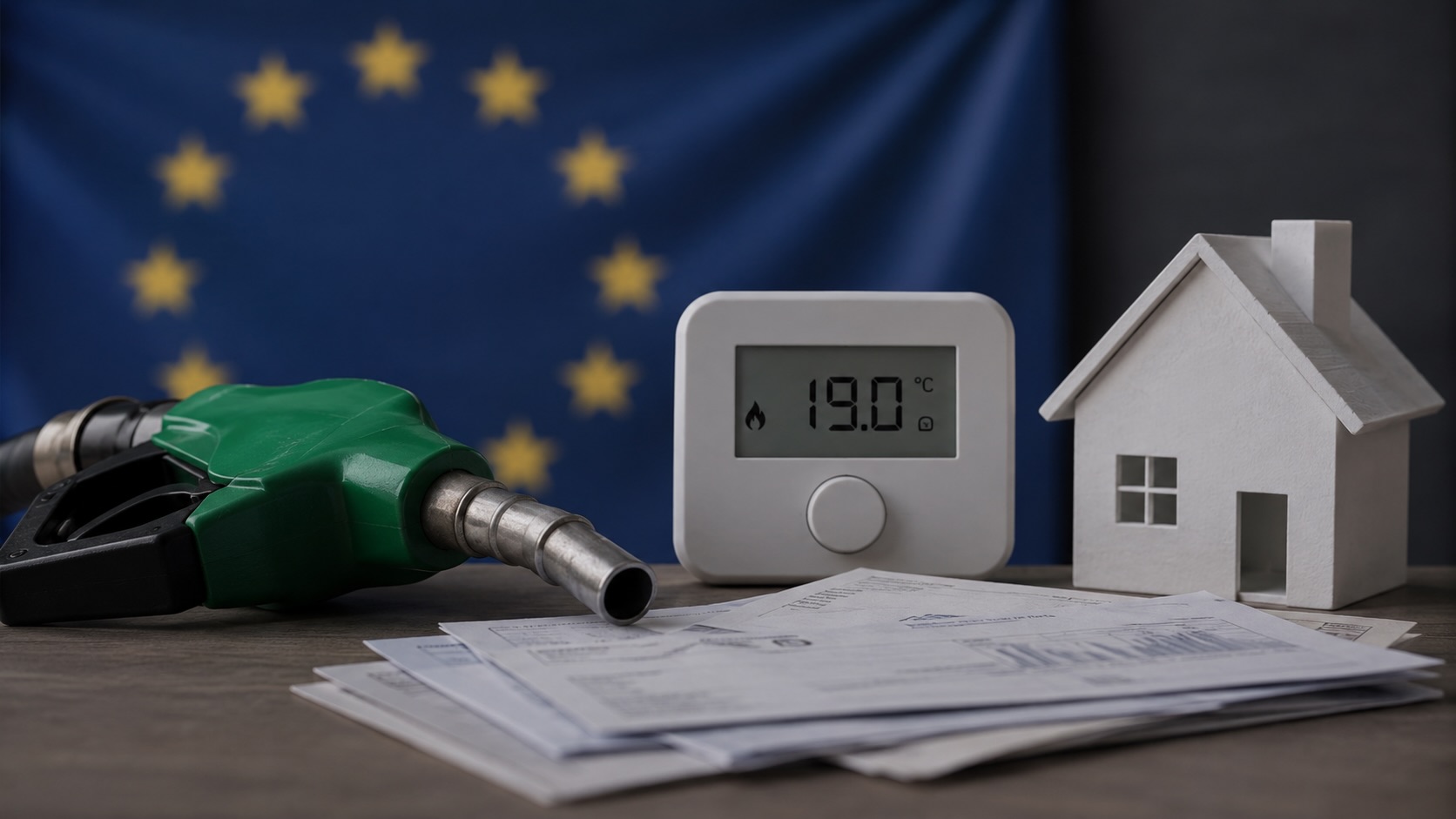
The European Union has reached a provisional agreement to strengthen price controls in its next carbon market, a move that shows how far climate policy is now being shaped by concerns over household fuel costs and political resistance.
The agreement, reached by the Council and the European Parliament late on 10 June, concerns the market stability reserve for the EU’s second emissions trading system, known as ETS2. The new system is due to apply from 2028 to carbon emissions from fuels used in road transport and buildings, including petrol, diesel and heating fuels.
Under the deal, if the price of carbon allowances in ETS2 rises above €45 per tonne of CO₂, 40 million allowances will be released from the reserve into the market. That doubles the previous release volume of 20 million allowances. The mechanism may be triggered twice per year, allowing up to 80 million additional allowances to be placed on the market annually.
The Council said the agreement is intended to strengthen market predictability, reduce volatility and address excessive price increases. It also extends the lifetime of the ETS2 market stability reserve beyond 2030, meaning that allowances held in the reserve will remain available for use after the system has been launched and tested in practice.
The technical language matters, but the political message is clearer. Brussels is trying to prevent ETS2 from becoming a symbol of higher living costs before it has even started.
Unlike the existing EU emissions trading system, which applies mainly to power generation and heavy industry, ETS2 will be felt indirectly by consumers because it covers fuel suppliers and distributors. These companies will have to buy allowances to cover emissions from fuel they place on the market. The cost may then be passed on through petrol, diesel and heating bills.
That is why ETS2 has become one of the most politically sensitive parts of the EU’s climate framework. It is designed to encourage cleaner transport and heating, but it arrives at a time when many governments remain wary of policies that can be presented as increasing household costs. The memory of fuel-tax protests in several European countries has not disappeared from the policy debate.
The Commission had already set out that, during the first two years of ETS2 operation, additional allowances could be released if the price exceeded €45, adjusted from 2020 prices. The new agreement strengthens that mechanism and extends its relevance. It is therefore not a retreat from ETS2, but it is a recognition that the system cannot be launched without visible price-control instruments.
According to the Council’s announcement, the co-legislators confirmed the core elements of the Commission proposal while adding stronger safeguards against price volatility. The arrangement includes a more gradual release of allowances from the reserve, intended to avoid sharp supply changes that could themselves cause abrupt price movements.
The issue has been building for months. In February, member states supported stronger price-control measures after several governments warned that ETS2 could intensify public opposition if it was perceived as an additional tax on households. EU Today reported at the time that governments were moving to contain possible carbon-price spikes before the system’s launch.
For the EU, ETS2 brings climate policy into areas where consumers have limited room to adjust quickly: commuting, heating homes and running small businesses. The system is built on the assumption that a carbon price will encourage a shift towards cleaner alternatives, but in practice the first visible effect may be higher everyday costs.
The Social Climate Fund is intended to cushion the impact by supporting vulnerable households, micro-enterprises and transport users through measures such as home renovation, cleaner heating and lower-emission mobility. Its effectiveness, however, will depend on how quickly national governments can deliver support and whether that support reaches people before higher fuel and heating costs are felt.
The new price-control deal acknowledges this political risk, but does not remove it. Brussels is preparing a carbon market that may add pressure to household budgets, while also trying to limit the backlash by releasing more allowances if prices rise too sharply.
That leaves the central contradiction unresolved: ETS2 needs a price signal strong enough to change behaviour, but not so strong that it becomes another visible burden on consumers.