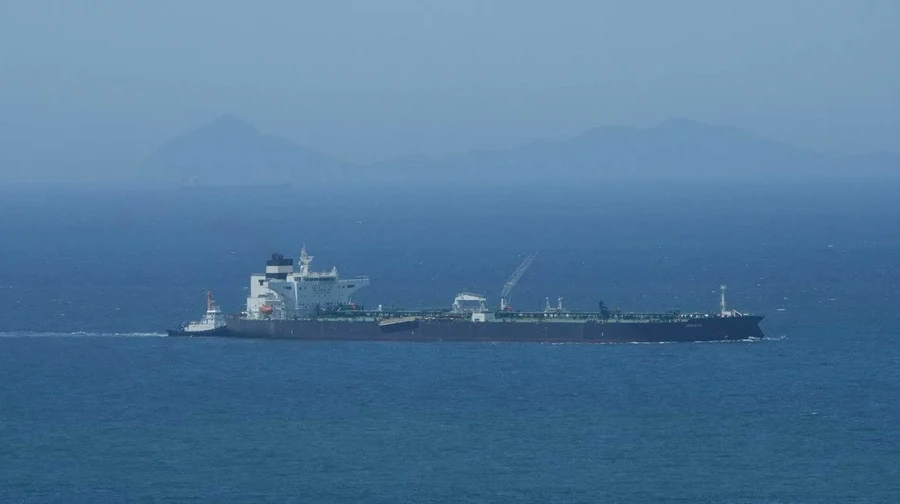
The strike on the Gas Lisbon is not only another Black Sea shipping incident. Its location near Romania brings hazardous cargo, rescue operations and attribution into a direct EU and NATO security frame.
A Liberian-flagged LPG tanker travelling from Egypt to Ukraine was struck in the Black Sea about 20 nautical miles off Romania’s coast, forcing Romanian rescuers to evacuate the crew and bringing the maritime risks of Russia’s war closer to NATO territory. Reuters reported that the Gas Lisbon was heading to Ukraine when the incident occurred. Romanian authorities rescued all 17 crew members, including three injured seafarers.
Romania’s president Nicusor Dan said the tanker was hit outside Romanian territorial waters and that state institutions would establish the circumstances, causes and responsibilities. Euronews reported that Dan described the incident as most likely linked to Russia’s illegal war against Ukraine. The tanker was carrying propane to the Ukrainian port of Reni, on the Danube close to Romania.
The location is the central fact. Previous attacks on ships and port infrastructure around Odesa already raised serious concerns about commercial navigation. EU Today reported on the deaths aboard the Golden Leo grain carrier off Odesa on 20 July. The Gas Lisbon incident is different because it occurred close to the coast of an EU and NATO member state and involved hazardous cargo.
LPG cargo creates a wider risk profile than ordinary dry bulk freight. A tanker carrying propane presents fire, explosion, pollution and navigation hazards. Even if the vessel is outside territorial waters, the nearest coastal state becomes responsible for rescue coordination, hospital treatment, navigational warnings and environmental monitoring. That is why Romania’s response matters as much as the strike itself.
The incident also tests the legal and political boundary between Ukrainian war risk and allied exposure. NATO’s Article 5 is not triggered by every incident near allied territory. The tanker was not Romanian-flagged, and the strike took place outside Romania’s territorial sea. But repeated attacks near allied waters can still force NATO members to adjust surveillance, maritime patrols, demining capacity, coastguard readiness and emergency-response planning.
Attribution will be sensitive. Romanian officials have not completed the investigation, and any final conclusion must identify the weapon, launch direction, target data and chain of events. The political context, however, is clear. Russia has intensified strikes against Ukrainian ports and vessels. Ukraine’s Danube routes and Black Sea export corridors have become economic lifelines, and Moscow has repeatedly tried to raise the cost of using them.
Reni is especially important because it connects Ukrainian trade to the Danube system and to Romania. When the Black Sea route is under pressure, Danube ports become more valuable. That also makes them more exposed. A strike on a vessel heading to Reni sends a signal beyond one cargo: it warns shipowners that routes close to NATO territory are not automatically insulated from the war.
The insurance effect may arrive before any formal policy response. Shipowners and charterers price risk through premiums, route decisions and willingness to accept Ukrainian cargoes. If vessels close to Romania are seen as vulnerable, costs can rise for grain, fuel, chemicals and other cargoes serving Ukrainian ports. That would damage Ukraine’s wartime economy and complicate European supply chains.
Romania has already had to manage spillovers from the war, including drone debris and pressure on Danube logistics. The Gas Lisbon adds a maritime hazardous-cargo dimension. It is a reminder that a war fought against Ukraine can still create emergency obligations for neighbouring states even when they are not direct belligerents.
For Brussels, the issue is whether Black Sea security remains a series of national responses or becomes a more integrated European maritime problem. Romania can rescue crews and investigate incidents, but sustained commercial confidence may require intelligence sharing, coordinated warnings, stronger air surveillance and clearer messaging to Moscow that attacks near allied waters carry consequences.
The Gas Lisbon may ultimately be recorded as a single casualty in a wider war. That would underestimate its significance. It shows how the danger zone around Ukraine’s maritime trade is creeping outward. The closer that zone moves to NATO coasts, the harder it becomes for Europe to treat Black Sea shipping risk as someone else’s problem.