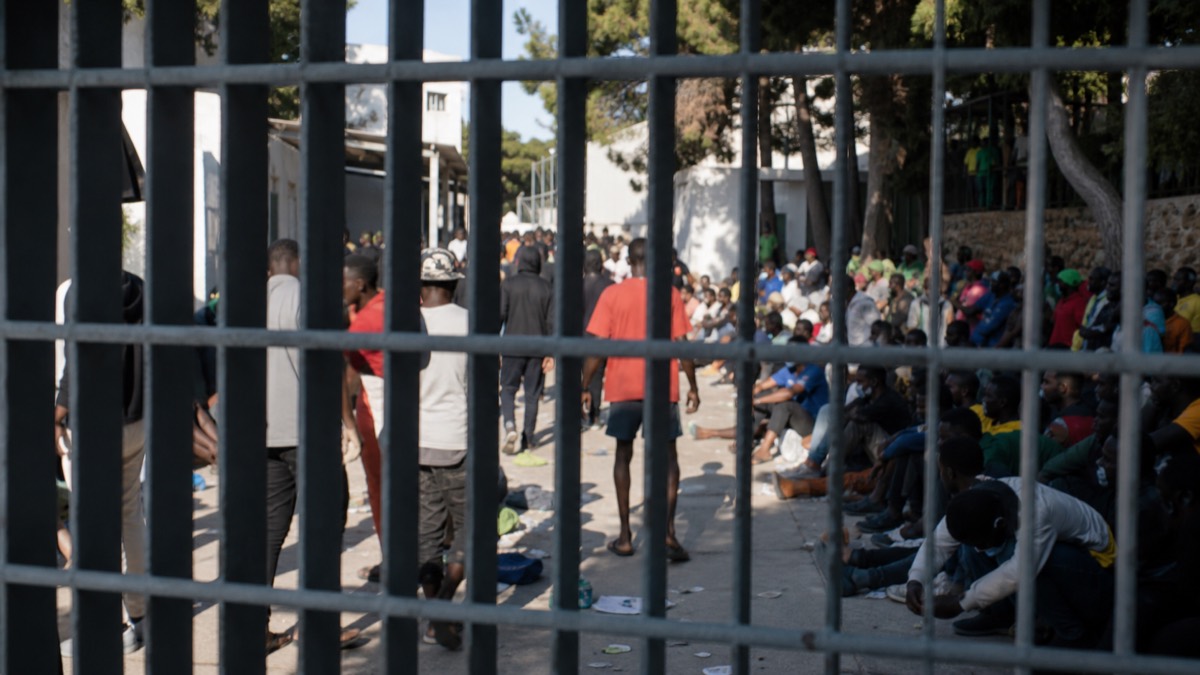
Brussels says rights will be protected if rejected asylum seekers are sent to return hubs outside the EU. The harder question is who will be accountable if those guarantees fail.
The EU’s new migration system is barely in force, but one of its most contentious tests is already moving from theory to negotiation: where rejected asylum seekers can be sent once their claims have failed, and what legal guarantees will follow them there.
EU migration commissioner Magnus Brunner said on Friday that human rights and international law would be safeguarded at planned third-country return hubs, according to an Associated Press report from Nicosia. He said any agreements would be monitored by the European Commission and vetted with the International Organization for Migration and the UN refugee agency.
The assurance came as several member states pursue talks with African countries on return-hub arrangements. Greece has said it is negotiating alongside Germany, Austria, Denmark and the Netherlands, with the aim of reaching agreements this year so that hubs could operate in 2027. Cyprus has indicated it may join the talks after its EU Council presidency ends on 1 July.
The Pact’s Hardest Promise
The return-hub debate goes to the centre of the EU’s migration pact. The new rules are meant to accelerate screening, asylum decisions and returns, while restoring public confidence that the bloc can manage irregular arrivals in a predictable way. But faster decisions only matter politically if rejected applicants can actually be removed.
That is the weak point in Europe’s migration system. Return rates have long lagged behind removal orders, often because countries of origin refuse readmission, documentation is missing, courts intervene, or deportations face diplomatic and practical obstacles. Return hubs are intended to solve part of that problem by creating places outside the EU where rejected asylum seekers could be transferred while onward return is arranged.
Yet the proposal also shifts the pact into its most legally exposed territory. Once a person is moved to a third country, the EU and the member state involved may still face questions over detention conditions, access to lawyers, the risk of onward removal to unsafe countries, family unity, medical care and effective remedies. Monitoring commitments will matter only if they are enforceable.
Accountability Cannot Be Outsourced
Brunner’s message was designed to reassure critics that return hubs will not become legal black holes. But the very need for that reassurance shows the vulnerability of the concept. If a rejected asylum seeker is sent from an EU state to a non-EU hub under an agreement negotiated by several governments and checked by international organisations, responsibility may become politically diffuse.
That diffusion is dangerous. Human rights groups have warned that external processing or return facilities can become overcrowded holding centres, particularly if countries of origin refuse to accept returnees or if legal appeals delay onward movement. In that scenario, the EU could face the worst of both worlds: public expectations of tougher enforcement, and court challenges over conditions it does not fully control.
The issue is also diplomatic. Return hubs would require partner countries to accept a visible role in Europe’s migration enforcement system. That carries domestic political costs for those governments and may require financial, development or visa-related incentives from the EU. If agreements are opaque, Brussels risks criticism that migration control is being traded for broader external-policy concessions.
Why This Is Not Just Another Launch Story
The pact formally entered application on 12 June, but readiness gaps were apparent even before that date. EU Today has already reported on how the new border system began under pressure from implementation gaps, and on the launch-day Eurodac malfunction that exposed operational risk.
The return-hub issue is different. Eurodac tests whether the EU can make its databases and border procedures work. Return hubs test whether the EU can enforce negative asylum decisions without pushing responsibility beyond meaningful legal oversight. One is an operational problem. The other is an accountability problem.
That distinction matters because the pact’s political credibility depends on both. A functioning border system may speed up identification and case handling, but it will not resolve the question of what happens after rejection. If returns remain blocked, governments will face familiar accusations that the pact is administrative theatre. If returns proceed through hubs that later face legal or humanitarian scandals, the pact could lose legitimacy in another way.
The Legal Test Ahead
The European Commission describes the wider Pact on Migration and Asylum as a framework for more orderly and effective management of migration. But return hubs will be judged by more specific standards: who is sent, for how long, under which procedure, with what appeal rights, and under whose jurisdiction.
Those details are not secondary. They will determine whether return hubs become a lawful enforcement tool or a new litigation front. The involvement of IOM and UNHCR may help, but it cannot substitute for clear legal responsibility by EU institutions and member states.
For Brussels, the coming months will therefore be an early test of whether the pact can survive contact with implementation. It is easier to promise a firm but rights-based migration system than to build one across EU borders, national capitals and third countries. Return hubs are where that promise will become hardest to defend.