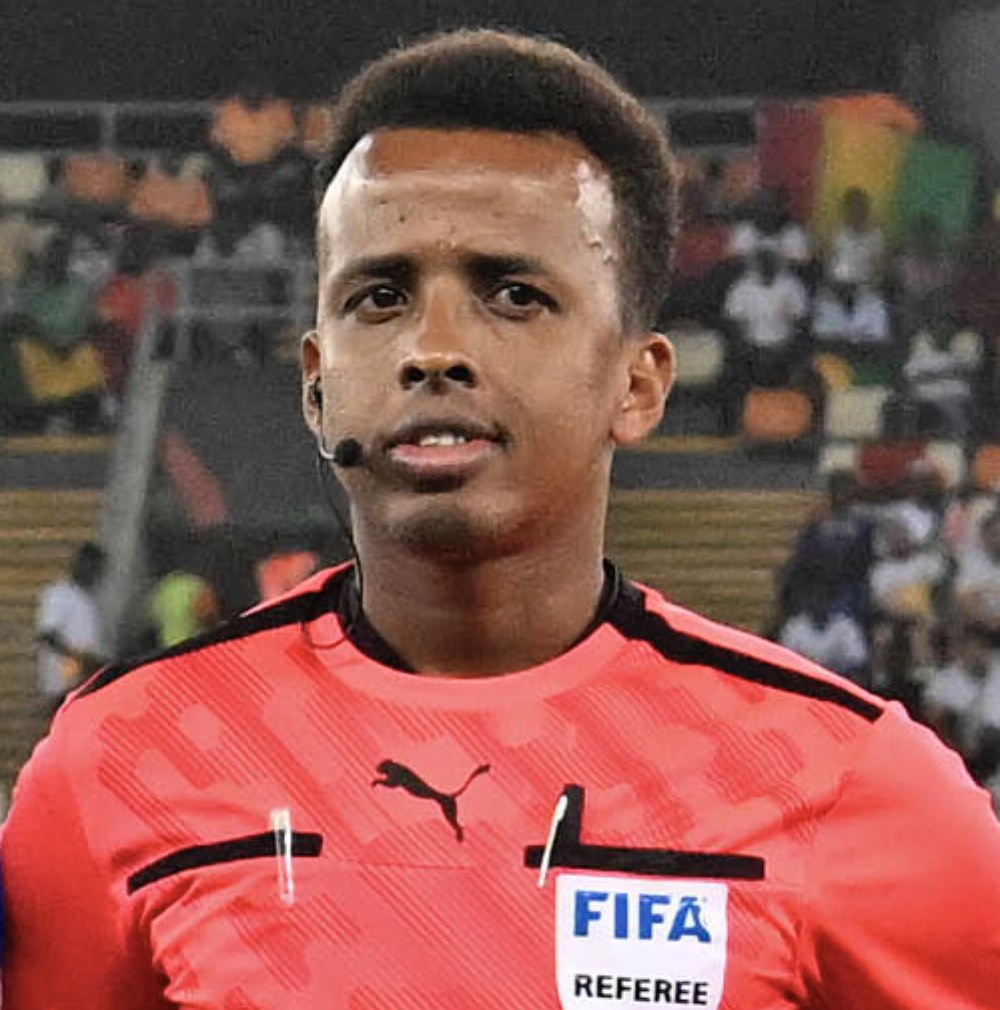
The image of a Somali football referee being turned away from the United States after an 11-hour interrogation at Miami International Airport offers an uncomfortable counterpoint to the glossy internationalism that major sporting events seek to project.
Omar Artan, a rising figure in world football officiating and the reigning Confederation of African Football referee of the year, had arrived in the US expecting to take his place among the officials selected for the World Cup. Instead, despite travelling with a diplomatic passport and what he believed to be valid documentation, he found himself detained, questioned about alleged links to militant groups and ultimately deported.
The episode has cast an unwelcome spotlight on the tension between national security policies and the increasingly global nature of elite sport.
According to Artan, immigration officials questioned him extensively regarding possible associations with Al Shabab, the Islamist militant organisation that has waged a violent insurgency in Somalia for nearly two decades. Artan has firmly denied any knowledge of, or connection to, the group.
“I had the right papers and everything. I had the right visa,” he said afterwards. “I’m just simply a referee who’s trying to live his dream, the biggest dream of my life, to come to the World Cup.”
US officials have maintained that Artan was refused entry because of an alleged “association with suspected members of terror organisations”. The precise basis for that determination has not been made public.
For FIFA, football’s global governing body, the incident represents a diplomatic embarrassment at a time when the organisation has sought to portray the World Cup as a genuinely universal event. The governing body has invested heavily in expanding opportunities for officials from nations with less established footballing traditions, emphasising that excellence on the pitch should transcend geography and politics.
Artan’s story embodied that aspiration.
At 34, he has emerged as one of African football’s most respected referees. His rise has been particularly significant given Somalia’s long struggle with instability and conflict, circumstances that have often obscured the country’s sporting achievements.
The past two years have marked a remarkable period in his professional development. In 2025, Artan became the first Somali official to oversee a major continental final when he took charge of the second leg of Pyramids FC’s African Champions League triumph over Mamelodi Sundowns. The appointment was viewed across the continent as both recognition of his technical ability and a symbol of Somalia’s gradual re-engagement with international sport.
That same year, FIFA entrusted him with officiating duties at the Under-20 World Cup in Chile. He oversaw three matches, including the tournament’s third-place play-off, further enhancing his reputation within elite refereeing circles.
His credentials were reinforced by appearances at successive Africa Cup of Nations tournaments. Having already officiated during the 2024 competition, he returned to the continental stage in 2025, cementing his status among Africa’s leading officials.
Against that backdrop, the decision to exclude him from the World Cup has prompted broader questions about the challenges facing international sporting events hosted by countries with stringent immigration frameworks.
Sporting competitions increasingly depend upon the seamless movement not only of athletes but also of coaches, medical staff, administrators and match officials. While governments retain sovereign authority over border control decisions, organisers face mounting pressure to ensure that participants are not subject to arbitrary or inconsistent treatment.
The United States, preparing to host some of the world’s largest sporting spectacles over the coming years, has repeatedly emphasised its commitment to welcoming international visitors. Yet cases such as Artan’s risk undermining confidence in that message, particularly among participants from countries subject to heightened security scrutiny.
FIFA has, however, moved swiftly to support the Somali referee. After Artan was returned to Turkey, officials assisted him during his transit through Istanbul before he boarded a flight back to Mogadishu.
Perhaps more significantly, sources indicate that FIFA will honour its financial commitment to the official despite his inability to participate in the tournament itself.
World Cup referees traditionally receive their remuneration only after the competition concludes, with exact figures generally undisclosed during the event. By ensuring Artan receives his full fee, FIFA appears keen to signal that he should not bear the personal consequences of circumstances beyond his control.
The gesture is unlikely to compensate fully for the disappointment.
For referees, appointments to the World Cup represent the pinnacle of professional achievement, often reflecting years of preparation, assessment and sacrifice. Artan himself described the assignment as the fulfilment of a lifelong ambition.
Yet if the experience has altered the trajectory of his immediate career, it has not diminished his determination.
In a homecoming marked by public support, Artan thanked “my people and my country” for standing behind him during the ordeal. He has also made clear that he intends to pursue another opportunity on football’s biggest stage.
His ambitions remain intact. He has vowed to officiate at the 2030 World Cup.
In the meantime, his professional calendar continues to fill. Artan has since received an invitation to referee the UEFA Super Cup in Salzburg between Paris Saint-Germain and Aston Villa in August, another prestigious assignment that reflects the esteem in which he is held within the game.
Football frequently celebrates stories of resilience and perseverance among its players. Omar Artan’s experience suggests that referees, too, can embody those qualities.
Whether remembered as an isolated bureaucratic failure or as evidence of a deeper incompatibility between global sport and national security systems, his case will resonate well beyond the touchline.
Main Image: – https://www.flickr.com/photos/196250323@N06/53535940590/
Click here for more News & Current Affairs at EU Today
Click here to check out EU TODAY’S SPORTS PAGE!
___________________________________________________________________________________________________________________