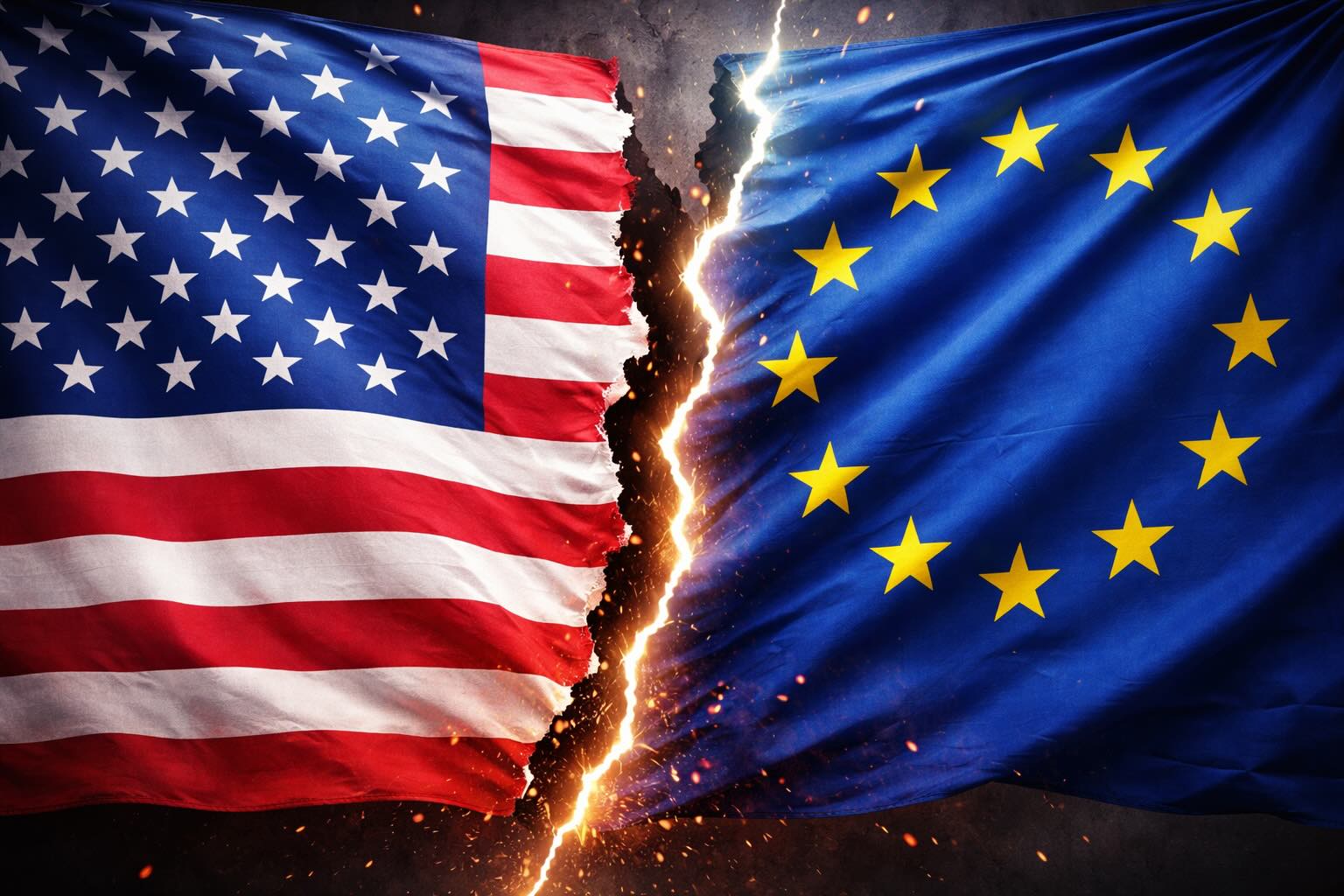
Fresh trade tensions between Brussels and Washington are pushing transatlantic commerce back to the centre of the political agenda, after the United States opened new investigations into alleged unfair practices by the European Union and 15 other trading partners.
The move has revived uncertainty around a trade framework agreed last year and has prompted a blunt response from the EU, which says it should be seen as part of the solution to global industrial distortions, not as one of the offenders.
The new US action takes the form of Section 301 investigations, a legal instrument Washington has often used when it believes foreign trade practices discriminate against American firms or burden US commerce. The Trump administration has launched one probe focused on industrial overcapacity and another on forced labour, with the overcapacity case covering the EU alongside economies including China, Japan, India, South Korea and Mexico. The inquiries could provide the basis for further tariff action as early as this summer.
For Brussels, that creates both an economic and a political problem. Economically, the European Union is trying to shield exporters from another round of tariff escalation at a time when growth remains weak and manufacturers are already coping with competition from lower-cost production in Asia and with high energy and financing costs at home. Politically, the investigations cut directly across the EU’s argument that it shares Washington’s concerns over global overcapacity, especially where state-backed production creates distortions in sectors such as steel, electric vehicles and other industrial goods.
The European Commission’s immediate line has been that the EU should not be treated as a source of the problem. A Commission spokesperson said the bloc should be regarded by the United States as an ally in tackling structural overcapacity rather than as a target of punitive trade action. Brussels has stressed that the EU is a market-driven economy with transparent rules and that its policies are fundamentally different from the state-led subsidy systems that have driven many of the overcapacity complaints now dominating trade debates.
That message is also designed for a wider audience. European officials have for months tried to position the EU as Washington’s natural partner in addressing Chinese overproduction and broader supply-chain vulnerabilities. By placing the EU inside the same investigative basket as major strategic competitors, the US risks undermining that alignment and reopening questions in Europe about the reliability of the transatlantic economic relationship. That concern has become sharper because the latest probes come only months after both sides reached a politically sensitive tariff arrangement in Scotland.
That agreement, reached at Turnberry in July 2025 between President Donald Trump and Commission President Ursula von der Leyen, was presented as a means of averting a broader trade war. Under the framework, the United States imposed a 15% tariff on most EU goods, including cars, semiconductors and pharmaceuticals, while the EU agreed to lower duties on many US products and to expand investment, energy purchases and defence procurement in the United States. Steel and aluminium tariffs remained at 50%, with the possibility of later adjustment.
It is precisely that deal which senior EU figures now say Washington must respect. Bernd Lange, chair of the European Parliament’s trade committee, has warned that the EU should accept only tariff measures that remain consistent with the substance of the Turnberry agreement. He said any departure from the deal would be unacceptable. Maroš Šefčovič, the European Commissioner for Trade and Economic Security, said earlier this month that US officials had given assurances that Washington would honour the agreement, though concerns in Brussels have not disappeared.
The nervousness is reflected inside the European Parliament. Lawmakers have already postponed work linked to implementation of the EU-US trade framework because of uncertainty over whether the United States still intends to stick to its commitments. That hesitation matters because parts of the arrangement require EU legislative and political approval, meaning the entire structure could become harder to sustain if trust continues to erode.
For now, neither side appears ready for a full rupture. The United States is seeking new leverage after legal and political challenges to parts of its earlier tariff regime, while the EU is still arguing for managed cooperation rather than retaliation. But the balance is delicate. If Washington uses the new investigations to justify tariffs that go beyond the Scotland framework, Brussels will face pressure to respond. If, on the other hand, the probes are used mainly as negotiating instruments, the dispute may yet remain contained. What is already clear is that trade, once again, has become one of the most sensitive tests of the broader EU-US relationship.