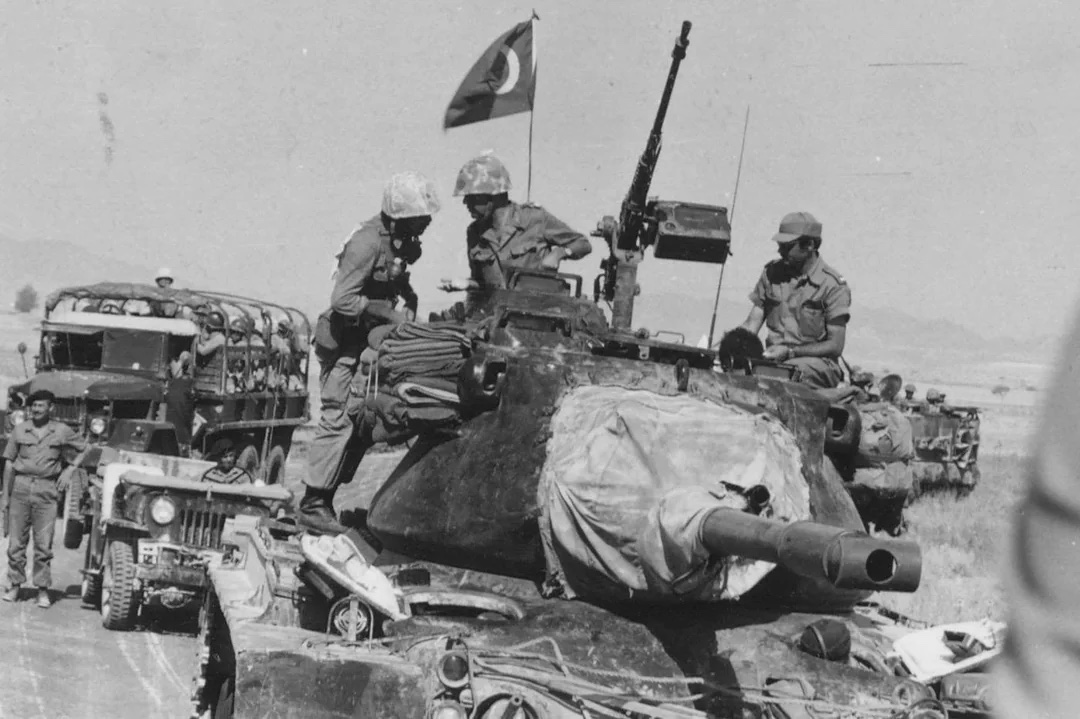
This week, the European Parliament, at long last, in a sharply worded resolution passed on Thursday, MEPs condemned what they termed Türkiye’s “continued illegal occupation” of the northern part of Cyprus — a phrase that cuts through decades of diplomatic euphemism.
It is a statement that carries more than symbolic weight. It signals a growing impatience in Brussels with Ankara’s defiance of international law and its contemptuous treatment of EU citizens.
The Parliament’s motion is not merely an abstract denunciation of history. It is rooted in the grim immediacy of current events. Five Greek Cypriot citizens — Antonis Louka, Andreas Kyprianou, Annie Kyprianou, Niki Gregoriou and Gregoris Gregoriou — were detained in July this year after attempting to visit their family properties in the village of Galatia, in the occupied north.
Three have since been conditionally released, but they remain trapped in limbo, unable to return home and still effectively held within the Turkish-controlled zone. MEPs describe their arrest as “illegal and politically motivated” — words chosen with deliberation, words that accuse Ankara not only of violating human rights but of weaponising them.
Such abductions are not aberrations; they are the logical outgrowth of a regime that has turned its occupation into an apparatus of intimidation. The Parliament’s resolution accuses the Turkish military authorities of using “abduction and hostage-taking” to deter Greek Cypriots from reclaiming their properties or even appealing to the so-called “Immovable Property Commission” set up by the occupation administration. The message from Ankara is calculated and cold: challenge our control, and you will pay a personal price.
A Crime That Europe Tried to Forget
The occupation of northern Cyprus began with the Turkish invasion of July 1974, launched under the pretext of protecting Turkish Cypriots after a coup by Greek nationalists.

That intervention has metastasised into a permanent partition, maintained by tens of thousands of Turkish troops and buttressed by the establishment of the self-declared “Turkish Republic of Northern Cyprus”, recognised by no state on earth save Turkey itself. It has created one of the most enduring frozen conflicts on the European continent, and yet it is often treated as a geopolitical afterthought — as though its persistence were simply part of the natural order.
The European Union’s own record has been one of equivocation. Cyprus acceded to the EU in 2004 as a divided island, with the acquis communautaire suspended in the occupied north. Since then, Brussels has indulged in the convenient fiction that the problem is too intractable to solve and therefore best handled with quiet technical talks. Turkey’s continued military presence has been tacitly tolerated as the price of keeping Ankara vaguely oriented towards Europe and NATO.
But this calculus has grown increasingly untenable. Erdoğan’s Turkey has in recent years shown itself not as a partner in need of coaxing but as a revisionist power testing the limits of Europe’s patience — whether in the eastern Mediterranean, in Libya, or through its military adventures in the South Caucasus. In this light, the occupation of Cyprus is no longer merely a historical anomaly; it is a standing rebuke to the very notion of a rules-based order on which the EU professes to stand.
The Human Cost of Indifference
The story of the five detained Greek Cypriots brings this reality into sharp focus. These are not politicians or provocateurs. They are civilians seeking to walk the land their families once owned, to tend to the houses and fields from which they were driven when Turkish tanks rolled across the island more than half a century ago. Their ordeal reveals how the passage of time has not blunted the injustice of 1974 but hardened it into a system of repression.
To visit ancestral property in the north is to enter a legal grey zone where European citizenship offers no protection, where one may be seized on spurious charges and held as bargaining chips. That this can happen to EU citizens in 2025, on EU soil, should shame the bloc into action. Yet it has taken their plight — and the audacity of Ankara’s behaviour — to jolt the European Parliament into breaking its long silence.
The resolution goes further than previous statements, declaring not only that the occupation is “a serious violation of international law” but that it constitutes “an obstacle to peace, stability and relations between the European Union and Türkiye”. This linkage matters. For decades, the EU treated Cyprus as a side issue to be compartmentalised away from its broader dealings with Ankara, whether on migration, trade or NATO coordination. Now MEPs are signalling that the occupation is not a peripheral irritant but a central impediment to any normalisation of ties.
They also remind Brussels of its own obligations. Cyprus is not merely a member state; its citizens are EU citizens, entitled to the protection of the Union. The resolution states bluntly that the EU has “a moral and legal obligation” to support them. It calls on the European Commission and the European External Action Service to “take all necessary measures, including considering punitive measures” against Turkey.
That language is deliberately open-ended, but its thrust is clear. The Parliament is inviting the EU to contemplate sanctions — a tool Brussels has deployed with increasing frequency against Russia, Belarus and other international law violators, but never against Turkey. This would mark a profound escalation, and one that would force member states to confront their own divisions. Several, notably Germany and Spain, have long preferred to appease Ankara in the hope of preserving the 2016 migration deal and protecting commercial interests.
Turkey’s Calculated Provocations
Turkey will no doubt respond with its usual indignation, denouncing the resolution as biased, illegitimate or neo-colonial. Such theatrics are Erdoğan’s stock-in-trade. Yet they mask a deeper strategy. By maintaining the occupation, Turkey preserves a permanent lever of influence within the EU. Northern Cyprus is a forward outpost of Turkish power in the eastern Mediterranean, offering Ankara military reach and strategic depth. Every so often, Ankara rattles this lever — as it has done with the reopening of Varosha’s beachfront or the harassment of Cypriot energy exploration — to remind Europe of the costs of defying it.
But this is precisely why Europe must no longer defer. To let Ankara hold part of an EU member state under military occupation is to signal that power, not law, ultimately governs Europe’s borders. It emboldens other revanchists who would redraw maps by force. If Moscow’s seizure of Crimea and Donbas is intolerable, why is Ankara’s hold over northern Cyprus deemed tolerable? The answer cannot be that Turkey is a NATO ally. Alliance membership does not grant immunity from the most basic norms of international conduct.
The Cost of Complacency
Europe’s habit of looking away has achieved nothing. The status quo has not mellowed over time; it has curdled. Turkish troops remain entrenched. Turkish settlers have altered the demographic balance. Greek Cypriot refugees grow old waiting for justice. Each new generation born under occupation knows only division, not reconciliation. The longer this persists, the more remote reunification becomes, and the more emboldened Ankara grows.
To insist on action is not to indulge in romanticism about Cyprus’s easy reunification. It is simply to recognise that passivity has failed. The EU need not launch gunboats, but it can and should wield the tools at its disposal: economic leverage, political conditionality, and the power of collective diplomatic pressure. If Turkey wishes to retain even the pretence of an EU accession process, it must be made to understand that occupation is incompatible with partnership.
A Line in the Sand
The European Parliament’s resolution is, in itself, only words. Ankara has shrugged off words for decades. But words can matter if they herald resolve. The Parliament has now drawn a line, declaring that Europe will no longer treat the illegal division of Cyprus as a tolerable inconvenience. Whether the European Commission and member states will dare to stand behind that line is another matter.
For too long, the EU has acted as though the problem were frozen. It is not. It festers. The detention of the five Greek Cypriots shows that this is no relic of history but a live instrument of coercion. It is a reminder that what is at stake is not only Cyprus’s sovereignty but the credibility of the European project itself.
Europe cannot claim to uphold international law while allowing one of its own members to languish under foreign military occupation. If it fails again to act, its professed values will ring hollow — and Ankara will have learned, yet again, that defiance carries no cost. This week, the European Parliament finally spoke. Now the rest of Europe must decide whether it will merely echo those words, or make them mean something.