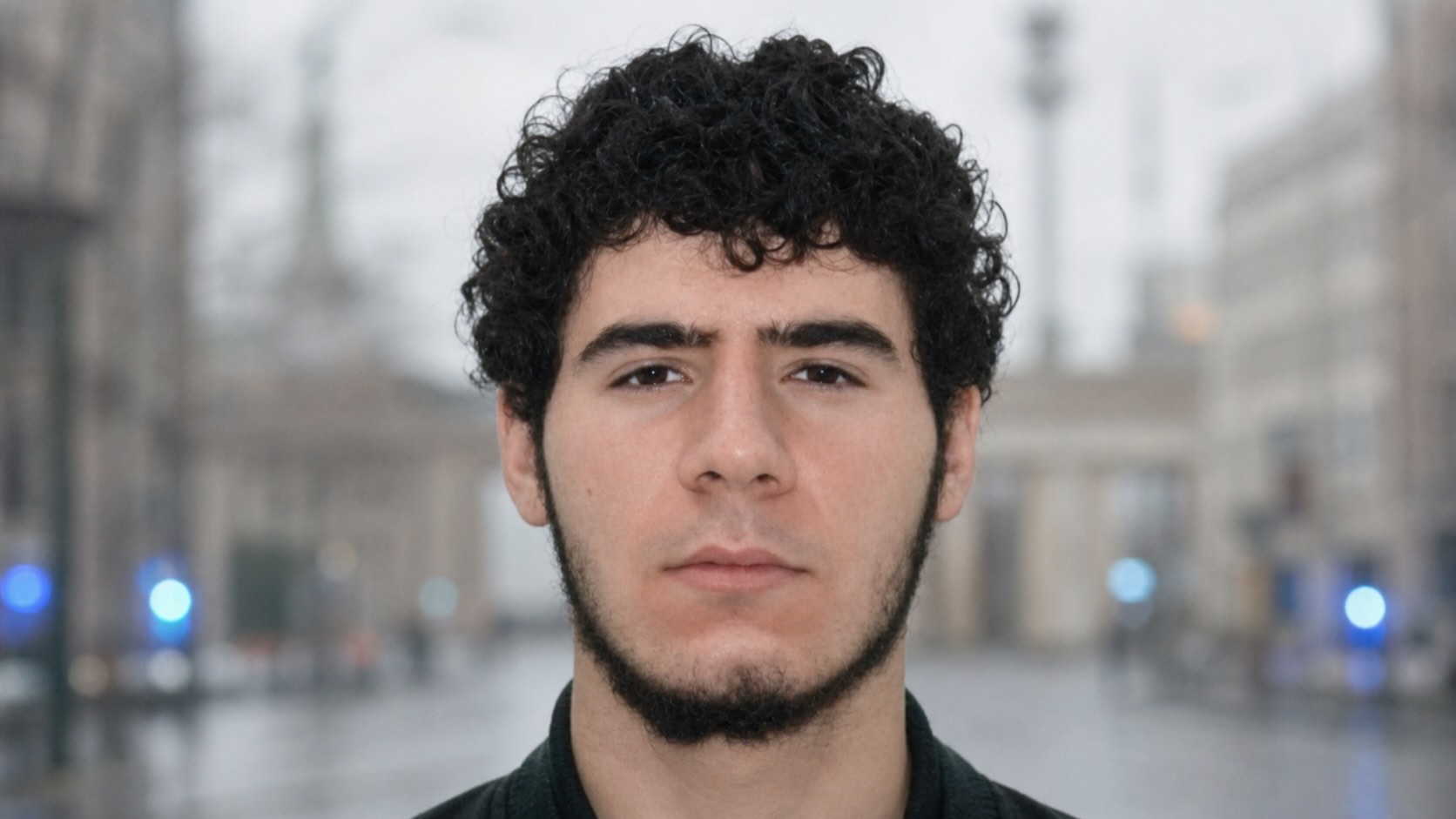
A vehicle was driven through crowds near Berlin’s Christopher Street Day celebrations, killing one person and injuring at least 16 as investigators examine the suspect’s motive and support network.
German police are searching for a man suspected of involvement in a vehicle attack near Berlin’s Christopher Street Day celebrations that killed one person and injured at least 16 others on Saturday night.
According to a joint appeal issued by Berlin Police and the city’s public prosecutor, several people were struck at approximately 22:00 on 25 July on Ahornsteig in the Großer Tiergarten. Authorities described the incident as an attack and published an appeal for information concerning a man who fled.
Police said the suspect was known to them and had links to Islamist circles in Berlin. That information is relevant to the investigation, but it does not by itself establish motive, organisational direction or the involvement of a wider group. Police spokesman Florian Nath said investigators had not yet determined the suspect’s precise motive, role or the full sequence of events.
The distinction is essential. Reporting should neither conceal verified information about the suspect’s associations nor convert those associations into a completed terrorism finding before investigators establish the evidence.
The incident brought the evening’s Pride celebrations and a planned concert to an abrupt end. It also revived an increasingly difficult security question for European cities: how to protect large, open public events from vehicles without turning public space into a permanently fortified zone.
What is known
The vehicle reportedly travelled along a path in the Tiergarten, struck multiple people and then hit a tree. The driver or occupants left the scene, prompting an extensive police operation.
Emergency services initially reported several life-threatening injuries. The Associated Press said one person was killed and at least 16 were injured. Casualty figures may change as hospitals update authorities.
Police have treated the event as a deliberate attack. The official appeal asks the public to help locate the suspect and identify witnesses, images and video that could establish the vehicle’s approach, its occupants and their movements after the crash.
The strongest evidence is likely to come from CCTV, mobile-phone recordings, vehicle records, fingerprints, communications data and witness accounts. Investigators will also need to determine how the vehicle entered or approached an area serving a major public gathering.
Until that work is complete, claims circulating on social media about accomplices, ideological instructions or the suspect’s identity should not be repeated as fact.
An open event has a wide perimeter
Berlin Pride—known locally as Christopher Street Day—is not confined to a stadium with controlled entrances. It moves through streets and public areas, drawing large crowds and creating informal gathering points beyond the official route.
That openness is part of the event’s character. It also means security cannot be defined only by barriers at a main stage or parade entrance. People gather on side streets, in parks, around transport stations and along routes used to enter and leave.
Police had deployed vehicle barriers for the event, according to contemporary reporting. The investigation should establish whether the Tiergarten path was within the protected perimeter, whether access controls were moved during the day and whether the vehicle exploited an unguarded service or emergency route.
The point is not to assign blame before the site plan and decisions are known. Effective reviews examine design, intelligence, staffing and attacker adaptation together. A barrier plan can be reasonable and still contain a vulnerability.
Protection cannot depend on concrete alone
Vehicle mitigation is now a standard element of event security. Fixed bollards, heavy vehicles, temporary barriers and controlled access can prevent or slow an attacker. Their effectiveness depends on placement, anchoring, supervision and the routes they leave open.
Cities also need layered measures: automatic number-plate recognition where lawful, rapid information sharing, trained stewards, medical teams, clear evacuation routes and officers positioned to respond after a breach.
No realistic system can eliminate all risk across an entire city centre. An absolute-security promise would require restrictions incompatible with the public character of demonstrations and celebrations.
The objective is instead to reduce opportunity, limit the speed and distance of a hostile vehicle, and ensure that emergency services can reach casualties quickly. The fact that one route was exploited should lead to a technical review, not the automatic cancellation or enclosure of future Pride events.
The social context matters
The target context makes the incident especially sensitive. Pride events are both celebrations and political demonstrations for equal rights. LGBTQ communities across Europe have faced threats, harassment and attempts to restrict public visibility.
If investigators establish that the crowd was selected because of its identity, the attack will have a wider purpose: intimidating a community and discouraging participation in public life. Authorities should therefore communicate clearly with LGBTQ organisations and provide reassurance without speculating about motive.
Political actors also bear responsibility. The attack should not be used to imply collective guilt by Muslims, migrants or any wider population. Equally, concern about prejudice should not prevent accurate reporting if investigators establish an Islamist ideological motive.
Public confidence depends on applying the same evidential standard in both directions.
Germany’s wider security debate
Germany has already confronted repeated questions about vehicle attacks and the management of individuals known to security services. EU Today’s coverage of the Magdeburg life sentence examined the persistent gap between information held by different authorities and timely risk assessment.
The Berlin case may or may not reveal a similar problem. Being “known to police” can mean anything from previous questioning to serious intelligence. It does not prove that officers possessed information that legally justified surveillance or arrest.
The review should ask what was known, by whom, when it was known and whether information was assessed and shared appropriately. Those answers matter more than the phrase itself.
What must happen next
The immediate priorities are locating the suspect, supporting victims and preserving evidence. Police should provide regular, factual updates and correct false reports quickly.
After the operational phase, Berlin should conduct a joint review involving police, prosecutors, the fire service, event organisers, transport authorities and representatives of the affected community. Its public findings should explain the protected perimeter, the access route and any changes required for future events.
Authorities must also guard against retaliatory violence and online incitement. A serious security response includes preventing the first attack from triggering further crimes.
Berlin’s Pride celebrations were intended as an assertion that citizens can occupy public space openly and safely. The attack challenges that principle. The city’s answer should combine determined investigation, honest examination of security failures and a refusal to allow either fear or premature conclusions to determine who belongs in that space.