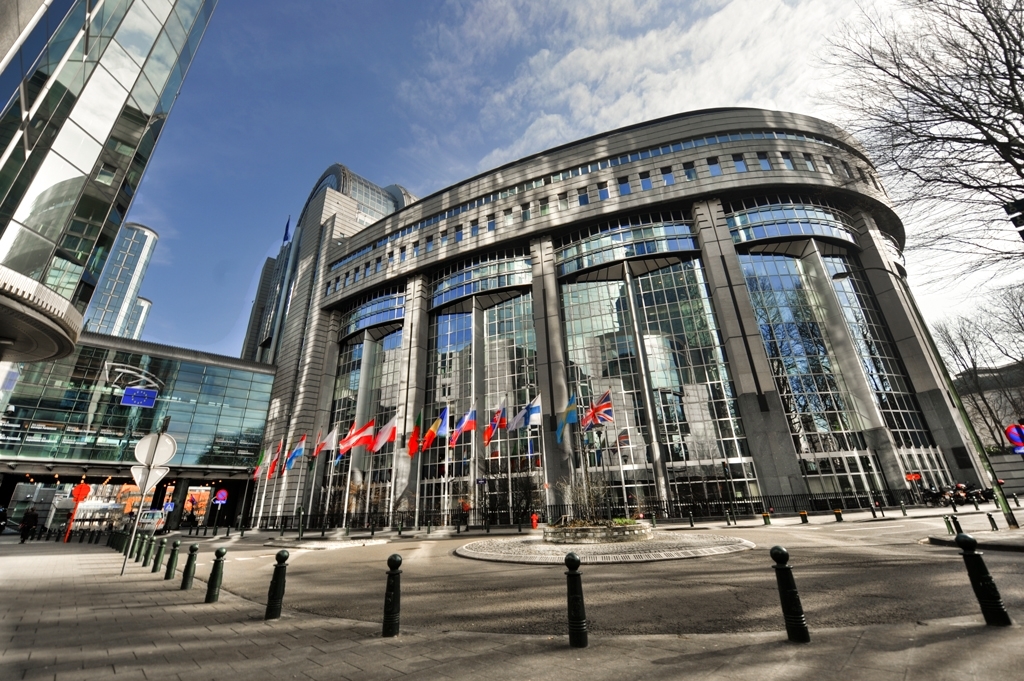
This week in Brussels the European Parliament is poised for a flurry of high-level hearings, legislative manoeuvres and diplomatic footwork.
From scrutiny of the European Central Bank’s monetary strategy to the nitty-gritty of passenger luggage dimensions, MEPs will busy themselves with matters ranging from the profoundly macro to the minutely mundane.
The show must go on—and in Brussels, it never lacks for drama.
Christine Lagarde Faces the Committee Firing Line
All eyes in the Economic and Monetary Affairs Committee will be on Christine Lagarde this Monday as she fields questions in her quarterly grilling by MEPs. The European Central Bank president is expected to face sharp queries not just on headline inflation, which has stabilised in much of the eurozone, but on the broader fallout from escalating global trade tensions and geopolitical tremors. With markets increasingly jittery over policy ambiguity, Lagarde’s every word will be parsed for signals.
What makes this particular appearance more charged is the committee’s decision to shine a spotlight on crypto assets—a theme many in Brussels still struggle to understand, let alone regulate. Expect MEPs to probe the ECB’s stance on digital currencies, the future of the digital euro, and the threat posed by unregulated crypto markets to financial stability. With some national regulators cracking down while others cheer innovation, Lagarde may find herself caught between competing pressures.
Passenger Rights: A Vote on the Fine Print of Frustration
Tuesday brings with it an old Brussels favourite: regulations so detailed they could make a Roman jurist wince. The Transport and Tourism Committee will finalise its position on two draft bills concerning passenger rights. It sounds dull. It isn’t.
The proposals cover scenarios that have long plagued European travellers—flight delays, missed connections, chaotic train substitutions, and the perennial question of how much luggage you can bring without triggering a payment penalty. MEPs are expected to support measures harmonising compensation rules across different transport modes—a response to rising frustration over fragmented national policies.
Notably, the rights of passengers with disabilities are set to be reinforced, a move that will likely be welcomed by campaigners and ignored by budget airlines, at least until the Commission brings down the hammer.
Holiday Chaos and Refund Roulette: Reforming Package Travel Rules
Just in time for the summer season, Thursday will see the Internal Market and Consumer Protection Committee adopt its position on the revised package travel directive. After years of chaotic refunds during the COVID pandemic and the occasional spectacular tour operator bankruptcy, MEPs are keen to restore a degree of confidence to Europe’s hard-pressed holidaymakers.
The updated rules promise greater clarity on what information must be disclosed before a booking is made, a streamlined refund process, and new rules governing the use of vouchers. With travel firms eager to push vouchers over cash, the battle lines are clear. Consumers want certainty. Operators want flexibility. Parliament, as ever, will aim to please both—and satisfy neither.
Redirecting Regional Funds: Defence, Borders and the Belarus Factor
Wednesday’s focus shifts to one of the EU’s perennial Achilles’ heels: cohesion funding. The Regional Development Committee is set to adopt its stance on a mid-term review of how these funds are allocated. Originally designed to reduce disparities between richer and poorer EU regions, the Commission now wants to divert a chunk of the money towards new priorities—including defence production, decarbonisation, and assistance for regions bordering Russia and Belarus.
This is less about cohesion and more about contingency. With the war in Ukraine grinding on, and security fears mounting in Eastern Europe, the Brussels machine is recalibrating—slowly, perhaps, but unmistakably. Still, MEPs from the South and West are unlikely to accept such a shift without debate. Cohesion cash is the closest thing to political oxygen in much of southern Europe, and nobody gives it up willingly.
Bill Gates Comes to Brussels
The Development Committee will play host to none other than Bill Gates, who is no stranger to the European Parliament, on Tuesday. The Microsoft billionaire-turned-philanthropist will discuss the role of innovation and development aid in improving health outcomes across the Global South. While Gates is widely admired in EU circles, expect some scepticism from Green and left-wing MEPs who see the Gates Foundation’s technocratic approach as overly corporate and insufficiently democratic. Whether his message of “innovation-first” resonates in the chamber remains to be seen.
Metsola’s Whirlwind Tour
Finally, European Parliament President Roberta Metsola will be on the move this week in a display of diplomatic ambition that befits her role. On Monday, she’ll be in the United Arab Emirates, addressing the Federal National Council and meeting counterparts from the Gulf Cooperation Council. On Thursday, she’ll speak to EU leaders at the European Council—no easy task amid growing political fragmentation. On Friday, she’ll round off the week with a meeting with Italy’s President Sergio Mattarella in Rome. A packed diary for the Parliament’s most visible ambassador.
As ever in Brussels, the details are intricate, the stakes often obscured, and the public largely disengaged. But behind the bureaucratic veneer, real power is being exercised. Whether wisely or not is, of course, another question entirely.