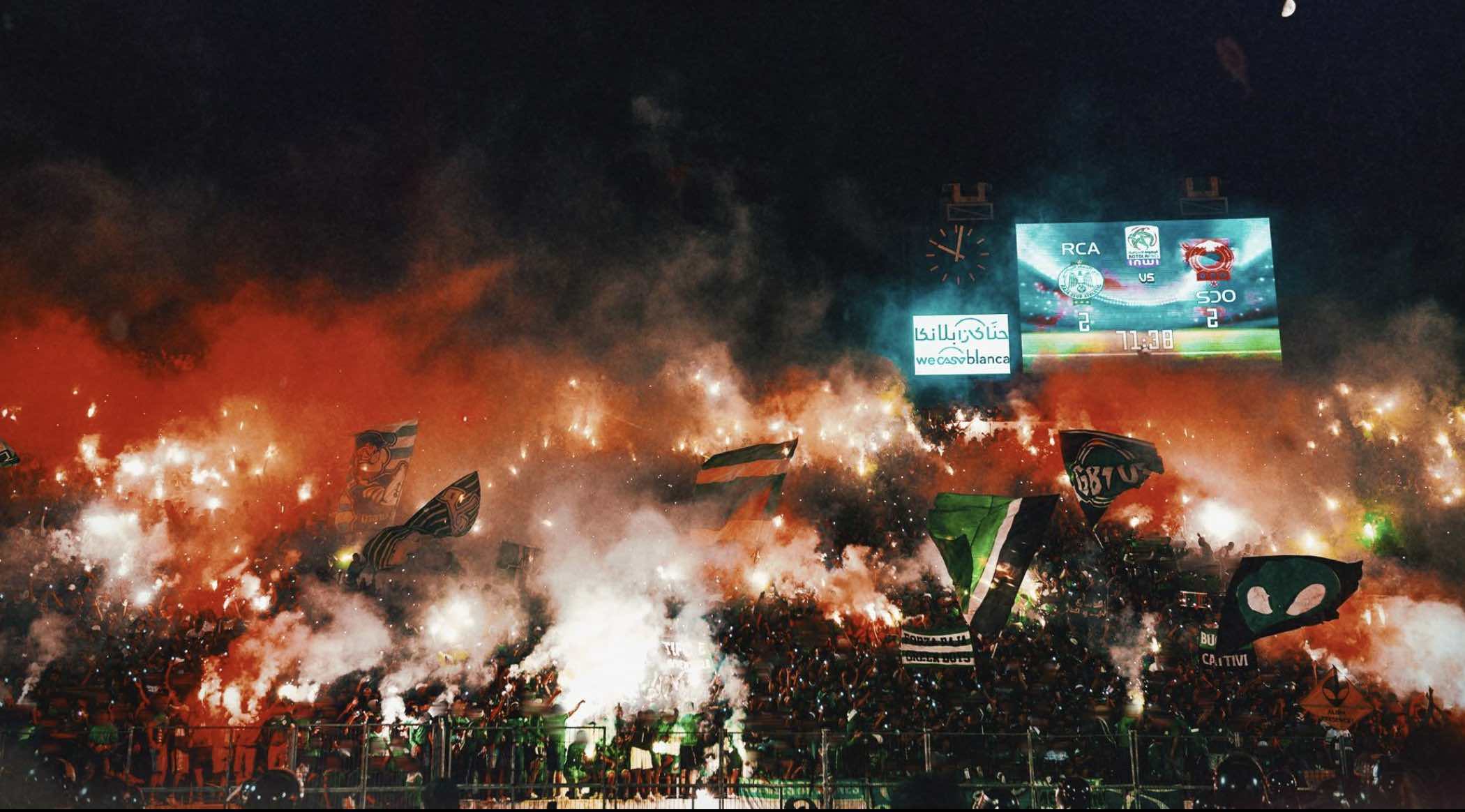
The past year has seen a weary and unsettling pattern repeat itself across Europe’s football stadiums: flares hurled into family stands, running battles outside grounds, riot police deploying tear gas, games abandoned or delayed, and, in some cases, visiting supporters treated almost like invading armies.
What was once thought a relic of the hooligan era — an ugly chapter many assumed had been largely written out of the modern game — is again demanding attention.
From Marseille to Rotterdam, from Belgrade to Berlin, the troubling scenes vary in scale and cause, but the undercurrent is unmistakable: crowd trouble is returning to the football stadiums, and with growing intensity. Football authorities, governments and police chiefs are all offering explanations, yet none fully capture the root of what is going on. The sense of unease is spreading faster than any firm answers.
A Europe-Wide Pattern, Not Localised Disorder
In France, this season alone has seen violent clashes involving Marseille, Lyon, Lille and Saint-Étienne. A Lyon coach was struck by projectiles in October, forcing a match postponement and leading President Macron to talk of a “national problem” in the sport. Police unions warn that forces are “stretched thin” as club reputations deteriorate and some fixtures are now seen as operational risks rather than sporting events.
Germany, usually praised for immaculate fan organisation and festive atmospheres, has not been immune. Borussia Dortmund’s recent home match against HSV saw pyro explosions and scuffles in the Südtribüne; Union Berlin fans clashed with police while protesting ticketing policies; Frankfurt supporters fought running battles near the stadium after a European fixture. Even the Bundesliga’s proud tradition of “fan culture” has begun to fray.
Italy continues to struggle with entrenched ultra violence, but the recent spike has alarmed even seasoned observers. Atalanta’s match in Bergamo saw a brutal clash between rival groups armed with batons; Napoli supporters set off industrial-grade fireworks at away grounds, sparking panic among ordinary fans.
And in the Balkans — Serbia, Bosnia, Croatia — violence at derbies has reached fever pitch, with politically charged ultras turning fixtures into powder kegs. UEFA has opened more disciplinary cases this season than at any time since 2014.
Why Now? No Single Explanation Fully Fits
The causes are entangled, and anyone who claims to have a single answer underestimates the complexity of Europe’s shifting social climate.
One theory points to post-pandemic social friction. For two years, crowds were absent, stadium rituals broken, and policing reduced. When supporters returned, the collective etiquette had weakened. The gap allowed harder-edge groups — some dormant, some newly formed — to reassert themselves. Police forces across Europe quietly acknowledge that they lost a degree of match-day intelligence during those empty-stadium years.
Another explanation lies in economic frustration. Football has always reflected social pressures; periods of political or economic strain often spill into terraces. Across Europe, wage pressures, high living costs and stagnant economies have created a resentful undercurrent among young men — historically the demographic most likely to gravitate towards ultra groups. The stadium becomes an arena where grievances can be acted out, even if the original anger has nothing to do with football.
There is also the politicisation of supporter groups. In parts of Eastern and Southern Europe, ultras have aligned themselves with nationalist or extremist movements. Their battles are no longer about club pride alone but about symbolism and identity. The Serbian “delije” or Croatian “Bad Blue Boys” have long been political, but similar dynamics are spreading westwards — something French intelligence agencies have been warning about quietly.
The Influence of Social Media — A Multiplier Effect
Another factor is social media’s transformation of supporter behaviour. Where hooliganism in the 1980s existed in silos — small groups, often clandestine — today’s confrontations are broadcast instantly, turning violent clashes into shareable, almost gamified spectacles.
Clips of charging mobs, pyrotechnic displays and confrontations with police circulate widely, producing imitation elsewhere. As one senior British police officer put it recently: “The violence is coordinated more quickly, but it is also performed for an audience. That is new.”
Clubs have noticed the trend: choreographed flare displays, once confined to the ultras, have become aspirational even among ordinary supporters, who see the imagery online and romanticise the atmosphere without grasping the risks.
A Crisis of Governance — High Prices, Weak Stewarding, and Complacent Authorities
There is also a growing feeling that football’s administrators have been slow to react. Rising ticket prices have driven out many traditional supporters while attracting others who see football as a venue for weekend mayhem rather than loyalty. Stewarding, meanwhile, has become inconsistent; some grounds rely on poorly paid private contractors with minimal training, while others lack the manpower to keep pace with modern crowds.
UEFA has tough sanctioning powers, yet its response often feels reactive, not strategic. Fines, partial stadium closures and bans on away fans come frequently, but the violence persists. Some critics say the root problem is cultural, not regulatory: clubs that once boasted strong community links have grown distant from their supporters, creating a vacuum filled by more aggressive factions.
Where Europe Goes From Here
Solutions remain elusive. Banning orders, intelligence-led policing and stricter stadium controls can help — and, in some countries, have helped — but they address symptoms rather than causes. If disillusioned youth, identity politics and online glorification are now fuelling the new era of violence, football authorities may need to rethink their strategies entirely.
Some propose rebuilding supporter engagement at the local level, giving fans a sense of ownership and responsibility. Others argue for more coordinated European policing, especially for high-risk fixtures. A few clubs are experimenting with “safe standing” areas designed to channel energies without allowing them to boil over.
What is clear is that Europe can no longer pretend the problem is isolated. It is spreading, and the shock factor has worn off. If the sport does not confront the trend now — with candour rather than PR gloss — the violence may well escalate from disturbing sideshow to existential crisis. Football’s great European nights were once known for passion, colour and competition. Increasingly, they are remembered for sirens, tear gas and spiralling chaos.
The game cannot afford for this to become the new normal.
Main Image: – Own work
Click here for more News & Current Affairs at EU Today
Click here to check out EU TODAY’S SPORTS PAGE!
________________________________________________________________________________________________________________________