Berlin’s harder language on China marks a shift for Europe’s largest manufacturing economy and could give Brussels more political cover for broader trade action.
France and Germany have signalled a more coordinated push for tougher European trade measures against China, citing industrial overcapacity, a widening trade deficit and what German Chancellor Friedrich Merz described as an undervalued Chinese currency.
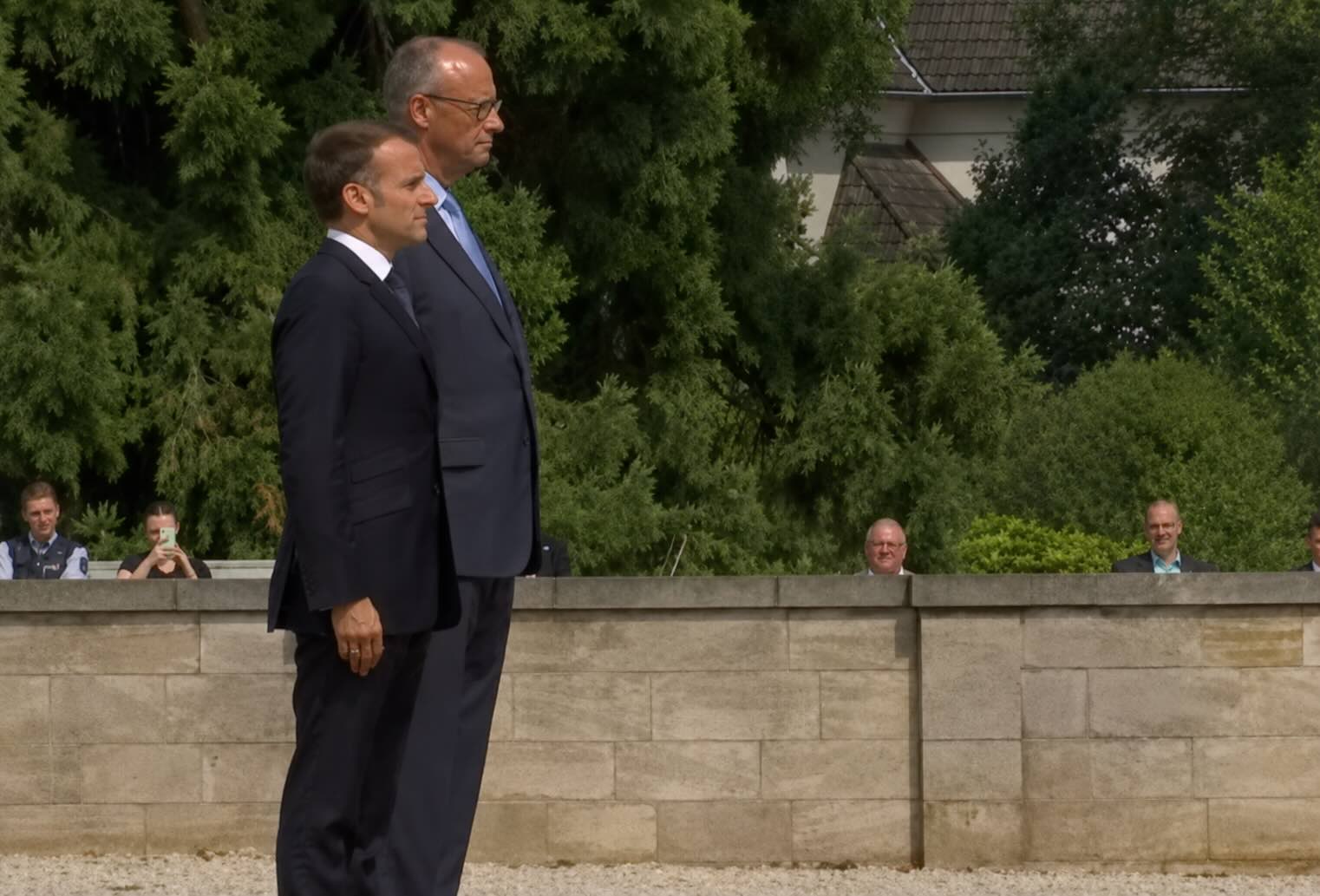
At a joint ministerial meeting in Brühl, Merz and French President Emmanuel Macron said Europe needed to protect its industrial base while avoiding full decoupling from China. Reuters reported that the two leaders accused Beijing of exerting heavy pressure on European industry through overcapacity and currency policy, while the Financial Times reported that finance ministers are expected to present safeguard mechanisms in September.
The shift matters because Germany has traditionally been more cautious than France about broad trade-defence action. Its export industries have deep exposure to China, and Berlin has often resisted measures that could provoke retaliation. If Germany now aligns more closely with France, Brussels may have a stronger mandate to use trade instruments beyond narrow product-by-product cases.
The timing is significant. European manufacturers have been pressing for faster action against subsidised Chinese competition. Recent coverage of German manufacturers’ demands for broader EU trade defence showed that industry frustration is no longer confined to electric vehicles. Machinery, chemicals, metals and clean technologies are all part of the debate.
Macron’s argument is familiar: Europe cannot sustain its industrial base if competitors benefit from state support and export excess capacity into the EU market. Merz’s intervention is more consequential because it suggests Germany is moving away from a posture built mainly around open export markets and managed dialogue.
The risk is escalation. China has already shown that it can use critical materials, market access and regulatory pressure as leverage. Brussels is also dealing with rare-earth vulnerabilities, explored recently in coverage of the Commission’s rare-earth crisis preparations. A tougher trade line may protect European industry, but it also raises the cost of retaliation.
For the EU, the strategic question is whether safeguards can be designed quickly enough to matter without becoming blunt protectionism. A sector-wide mechanism would be more powerful than a standard anti-subsidy case, but also more legally and diplomatically sensitive.
The Franco-German signal does not settle the policy. It changes the politics. If Paris and Berlin hold the line together, Brussels will find it harder to avoid a more confrontational industrial strategy towards China.