Brussels wants electrification to drive competitiveness, but steelmakers warn that carbon-market deadlines remain detached from affordable power and hydrogen supply.
The European Commission has presented an Electrification Action Plan and review of the EU Emissions Trading System, setting up a new argument over whether Europe can decarbonise heavy industry without worsening its competitiveness problem.
The Commission said on 17 July that the package is designed to boost competitiveness, decarbonisation and independence, with electrification placed at the centre of industry, transport and buildings policy. SolarPower Europe said the plan includes a 46 per cent electrification target for 2040 and welcomed efforts to correct the imbalance between electricity and fossil-fuel taxation.
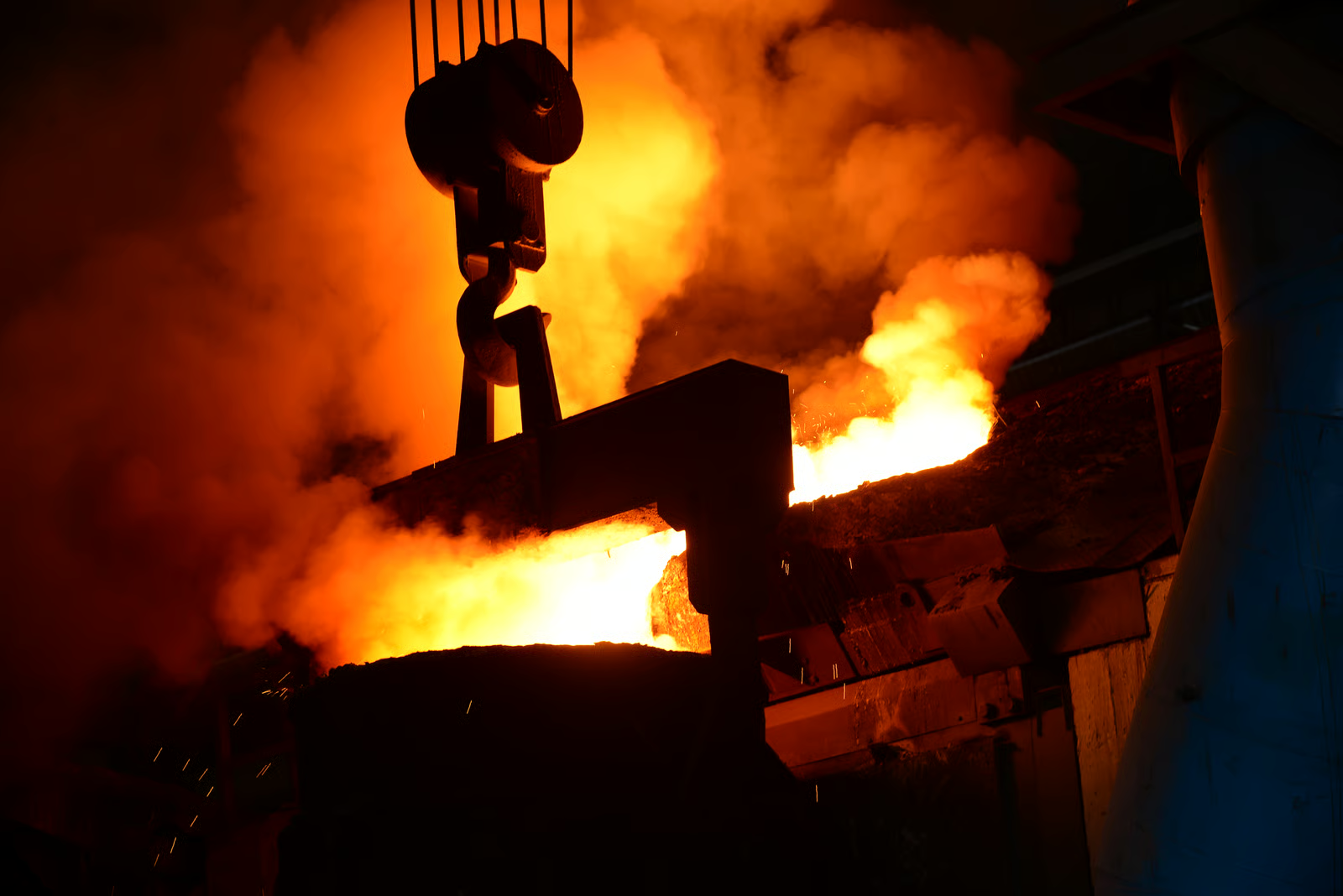
Industry reaction was less comfortable. The European steel association EUROFER said it was “a fantasy” to believe Europe’s steel industry could fully decarbonise by 2033 without affordable clean electricity and hydrogen. In its 17 July statement, EUROFER argued that the free-allocation phase-out and benchmark rules still create investment uncertainty.
The conflict is not over whether electrification is desirable. It is over whether the enabling infrastructure will exist in time and at a price industry can survive. Steelmakers, chemicals producers and other energy-intensive sectors are being asked to commit billions to cleaner processes while electricity grids, hydrogen supply and long-term power costs remain uncertain.
That concern sits inside a broader EU competitiveness debate. Recent coverage of falling Rhine levels and industrial transport risk showed how European manufacturers are already exposed to energy, logistics and infrastructure pressures. The ETS review adds carbon-cost uncertainty to that list.
Environmental and clean-energy groups see the plan differently. They argue that electrification is the route to lower fossil-fuel dependence and more resilient industry. The question is how quickly member states can align grids, permitting, storage and tax systems with that objective.
For Brussels, the political problem is balance. A weaker ETS risks undermining the EU’s climate trajectory. A rigid ETS without affordable clean inputs risks pushing production and investment outside Europe. Both outcomes would weaken the case for the green transition.
The package will now move into negotiations with the European Parliament and Council. The core issue will be whether legislators can turn electrification from a strategic slogan into bankable conditions for investment.