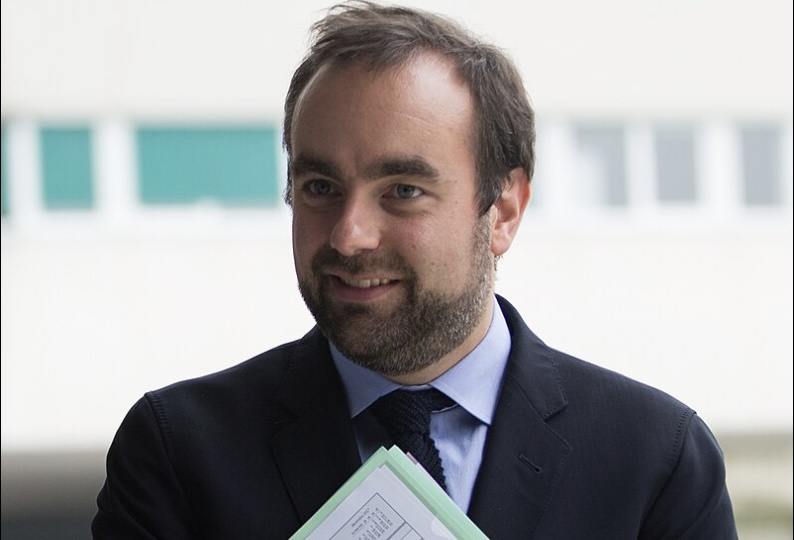
In the grand chambers of the French National Assembly, an uneasy ritual unfolded this week that was less about governance and more about the theatre of political survival.
Late yesterday, Prime Minister Sébastien Lecornu’s administration once again endured the ignominy of no-confidence votes tied to its handling of the 2026 state budget — specifically the contentious expenditure component. Yet, far from signalling strength or clarity of purpose, the outcome laid bare the fragility of the executive and the increasing drift of the Fifth Republic towards constitutional sleight of hand.
The government survived two motions brought in protest at its decision to ram through the expenditure section of the budget without offering the National Assembly a final vote. The principal motion, tabled by hard-left deputies aligned with France Insoumise, the Greens and the Communists, attracted 267 votes — still 22 short of the 289 required to topple Lecornu’s Cabinet. A second challenge from the far-right National Rally fared even worse, with only 140 deputies supporting it.
Seen in isolation, these numbers might be spun as a modest vindication. But this is spin of the flimsiest sort. What passed was not a vote of confidence but a demonstration of political impasse. A government that must repeatedly dodge parliamentary accountability to get its fiscal blueprint adopted is hardly one that commands respect; it is a minority administration clinging to office at almost any cost.
The root of this dysfunction lies in the fractured nature of President Emmanuel Macron’s governing coalition. Since the legislative elections, no single party or bloc has been capable of mustering a majority in the lower house. Faced with intransigent opposition on both the left and the right, Lecornu has resorted with increasing frequency to Article 49.3 of the Constitution — a mechanism that allows a government to force through legislation without a vote, at the risk of triggering a confidence motion.
First employed on the revenue side of the budget, the controversial device has now been deployed against the expenditure side as well. This is not the confident use of a constitutional safeguard in exceptional circumstances; it is its normalisation as a tool to bypass democratic debate. And that ought to trouble anyone who believes that a budget should be more than a decreed document. It is, after all, the pre-eminent expression of political priorities and public consent.
Indeed, Lecornu’s insistence on pushing through a controversial budget in this fashion exposes a profound disconnect between the executive’s ambitions and parliamentary reality. The prime minister has pledged that the deficit will shrink to below 5 per cent of national output in 2026, down from 5.4 per cent in 2025, but still well above the European Union’s 3 per cent threshold. Fiscal prudence that fails to secure broad legislative support is not prudence at all — it is unilateral action masquerading as governance.
Critics across the political spectrum have panned the administration for this method. The hard left has accused Lecornu of trampling democratic norms, while the right has seized on the government’s manoeuvres as evidence of elite disconnect and political opportunism. Even moderate voices have expressed unease at the routine use of 49.3, warning that it erodes the very foundations of parliamentary democracy.
And with good reason. The repeated invocation of Article 49.3 has transformed what should be a deliberative process into a series of rubber-stamp rituals. Budget negotiations, which ought to be robust and inclusive, have become the province of backroom deals and constitutional bypasses. Parliament, in this context, is reduced to a venue for symbolic protest rather than a chamber of meaningful deliberation.
The broader political implications of this erosion of parliamentary authority are stark. As France prepares for key electoral contests in 2027, including the presidential race, the government’s handling of the budget could have far-reaching consequences. Voters weary of a political class that denies them a voice in shaping national priorities may now look elsewhere for alternatives. The far right, in particular, stands ready to capitalise on public frustration — not least because it frames this episode as proof that the establishment is indifferent to democratic norms.
Yet the governing centrist bloc and its allies appear determined to press on regardless, betting that survival is synonymous with legitimacy. This is a perilously shallow foundation upon which to build public trust. A government that cannot secure majority support for its principal fiscal instrument is one that is, in truth, governing against rather than with parliamentary consensus. It is an inversion of democratic purpose.
The budget will now proceed to the Senate and, thereafter, return to the National Assembly, where the government has already signalled its intention to invoke 49.3 yet again on the full text. This prospect almost guarantees further no-confidence motions and deepens the sense of political theatre that has come to define Paris in 2026.
What is striking about the current moment is not just the political gridlock, but the apparent complacency with which it is accepted. Fiscally, constitutionally, and democratically, the stakes are high. Yet the spectacle of repeated parliamentary rebuffs, constitutional workarounds and narrow escapes has become routine. A government should not merely avoid collapse — it should inspire confidence. In this respect, Lecornu’s Paris may lay claim to longevity, but it is a legacy etched in procedural expedience rather than democratic renewal.
Click here for more News & Current Affairs at EU Today
Click here to check out EU TODAY’S SPORTS PAGE!
_____________________________________________________________________________________________________________________________