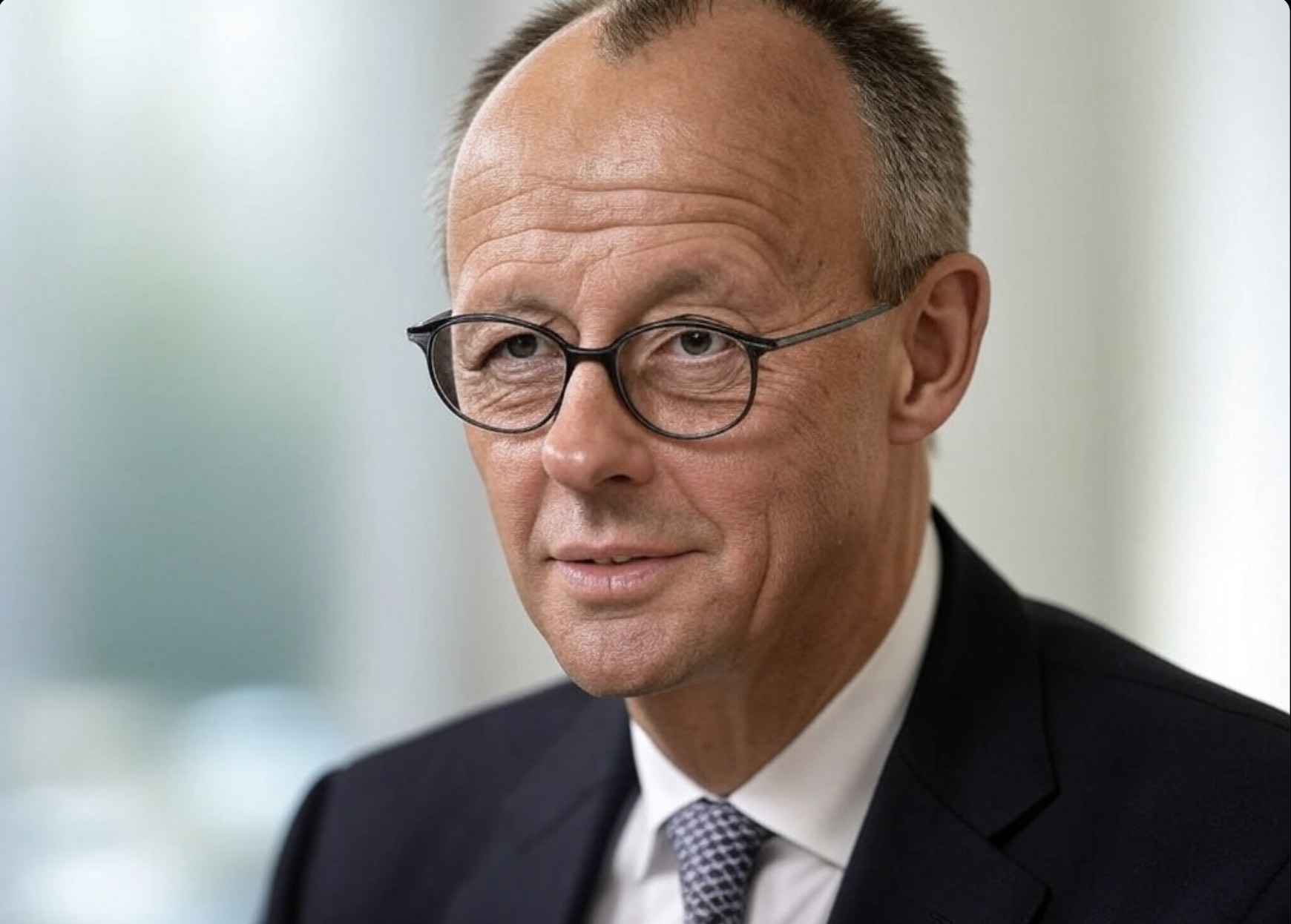
Friedrich Merz wasted no time signalling his ambitions. The veteran Christian Democrat has embarked on a brisk diplomatic tour of Europe, making Paris and Warsaw his first ports of call.
It is a deliberately symbolic gesture: Merz wants the continent—and indeed the world—to know that Germany is back at the helm of European affairs, under new, more assertive management.
For a country whose foreign policy has been historically marked by caution and coalition-building, Merz’s early moves feel like a gear shift. A long-time figure on the conservative flank of German politics, Merz has often decried the inertia of Berlin’s foreign policy under his predecessors. Now, in office, he intends to change that. His twin visits to France and Poland serve not just as introductory handshakes, but as foundational steps in reasserting German leadership in a Europe increasingly buffeted by geopolitical tremors.
A Chancellor With a Mission
Merz’s agenda in both capitals is heavy with substance. In Paris, the focus has been on revitalising Franco-German defence cooperation, long regarded as the backbone of European security. President Emmanuel Macron, himself eager to re-energise Europe’s strategic autonomy, has found in Merz a partner willing to speak plainly about military readiness and burden-sharing within NATO.
Where Olaf Scholz once struck a more cautious tone, Merz has embraced the idea that Europe must shoulder more of its own defence. His backing of increased German military expenditure—and the politically sensitive notion of joint EU defence initiatives—marks a significant pivot from the traditional German posture of strategic ambiguity.
In Warsaw, the message is one of solidarity and pragmatism. Poland, now a crucial player in NATO’s eastern flank, shares Berlin’s concern over Russian revanchism. Merz has reaffirmed Germany’s commitment to defending Europe’s eastern frontier, while also addressing thorny bilateral issues—among them, disputes over migration, energy, and judicial independence.
Migration and Security: A Coordinated Front
One of Merz’s central policy goals is to establish a German National Security Council, a move designed to bring coherence and speed to a bureaucracy often paralysed by departmental infighting. Modeled loosely on the U.S. system, the proposed council would centralise decision-making on foreign policy, defence, and intelligence under the chancellery—essentially putting Merz at the apex of Germany’s strategic apparatus.
In tandem with this institutional shift, Merz is pushing for greater coordination on migration policy—a flashpoint issue across the EU. His discussions in Paris and Warsaw reportedly included proposals for a tiered asylum system and tougher border controls, alongside humanitarian corridors for genuine refugees. It is an attempt to strike a balance between compassion and control, one likely to resonate with a public grown weary of political equivocation.
Merkel’s Heir—or Her Antithesis?
The contrast with Angela Merkel’s style could hardly be starker. Where Merkel’s leadership was defined by consensus-building and studied neutrality, Merz appears more willing to speak in absolutes. His background in finance and law, his years in the private sector, and his unabashed Atlanticism have endowed him with a decisiveness that supporters claim has long been missing from the chancellery.
But assertiveness can be a double-edged sword. Critics within the Bundestag warn that centralising power in the chancellery could marginalise the foreign ministry and lead to an over-personalisation of foreign policy. Others question whether Merz’s tough-on-migration stance will alienate potential partners in Southern Europe.
Yet there is little doubt that Merz has injected new energy into Berlin’s foreign posture. His emphasis on defence, migration, and NATO cohesion reflects a hawkish realism that many in Europe’s power corridors now see as not just desirable, but necessary.
Europe’s Reluctant Giant No More?
Germany has long been described as Europe’s “reluctant hegemon”—an economic powerhouse wary of the political leadership that such status entails. Merz seems intent on shedding that reluctance. His swift outreach to France and Poland may foreshadow a broader diplomatic offensive aimed at cementing Germany’s role not merely as Europe’s banker, but as its strategist-in-chief.
Whether the rest of Europe is prepared to follow Merz’s lead remains to be seen. But for now, Berlin’s message is clear: Germany is no longer content to be merely reactive. With Merz at the helm, it seeks to shape the European agenda with clarity and conviction.
And for a continent beset by crisis and competition, that may be exactly what is required.
Main Image: GROK